Why a loose garment warms less
Short answer: When there is too much room between fabric and skin, the air can move. Moving air carries heat away, and the insulation disappears even if the fabric is thick. A loose garment therefore warms less than you might expect.
The air has to stay still
Insulation needs the air to stay in place. A large gap between fabric and skin lets warm air rise and cold air enter from below, so heat runs off. That is why a garment can feel cold even with thick fabric when it hangs loosely around the body.
Movement makes it worse
Every step pumps air in and out at the neck and sleeves. This is called the bellows effect, and it can remove a lot of heat. The more you move, the more you feel it, especially in a wide garment with open edges. See also the bamboo hoodie for men.
Thick fabric does not fix it
Many people think thicker fabric always warms more. But thickness only helps if the air inside the fabric stays put. With a big gap between fabric and body, cold air can blow in and warm air escape, and then extra thickness helps less than you expect.
Why the edges are closed
An elastic cuff, a drawcord at the hem and a closed neck stop the air exchange. It is a simpler fix than more insulation and often works better. The edges are where air moves in and out, so sealing them makes the biggest difference. See bamboo loungewear for men.
Loose or tight, what is right
Clothing should not be tight in the cold. It should close snugly at the edges and be loose enough to hold a thin layer of air inside. Too tight presses the air out, too loose lets it move. The goal is still air, not a particular measurement in centimetres.
Why loose garments work in the heat
The bellows effect, a problem in the cold, becomes an advantage in the heat. When air moves freely, sweat and warmth are carried away from the skin and you feel cooler. That is why a wide garment is often best on warm days, and a snug one when it is windy.
Socks and other places with air
The same principle applies everywhere on the body. A loose sock insulates worse, because air can move in the shoe. If it sits a little loose and also gets wet, it quickly loses its ability to hold heat. A sock that fits closes snugly and keeps the air still.
In the evening and at night
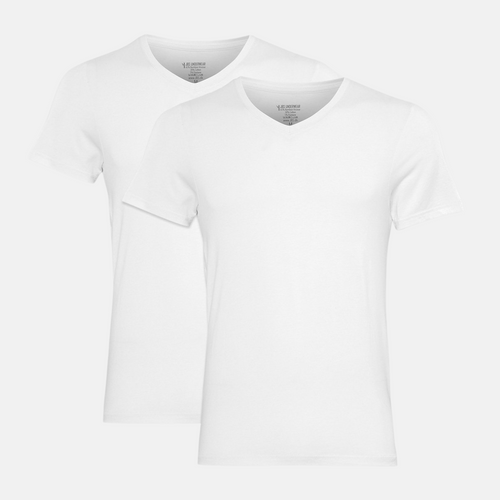
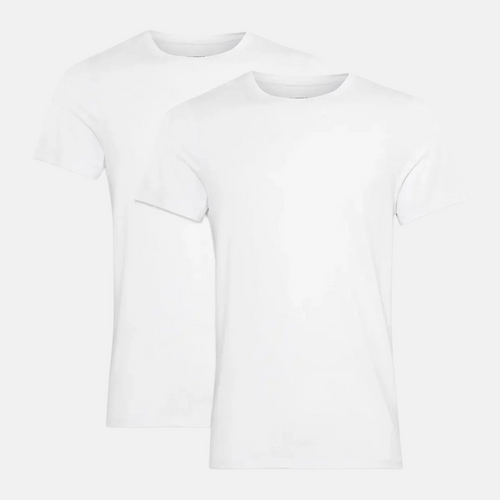
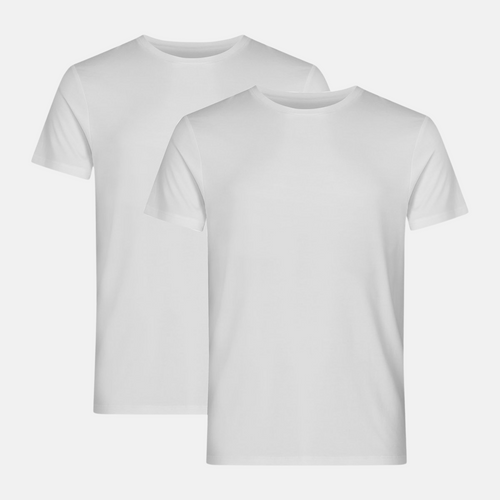
Fit matters indoors too. A loose garment that slips and opens lets heat out when you sit still on the sofa or lie under the duvet. With a soft fit that is not too tight and has a closed neck, you keep warmth better. See the night T-shirt for men.
How to choose the fit
Try the garment with another layer underneath and move around in it. Notice whether air pulls in at the neck, sleeves and hem, or whether the edges sit calmly. Choose the fit that leaves room for a thin layer of air but closes well at the edges, so you get the most out of the fabric.
Frequently asked questions
Should clothing be tight in the cold?
No. It should close snugly at the edges and be loose enough for a layer of air inside. If clothing is too tight, it presses the air out and a large part of the insulation is lost.
Why do loose garments work in the heat?
Because the bellows effect removes heat, which is exactly what you want when it is warm. Air moves freely, so sweat and warmth get away from the skin.
What about a loose sock?
It insulates worse, because air can move inside the shoe. A sock that fits and closes snugly at the top keeps the air still and therefore works better.
You can find the full range at Bamboo-Clothing.com.