Why a sock creates pressure over the instep
Short answer: The instep is the highest point of the foot, and the shoe presses exactly there. If the leg of the sock is tight, two pressures meet at the same spot and leave a mark. Looser laces and a sock without thick ribbing over the instep can take the worst of it.
Two pressures meet
The upper of the shoe presses down on the instep, and the leg of the sock tightens upward and around the foot. The sum of the two forces is greater than either alone. That is why a sock that feels fine in your hand can still leave a clear line once it sits in a closed shoe all day.
The instep has little padding
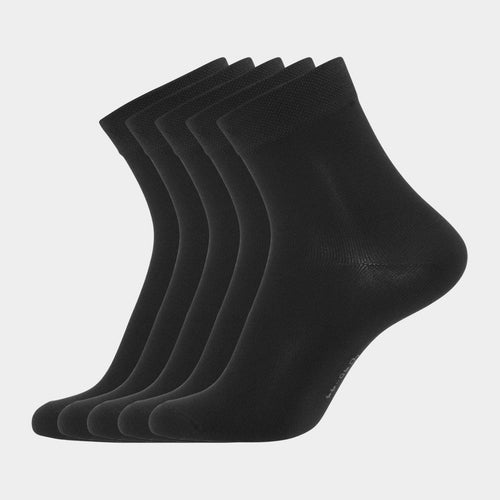
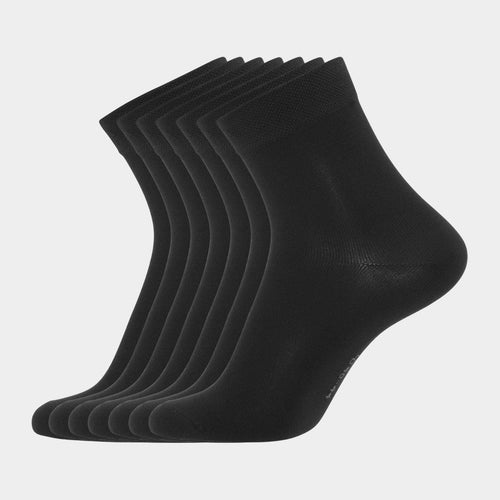
Tendons and bones lie close under the skin on the instep, with almost no layer of fat. The pressure therefore goes straight through to what lies underneath, and you feel it sooner than elsewhere on the foot. Look at bamboo socks for men to compare how the legs are knitted.
The shoe plays its part
Shoes with tight lacing or a low upper press harder on the instep than a loose shoe. This is especially true of new shoes, where the leather has not yet given way. Lace very tightly and you get strong pressure over the instep, however soft the sock is. Loosen the laces a little and see whether the pressure eases.
The leg and the ribbing
Ribs are the vertical grooves in the leg of a sock that give the knit stretch and help the sock stay up. If the rib is thick and firm, each groove can press into the skin like a thin line. That is why socks with coarse ribbing often leave a clear pattern on the instep after a long day.
Why ribbing is placed differently
Some socks have a smooth zone over the instep instead of rib. That removes one of the two pressures, because the fabric there can lie flat and give way without grooves pressing in. The ribbing can then be used elsewhere on the sock, where it holds the sock without pressing. See all bamboo socks for men to find different types.
A thin sock gives more room
A thin sock fills less of the shoe, so there is more room over the instep. That can be enough to remove the mark, especially in shoes with a low upper or a snug fit. A thick sock in a shoe that already fits closely adds pressure, so a thinner model may be worth trying.
Compression stockings are a special case
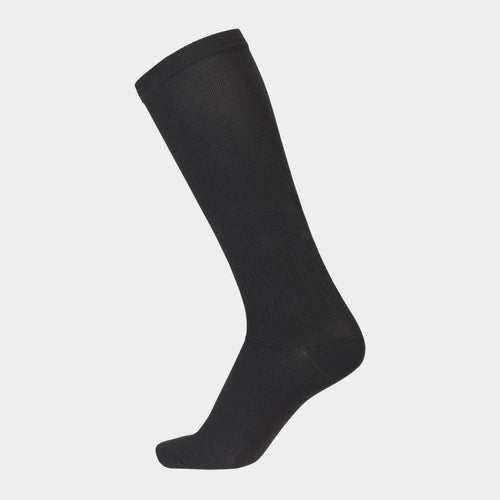
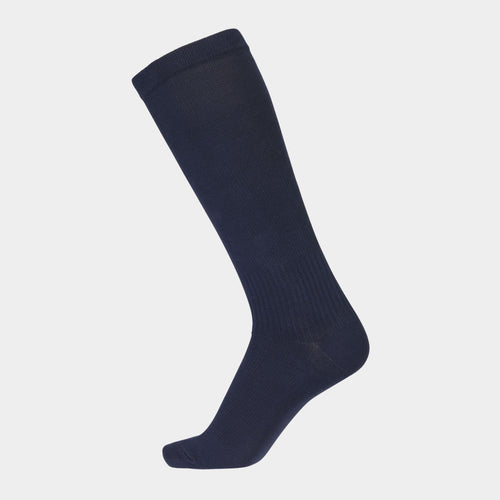
Compression stockings are made to fit firmly on purpose, so they can leave clearer marks than ordinary socks. See bamboo compression stockings if you are looking for that type. If you wonder whether compression stockings are right for you, or whether they fit too tightly, talk to your doctor or a professional.
How to check the fit
Put on the sock and shoe and walk a little. Notice whether there is clear pressure over the instep when you stand and when you sit. Take off shoe and sock afterwards and look at the skin. A light line that fades quickly is normal, while a deep groove that stays suggests something is too tight.
When a mark is too much
A mark that fades within an hour is usually harmless. If it stays, or the skin becomes sore, itchy or red, either the sock or the shoe is too tight. Try another sock, loosen the laces or switch to a shoe with more room. Talk to your doctor if the discomfort continues.
Frequently asked questions
Is a mark over the instep dangerous
No, but if it does not fade within an hour, the sock is too tight. Talk to your doctor if the skin becomes sore or the mark stays.
What should I do if the shoe presses
Loosen the laces over the instep and choose a sock without thick rib exactly there. If that does not help, a shoe with more room or a higher upper may be the answer.
Can a thin sock solve it
Often yes, because there is more room in the shoe. A thin sock without tight rib over the instep often removes both parts of the pressure you feel.