Why bleaching is used
Short answer: Cellulose from plants is not white but slightly yellowish. Bleaching removes the residues that give the colour, so the fabric can be dyed in light and clean shades. Here is why it is done and what sets a limit on it.
The raw material is not white
Even after cooking, the pulp is slightly yellow from plant residues. If the fabric is to be dyed pale yellow, pink or white, that base tone must go, or it pulls the colour towards the muddy. Bleaching is therefore not a goal in itself, but a means to get a clean and even background for the colour.
The base tone affects the colour
Colour lies on top of the fibre's own tone. A slightly yellowish fibre dyed blue turns greener, and a fibre dyed pink turns more peach than rose. The lighter and cleaner the colour is meant to be, the more important it is to start with a fibre that is as neutral as possible.
Two routes to white
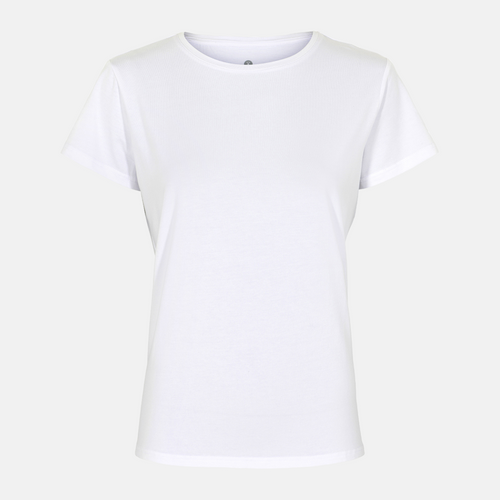
Chemical bleaching removes the colour, while optical white only adds a blue tone that makes the eye see the fabric as whiter. The two are often used together. The optical addition does not change the fibre, but it can fade with time and washing, so a fabric may look less white after some years. See bamboo dresses.
What is used for bleaching
In modern plants, oxygen-based agents are most often used instead of chlorine. Hydrogen peroxide is one example, which breaks down into water and oxygen. Which agents a given factory uses can vary, though, and you can only learn it from the factory's documentation, not by looking at the finished fabric.
Bleaching has a limit
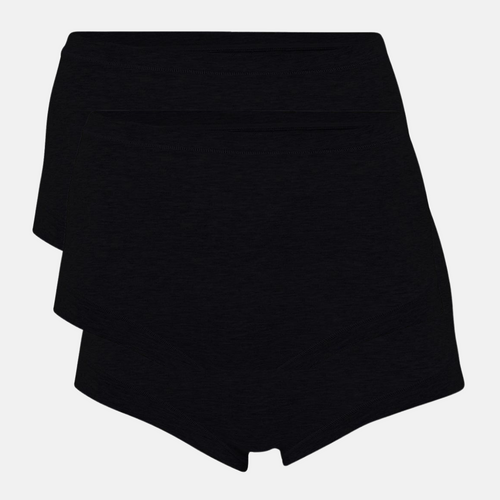
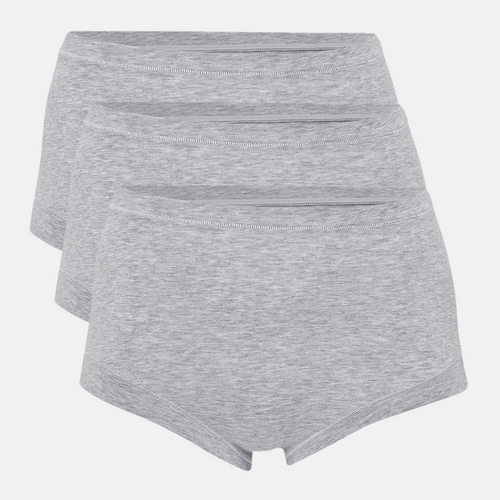
Bleaching too hard weakens the cellulose and makes the fabric brittle and thin. So time, temperature and amount are tightly controlled in production. The aim is to remove colour without harming the fibre, a balance where too little leaves yellowish shades and too much gives a fabric that does not last. See women's bamboo pants.
Can bleaching be avoided
Yes, if the fabric is to be dyed dark. Then the base colour matters less, because a dark colour covers it. Many dark garments are therefore bleached less than light ones. It is a practical choice the factory makes based on the colour that should end up on the fabric, and not a fixed rule.
Is unbleached fabric better
Not necessarily. Unbleached fabric is a choice that depends on the wanted colour and look. Some like the natural, slightly yellowish tone, while others want white or light fabric. Unbleached is neither better nor worse in itself, and the choice is mostly about taste and what the clothing will be used for.
What bleaching means for care
Light and white fabrics show stains and shadows faster, so they may need a little more care. Wash whites separately, use a mild detergent and avoid overdosing, since residues can give a greyish tinge. Drying in the shade is gentle on both colour and fibre. See JBS of Denmark.
How to choose
Look at the colour and at how the fabric feels, not at whether it is bleached. Bleaching is part of almost all dyed textile production, and a factory cannot always do without it. What matters most for a garment you will wear for many years is fit, material and how well it handles washing.
Frequently asked questions
Is chlorine used for bleaching?
In modern plants, oxygen-based agents are most often used instead of chlorine. Which agents a factory uses can vary, though, and needs documentation if you want to know for sure.
Can bleaching be avoided?
Yes, if the fabric is to be dyed dark. The base colour then matters less, because a dark colour covers it, and heavy bleaching is not needed.
Is unbleached fabric better?
Not necessarily. It is a choice that depends on the wanted colour and on how you want the fabric to look and feel.
You can find the full range at Bamboo-Clothing.com.