Why clothes wear most in the first months
Short answer: Because the loose fibre ends and the outermost finish disappear first. Once they are gone, the rest of the change happens more slowly and the garment settles into its final state. It is a normal running in phase for most textiles.
The loose parts go first
The short fibre ends that stick out of the yarn wear off or curl up in the first weeks. That is why many new garments pill a little at the start. The fuzz can be removed with a fabric shaver or by gently picking, and it returns less often as the garment is worn and washed.
The finish washes out
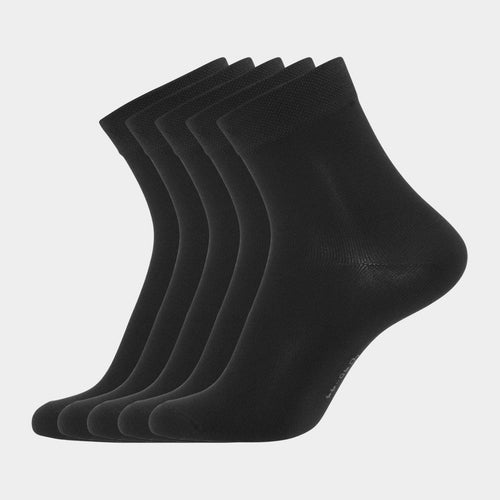
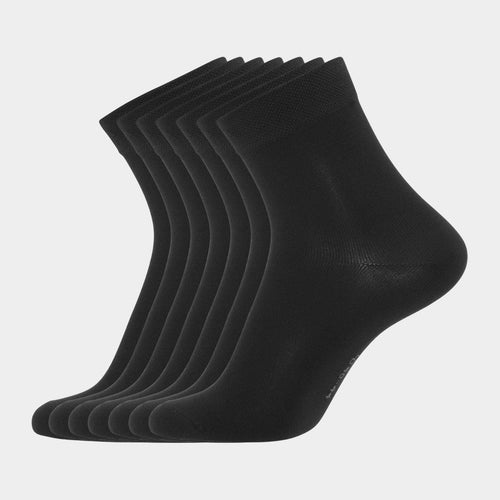
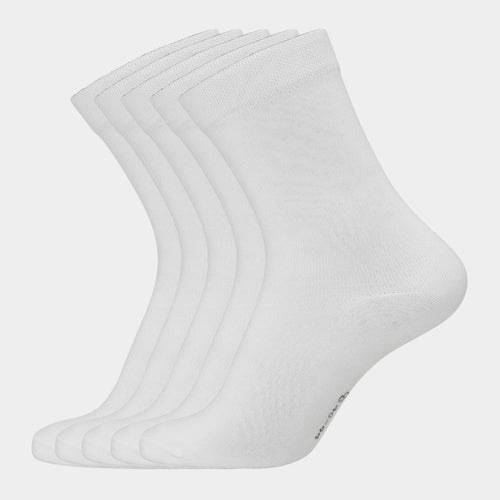
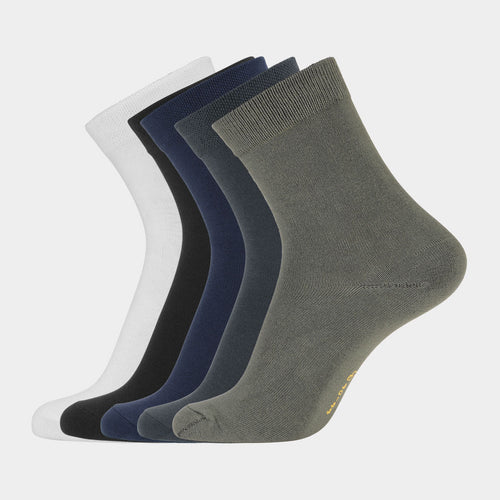
Softening and surface treatment disappear gradually over the first washes. The fabric can therefore feel different after a few weeks than on the first day. That does not mean something is wrong, only that the garment shows its actual fabric. See all bamboo socks for women for more basics.
Then the curve flattens
Once the loose parts are gone, wear slows down, and the garment looks the way it will look for a long time. Think of it as a curve that drops steeply at first and then flattens out. Read more about Turiform and bamboo socks for women.
The colour settles
Some garments change colour slightly in the first washes when excess dye rinses out. Wash new clothes with similar colours the first few times. After a few washes the colour often stabilises, and you can wash the garment with the rest of your laundry without worrying.
The fit finds its place
Knitwear and stretchy fabrics give a little in the first few wears. The garment adapts to your body and can feel more comfortable after the first period. If a piece is just snug enough when new, it is usually easy to wear without losing its shape.
How to look after new clothes
Wash new clothes gently the first few times, at a low temperature and few revolutions. Avoid the tumble dryer and hard friction while the garment finds its state. Turn clothes inside out so the surface is protected. That keeps the running in phase calm and gives the garment a good start.
Differences between fabrics
Not all fabrics behave the same. Dense, smooth fabrics change less than loose, soft ones, and thick knit shows more change than thin jersey. Read the care label and expect differences between garments. That is normal and not in itself a sign that something is wrong.
When to react
The running in phase ends by itself. If a garment keeps changing after many washes, thins out or gets holes, it is no longer running in but real wear. Then it is worth looking more closely at how you wash and how hard the clothes are used every day.
Patience gives a better overview
Wait to judge a garment until it has been washed a few times. The first impression is not always the final one. Watch how it looks after three to ten washes and compare it with the day you bought it. Then you know what you have and how long to count on it.
Frequently asked questions
Does it mean the garment is poor
No. It is a normal running in phase for almost all textiles. Loose fibre ends and the finish disappear first, then the change slows down and the garment reaches its final state.
How many washes does it take
Typically between three and ten, depending on fabric and treatment. After that the garment looks the way it will look for a long time, if you wash it gently and rarely too hot.
Can I speed it up
Wash the garment a few times before you use it a lot. Then you know what you have, and you can watch the change calmly, without it happening in the middle of a busy week.
You can find the full range at Bamboo-Clothing.com.