Why freezing does not remove odour
Short answer: Cold puts bacteria to sleep, but it rarely kills them, and it removes neither fat nor the molecules that already smell. When the garment warms up again, everything carries on. Freezing is therefore no substitute for washing, even if a garment can smell better right after the freezer.
Cold stops, it does not clean
In frost the metabolism of bacteria comes to a halt. They do not die, they wait. As soon as the temperature rises they carry on, and they still have the nutrients they had before. The freezer acts as a pause button and not as a clean, and the pause ends when the garment is back at room temperature.
The odour molecules stay put
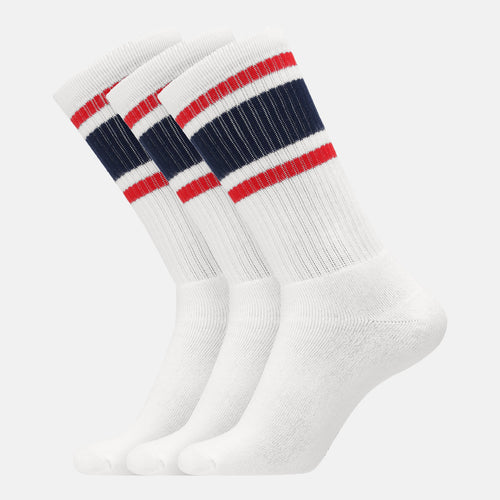
The compounds that have already formed sit in the fibre. They disappear only by being washed out or by evaporating. A cold, dry fibre releases fewer molecules, so the smell is weaker, but it is not gone. See bamboo tennis socks for men.
Why freezing only works briefly
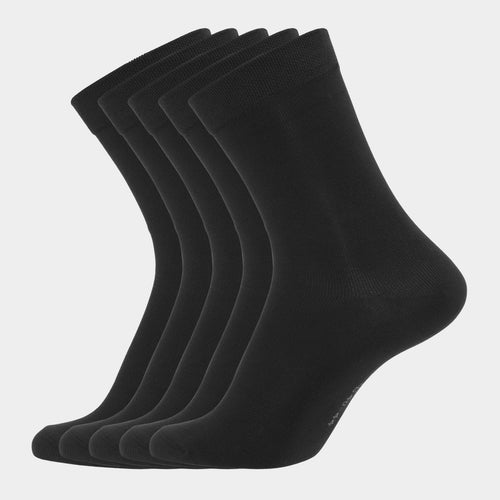
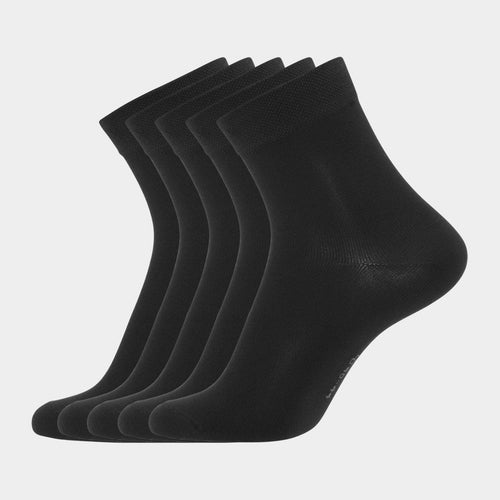
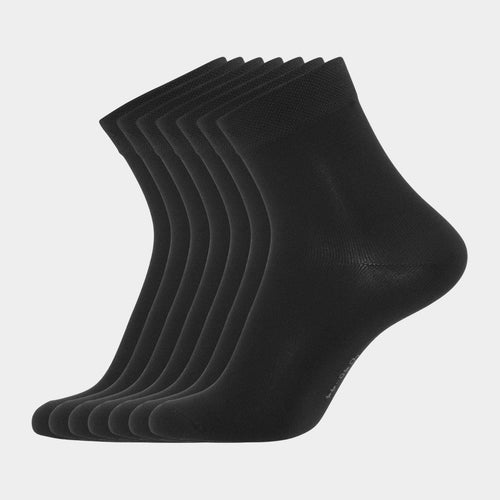
A garment in the freezer smells less right afterwards because it is cold and dry. After a day the smell is back. This can give a false impression that it worked, precisely because you sniff the garment while it is still cold. See bamboo socks for men and all bamboo socks for men.
The fat does not disappear
Smell arises when bacteria act on skin fat and sweat. The fat is still there after a night in the freezer, and it is what builds up over time. Only washing at a suitable temperature with detergent loosens the fat so it can be rinsed out of the fabric.
Moisture in the freezer
A garment put in the freezer damp can come out with condensation as it thaws. The moisture gives bacteria good conditions again, and the smell can become stronger than before. That is one more reason to choose washing and drying over cold.
What frost can be used for
Frost can kill certain insects, but that is a different task and should follow the instructions that exist for that kind of problem. For odour it has no documented place in a normal care routine, and it is easier to do what works every time.
Wash at a temperature that loosens fat
Choose the temperature printed on the garment and use a detergent made for the purpose. Do not overfill the machine, so the water can reach every fold. If the smell is old, a longer soak before the wash itself can make a difference.
Drying makes a difference
After washing, the garment must be completely dry before it is put away. Hang it in open air and leave it until moisture is gone from seams and thick places. A fibre put damp in the drawer can smell again after a few days even though it was clean.
How to get rid of old residue
If a garment has smelled for a long time, a layer may have built up over many washes. Wash it at the highest temperature the fabric tolerates and let it dry fully. Repeat if needed. Frost, spray and scent bags do not move the layer already sitting in the fibre.
Frequently asked questions
Why do many people think it works?
Because cold and dryness dampen the smell temporarily. The smell is back once the garment has spent a few hours at room temperature.
Does frost work on anything at all?
It can kill certain insects, but that is a different task. For odour it removes neither fat nor the smell compounds already in the fibre.
What works instead?
Washing at a temperature that loosens fat and drying completely afterwards. If the smell has been there long, a soak before the wash can improve the result.
You can find the full range at Bamboo-Clothing.com.