Why the size on the label can be rounded
Short answer: The label has to be quick to read. A system with half sizes would be more precise, but also more awkward for shop and customer. That is why a measurement is rounded to the nearest step, and two pieces in the same size can differ a little.
Rounding is a choice
If a measurement falls between two steps in the system, the nearest step is chosen. That is why two pieces in the same size can differ a little in width. The difference is usually small, but it is there, and it can be the reason one piece sits slightly differently from another in the same size.
The label has to be readable
A size on a label is a shortcut. It has to be readable in a second, in a shop or on a page, without any arithmetic. A system with many steps would be hard to take in, and it would make it harder to find something that fits.
More steps cost more
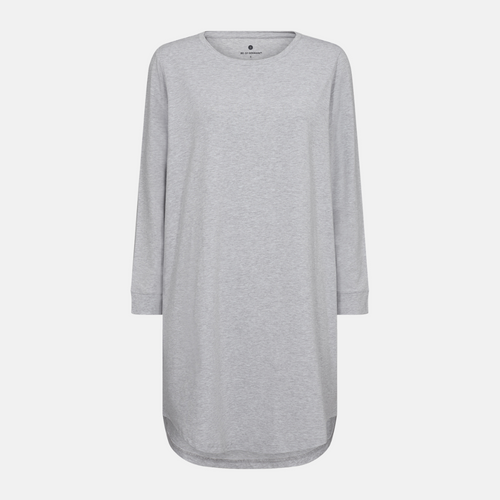
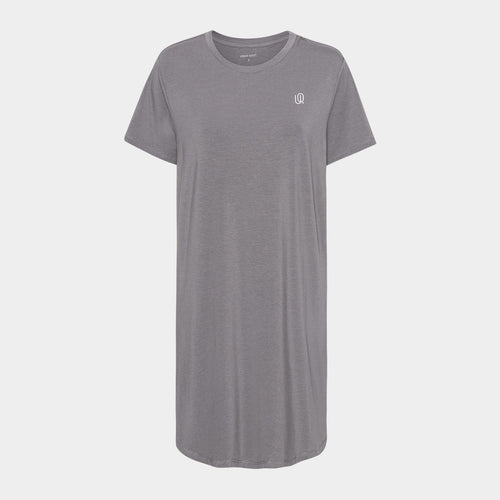
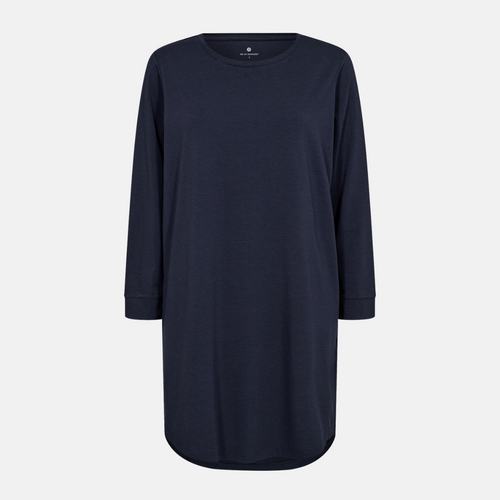
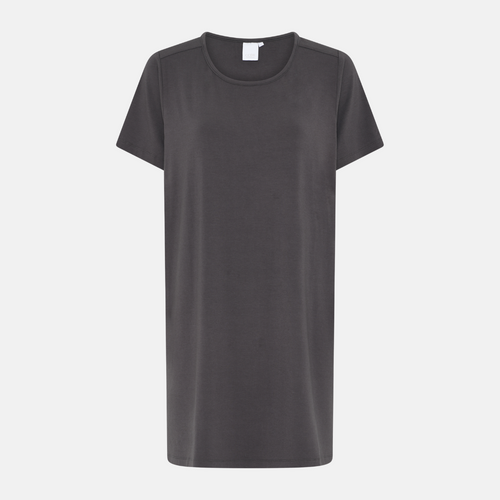
Every extra size means more item numbers, more stock and more samples to be measured and approved. That adds to the work for supplier and shop, and it makes the system heavier to run. That is why most stay with a limited number of steps. See bamboo T-shirt dresses.
The chart shows the real numbers
Beneath the label sits the chart, which gives the measurements in centimetres. Those are the ones to use when you want it exactly right, and they are far more precise than the letter on the label. With the chart you can see for yourself where your body sits relative to the steps.
Stretch covers the rounding
In elastic pieces rounding is seldom felt, because the fabric gives and adapts. In woven fabric it is. There is therefore more to gain from measuring when you buy something without stretch. See bamboo sports bra and period underwear for pieces where stretch makes a difference.
Are there half sizes
In shoes and shirts yes, in knitwear almost never. Here the fabric is so elastic that an extra step would make little difference. Shirts and shoes, on the other hand, have a fixed shape that forgives nothing, and that is why more steps make sense there.
Why men's shirts have more steps
The collar width has to be exact for the shirt to fasten properly. If it is a centimetre too tight it bothers you all day, and if it is too loose the shirt looks crooked. That is why shirts have more steps than knitwear, where the fabric itself can give a little.
How to spot the rounding
Irregular jumps between sizes in the chart are often a sign that rounding has taken place. If one step is three centimetres larger than the previous and the next only two, the measurements have been fitted to the system. Look at the whole row, not just your own size.
How to choose when you are in between
If you are between two steps, look at the fabric and the garment. If it has stretch you can choose the smaller. If it has none, choose the larger. If the piece should fit close, follow the measurement that is hardest to make fit.
Frequently asked questions
Are there half sizes?
In shoes and shirts yes, in knitwear almost never. Knitwear gives by itself, so an extra step would rarely make a noticeable difference to the fit.
Why are there more steps in men's shirts?
Because the collar width has to be exact for the shirt to fasten properly. If it is slightly too tight or too loose, you notice at once.
Can I see the rounding in the chart?
Yes. Irregular jumps between sizes are often a sign that rounding has taken place. Look at the whole row of the chart, not just your own size.
You can find the full range at Bamboo-Clothing.com.