Why there is elastane in bamboo clothing
Short answer: Elastane pulls the fabric back into shape after it stretches. Without it a garment would grow a little larger every hour you wear it.
What elastane is
Elastane is a synthetic fiber that can stretch far beyond its own length and then return fully to its starting point. It stays hidden in the finished fabric because it runs as a thin thread inside the yarn alongside the bamboo viscose. Without elastane even a tightly knit fabric would lose its shape after just a few hours of wear.
How the fiber sits in the yarn
Elastane is often spun together with the bamboo fibers into a single thread that runs evenly through the whole knit. That gives consistent stretch across the entire fabric instead of only at seams and edges. The method is called core spun, and it explains why modern bamboo fabric feels stretchier than older versions.
How little is needed
Two to five percent elastane is usually enough to change the whole garment's behavior. The share sounds small, but because the fiber stretches so much, it shapes the fabric's behavior far beyond its actual weight. Without that small share, the fabric would feel stiff and would quickly lose its shape after washing and wear.
Underwear and socks
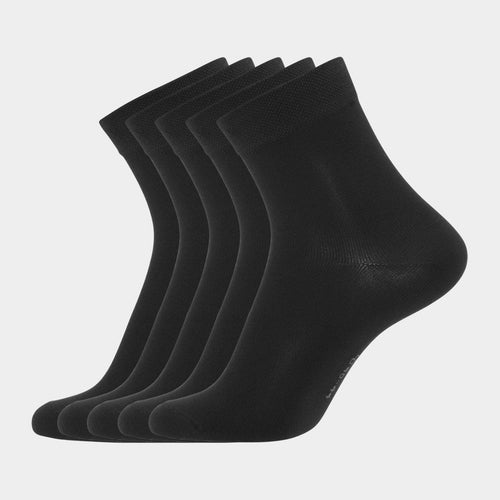
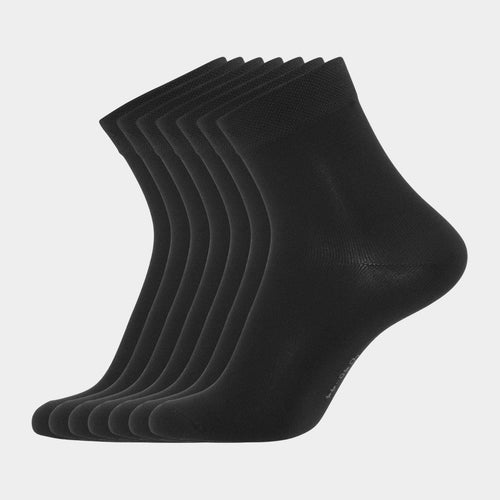
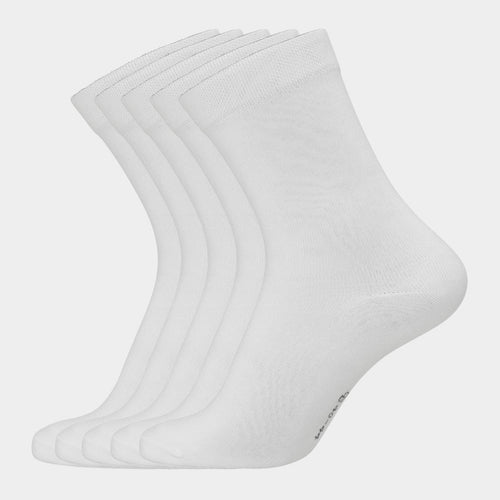
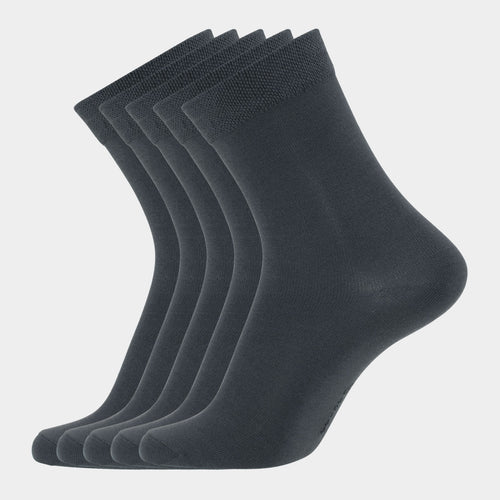
In underwear, socks, and leggings, elastane is essential for how the garment fits throughout the day. It is the difference between a waistband that stays put and one that gives up after an hour. See bamboo underwear for women. Without elastane, these pieces would need a tight cut from the start just to hold their shape at all.
Sleepwear and loose clothing
In sleepwear, loungewear, and loose t-shirts, elastane matters less because the garment does not need to follow the body's movements closely. Pure bamboo fabric is often softer and cooler to sleep in. See bamboo sleepwear for women. Some makers skip elastane entirely in this category in favor of a more flowing drape.
Activewear
In activewear the elastane share often runs higher, up toward ten percent, because the fabric must follow large movements without shifting out of place. The mix of bamboo viscose and elastane creates a moisture wicking surface that still sits tight enough to feel like real activewear rather than loose everyday clothing.
Why elastane wears out
Elastane cannot handle heat and breaks down long before the cellulose fiber around it does. That is why an old garment loses its stretch even though the rest of the fabric still looks fine. The strands inside the elastane grow stiff and eventually snap, and once that happens the ability to spring back disappears for good.
Washing and care
Wash at thirty degrees and avoid hot tumble drying, and the garment will last roughly twice as long. See bamboo socks for women. Hot water and high dryer heat are the two biggest enemies of elastane, and damage from them cannot be undone afterward, no matter how well the rest of the fabric holds up.
How to choose
If a garment needs to sit close and hold its shape all day, choose something with elastane in it. If it should just fall loose and feel soft, pure bamboo viscose is the better pick. Check the care label, where the share usually appears as the last number, and use it to judge how fitted the piece is meant to be.
Frequently asked questions
Is elastane the same as lycra
Lycra is a brand name for elastane, not a different fiber. Spandex is the American word for the same fiber. All three names describe the same stretchy thread inside the yarn.
How much elastane is normal
Two to five percent is normal in underwear and socks. In activewear the share can rise to around ten percent, because the movements there are larger and demand more stretch from the fabric.
Can elastane be avoided entirely
Yes, but then the cut should be loose from the start, or the garment will stretch out quickly. For sleepwear and loose t-shirts this is often a fine choice with no real downside.
See our range of Copenhagen Bamboo.