Why underwear is knitted and not woven
Short answer: Knitted fabric stretches in every direction and follows the body, while woven fabric only stretches on the diagonal. That is why underwear and t-shirts are almost always knitted, while shirts and trousers are typically woven.
Knit follows the movement
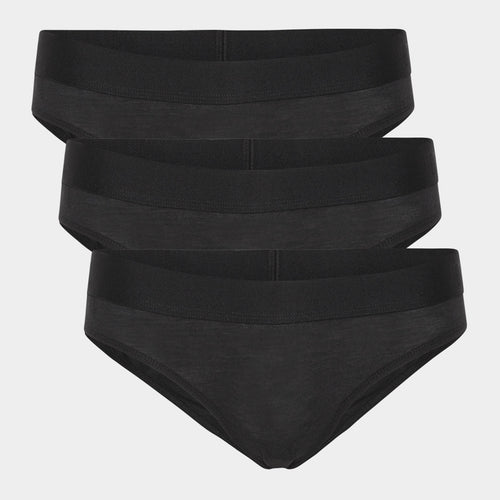
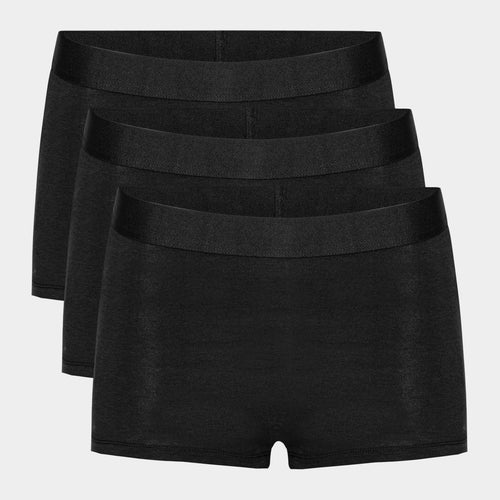
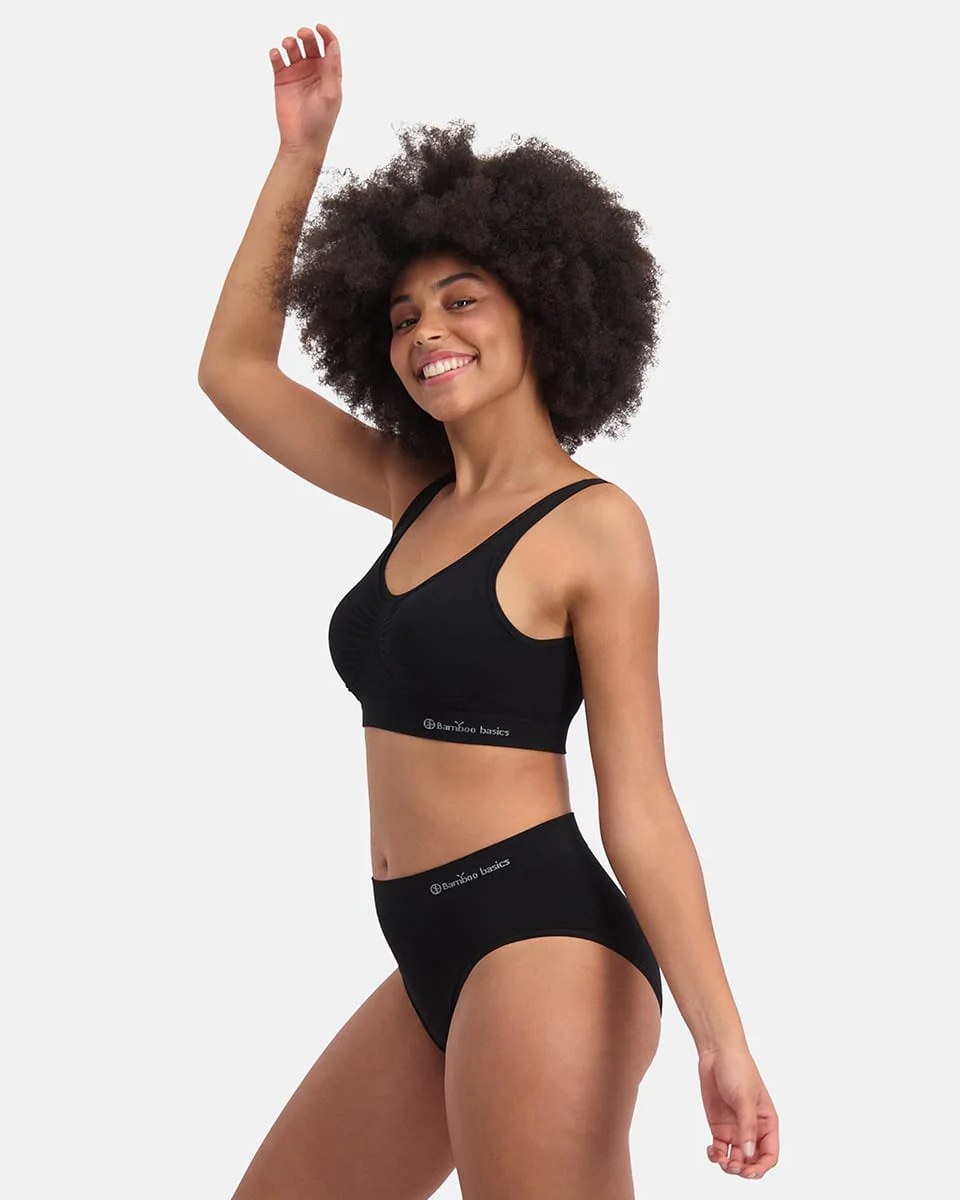
Knitted fabric is built from loops that can contract and expand in every direction. That is why underwear and t-shirts are always knitted, because they need to follow the body without binding anywhere. See bamboo underwear for women , where the soft knit is a central part of the fit.
Woven holds the shape
Woven fabric has fixed threads crossing each other in two directions, called weft and warp. That produces a fabric that keeps its shape instead of giving way. See bamboo shirt for men , where exactly this woven structure gives the shirt its crisp, tidy look.
The mix of both techniques
Some garments combine a woven outer fabric with knitted edges or panels, precisely to get both properties in one place. See bamboo dresses , where a woven fabric can give the skirt its drape, while knitted parts at the waist and sleeves give freedom of movement without pulling tight.
Why knit feels softer
Because the loops have air between them and can move against each other, knitted fabric generally feels softer against the skin than woven fabric of the same fibre. That is one reason almost all clothing that sits directly against the skin is knitted rather than woven.
The downside of knit
On the other hand, knitted fabric can lose its shape over time, especially at elastic parts like collars and cuffs, if it is worn and washed a lot. Woven fabric keeps its shape better but does not give the same way, which is why it is rarely used for close-fitting basics.
The downside of woven
Woven fabric only stretches a little, and only on the diagonal of the weave. That makes it unsuitable for anything that needs to follow the body's movements closely, like underwear or sportswear, but well suited to anything that should sit looser and neater, like a shirt or trousers.
How to see the difference yourself
Stretch a piece of fabric in two opposite directions. If it clearly gives and springs back, it is knitted. If it barely gives unless you pull on the diagonal, it is woven. The difference can be felt immediately, even without knowing the technique behind the fabric.
How the choice of technique affects price
Knitting machines can generally produce faster than weaving machines, but a fine, tightly knitted fabric still needs precision and time. Price depends more on the quality and fineness of the yarn than on the technique itself, so neither knit nor woven is automatically pricier than the other.
Briefly, why it fits together
The technique behind a piece of fabric is chosen for what the garment needs to do, not by chance. Knit gives movement, woven gives shape, and most wardrobes need both to cover everything from underwear to outerwear.
Frequently asked questions
What is the difference between knit and woven fabric
Knit is made of loops and stretches in every direction, while woven is threads in two directions and only stretches on the diagonal of the weave.
Why are t-shirts always knitted
Because they need to be pulled over the head and follow the body's movements all day without any fastening. Knitted fabric offers that flexibility, which woven fabric cannot offer in the same way.
Can bamboo be used for woven fabric
Yes, among other things for shirts and bedding, where shape stability matters more than stretch. Bamboo viscose can be spun into knitting yarn or woven into a firmer fabric.
See our range of Boody underwear.