Why your bamboo t-shirt gets bobbles and what to do about it
Short answer: Pilling happens when loose fibres rub against each other and roll into little balls. Wash inside out, avoid rough fabrics in the same load, and remove pills with a fabric shaver, and the fabric looks neat again.
Where pilling comes from
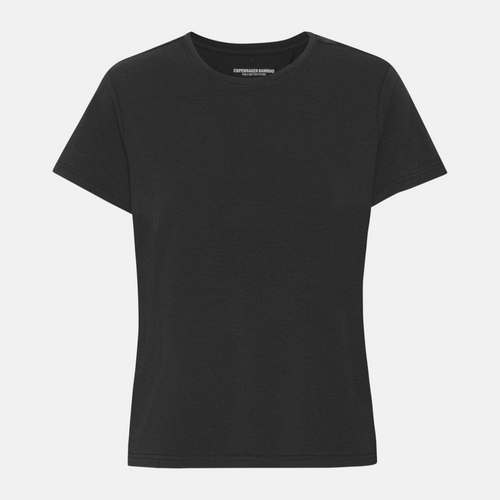
Pilling is not in itself a sign of poor fabric. All knitted fabrics have fibre ends that stick out slightly, and when they rub against something rough, they roll up into small balls. That is why pills form exactly where the most rubbing happens. See the range in bamboo t-shirt for women.
Where on the body it happens most
Pills usually gather under the arms, on the side where a bag hangs, and on the back where a chair sits. Those spots see the most repeated rubbing during an ordinary day, so that is where the fabric starts pilling first, while the rest of the shirt stays smooth longer.
What you can do in the wash
The biggest source of rubbing is the wash itself. Wash inside out, fill the machine so the clothes can move freely without being pressed together, and never wash with towels or other terry fabric, which tears at the fibres and creates more pills than it removes.
Turn down the spin cycle
Turn down the spin cycle so the fabric is not flung hard against the drum toward the end of the wash. A high spin presses the wet clothes into a tight clump, and that exact motion tears at the fibres and starts new pills, even in an otherwise gentle wash programme.
How to remove the pills already there
A fabric shaver is the best tool. Lay the garment flat on a table, stretch the fabric gently with one hand and run the shaver in one direction. Do it when the garment is dry, since wet fibres cut differently. See bamboo t-shirts for men.
A disposable comb as an alternative
A disposable pilling comb also works, but it must be used lightly, or you get a hole in the fabric. Test on a small, less visible spot first to see how the fabric reacts, before moving on to the whole garment. The comb is cheaper than a shaver but needs more care in use.
Choose more tightly knitted qualities
Choose more tightly knitted qualities for the clothes you wear daily, since tight knits have fewer loose fibre ends that can roll together. Loosely knitted fabrics are comfortable to wear, but they pill faster for the same amount of use and washing.
Let the garment rest between wears
Let the garment rest a day between wears so the fibres can straighten out again after being pressed and rubbed. A t-shirt that pills a lot in the first few weeks and then settles down is normal and not a sign the fabric is wearing out.
See the rest of the range too
See also bamboo t-shirts for men and bamboo clothing for women, where the fabric is chosen for exactly this kind of daily use, and where you can find several qualities to rotate between if you want to give a garment a rest between wears.
Frequently asked questions
Does pilling mean the fabric is bad?
No. Pilling mostly says something about rubbing and knit type, not about the fibre quality itself, and most knitted fabrics pill at some point.
Can pills come back after removal?
Yes, but usually fewer times. Most garments pill most in the early part of their life and settle down after that.
Does fabric softener help against pilling?
No. Fabric softener coats the fibres in a film and makes the fabric less absorbent without solving the actual rubbing problem.
You can find the full range at Bamboo-Clothing.com.