Yarn count and what it tells you about the fabric
Short answer: A high yarn count means a thinner and finer yarn. That gives a softer, more even fabric, but also one that is more delicate.
How to read the number
Yarn count shows how many meters of yarn go into one gram, or a similar unit depending on the system used. A high number means a thin yarn, meaning a fine fabric. A low number means a coarse yarn and a rugged fabric. That is the opposite logic from most other numbers found on a care label.
What it means for feel
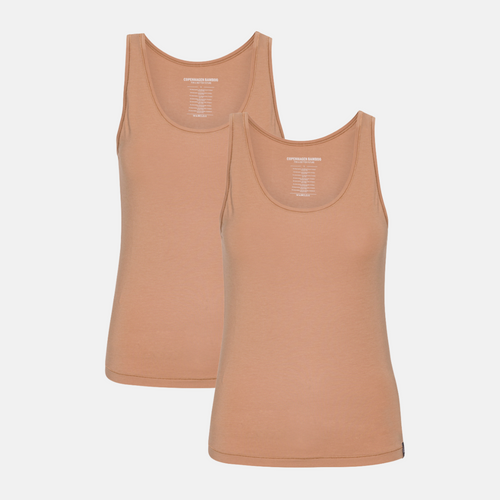
Fine yarn creates a smooth surface with no visible threads and feels softer against the skin right away. That is one reason two t-shirts with the same weight in grams can feel completely different. See bamboo t-shirt for women. Yarn count therefore tells you more about feel than the gram figure alone does.
Durability
Coarse yarn withstands more wear because the individual threads are thicker and more resistant to friction. Fine yarn, on the other hand, is more prone to pulled threads and holes from an accident. For everyday clothing, a mid level yarn is often the best compromise between softness and the ability to handle daily use.
Where it shows most clearly
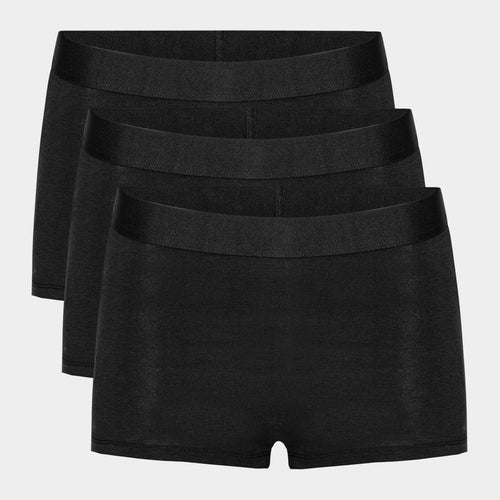
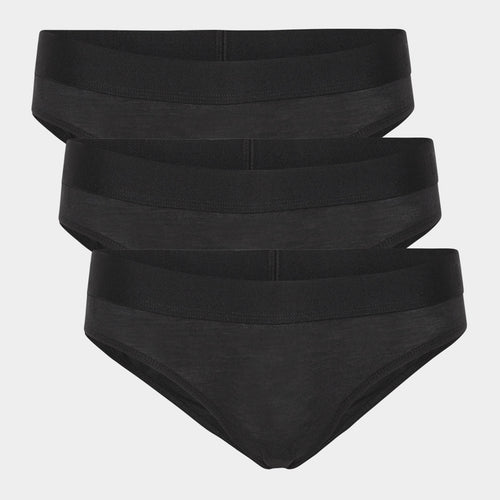
In thin underwear and light t-shirts, yarn count matters most, because the fabric sits close to the body and the surface is highly visible. See bamboo underwear for women. In sweat fabric and terry cloth it matters less, since the thick knit already hides the yarn's fineness from the naked eye anyway.
Link to yarn type
Yarn count relates to how the yarn was spun, not only to its thickness. Two yarns with the same count can still feel different depending on how many fibers are twisted together and how tight that twist is. That is why two fine yarns do not automatically produce identical fabrics despite sharing the same number.
Fine yarn and knit density
A fine yarn can be knitted very tightly and still end up relatively heavy, simply because more threads are used per area. That contradicts the easy assumption that fine yarn always means light fabric. Weight therefore depends just as much on knit density as on yarn count itself, and the two numbers should be read together.
Why it is rarely stated
Yarn count is mostly used internally in production and rarely appears on ordinary clothing, neither on the care label nor in the product description. It shows up more often for bedding and shirting fabric, where customers often want to know how fine the material is. For t-shirts and underwear, you usually have to feel the fabric yourself.
How to feel the difference
Rub the fabric lightly between two fingers. Fine yarn feels smooth and almost silky, while coarse yarn feels noticeably more textured with visible individual threads. See bamboo clothing for women. This simple test often gives a better picture than trying to guess from price or packaging alone.
How to choose by purpose
If a garment should feel luxuriously soft against the skin and sit close to the body, go for fine yarn. If it needs to withstand hard daily use without close skin contact, choose a coarser yarn for extra strength. Always combine the assessment with the purpose, much like with gram figures and knit type, for the best result.
Frequently asked questions
Does yarn count always appear in the description
Rarely for ordinary clothing like t-shirts and underwear. It is used more often for bedding and shirting fabric, where customers often want to know exactly how fine the material is.
Is fine yarn always better
No. It is softer but more delicate and more prone to pulled threads. Choose based on what the garment will be used for, not just on what sounds finest.
Are yarn count and weight linked
Partly. A fine yarn can be knitted tightly and still become a heavy fabric, so yarn count and gram figure should always be considered together rather than separately.
You can find the full range at Bamboo-Clothing.com.