Antibacterial claims about bamboo clothing
Short answer: The bamboo plant contains substances with antibacterial effects, but they do not necessarily survive processing into viscose. What you notice in practice is that moisture is moved away from the skin, which gives bacteria poorer conditions.
What actually happens
Bacteria thrive in moisture and warmth. A fabric that moves moisture away from the skin and lets it evaporate gives them poorer conditions. That is why odour builds up more slowly. It is a physical effect of how the fibre handles moisture, not the same as killing bacteria.
The plant and the fibre are not the same
The bamboo plant and the finished viscose fibre have been through a chemical process where the cellulose is dissolved and formed into new threads. Qualities of the plant cannot simply be assumed to carry through that process. It is worth keeping the two apart when reading about bamboo clothing.
Claims are regulated
Claims of antibacterial effects in textiles are subject to rules and need documentation. That is why you should be sceptical of strong wording that promises more than a garment can deliver. A calm description of how the fabric handles moisture is usually more trustworthy.
What research looks at
When researchers study bamboo textiles, they separate the raw material from the finished fibre. The results depend on how the fabric was made and treated. If you want to know what has been studied and what remains uncertain, read antibacterial bamboo.
What you can notice
In practice many people find that socks and underwear in bamboo viscose smell later than cotton after a long day. This is linked to moisture and to the fabric being smooth and dense. The experience varies from person to person. Read more in why bamboo clothing smells less.
Silver treatments
Some textiles are treated with silver or other substances to inhibit bacteria. That is an added treatment and not a quality of the fibre itself. If nothing on the garment mentions such a treatment, assume the fabric is untreated. Ask the store if you are unsure.
The socks
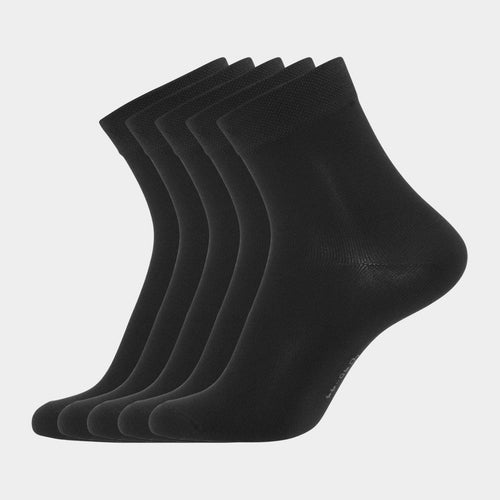
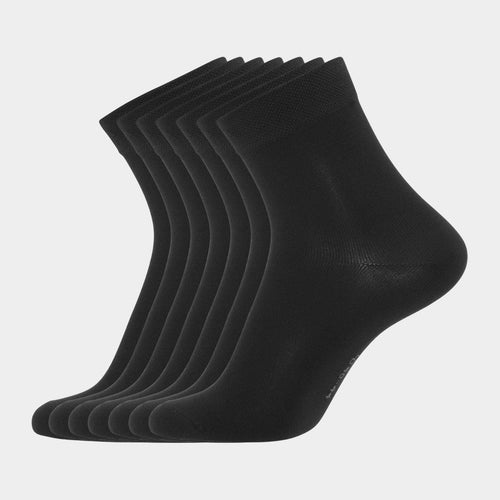
The effect is clearest in socks, because feet sweat in closed shoes all day. Socks that let moisture evaporate make a difference for many people. Change socks daily and let your shoes dry between wears. See bamboo socks for sweaty and smelly feet.
Washing still matters
Even clothes that smell later need regular washing. Wash at 40 degrees with a mild detergent and skip fabric softener, because it leaves a film on the fibres and makes them worse at absorbing moisture. Let the clothes air dry so they keep their shape.
If you have skin problems
If you have recurring problems with skin, feet or odour, choosing clothes is not the whole answer. Bamboo clothing is not a treatment and cannot replace advice from a professional. Talk to your doctor if you are unsure or if the problem does not go away.
In short
Bamboo viscose is not antibacterial in the strict sense, but it handles moisture well. That is why many people notice less odour. Read descriptions with calm scepticism and check whether an effect comes from the fibre itself or from an added treatment.
Frequently asked questions
Is bamboo clothing antibacterial?
Not in the strict sense. The substances in the plant do not necessarily carry into the finished viscose fibre. What you notice is moisture moving away from the skin, so odour builds up more slowly.
Why do bamboo socks smell less?
Many people notice this because the fabric lets moisture evaporate, and bacteria do less well without moisture. The effect varies, and socks still need changing and washing regularly.
Is silver treated clothing the same?
No. Silver is an added treatment that should be stated on the garment. It has nothing to do with the fibre's own qualities, and untreated bamboo viscose contains no silver.
See our range of Copenhagen Bamboo.