Are Viscose and Bamboo the Same Thing?
Short answer: No, but they are connected. Bamboo is the plant, viscose is the process. Most clothing sold as bamboo clothing is bamboo viscose, that is, viscose made from cellulose from bamboo. That is why both words can appear on the same label without contradicting each other.
Bamboo is the raw material
Bamboo is a plant, more precisely a grass, that grows quickly and can be harvested without digging up the roots. The stems contain cellulose, and it is that cellulose which becomes fibre, not the plant itself.
Viscose is the process
Viscose is a way of making fibre. The cellulose is dissolved chemically and pressed through fine nozzles, where it sets into long threads. The process works on bamboo, on wood and on cotton waste, and the result is called viscose in all three cases.
Hence bamboo viscose
The combination bamboo viscose simply means viscose made from bamboo. Some brands write only bamboo, some write viscose, and some write both. It is the same fabric, but the full term is the one that tells the whole story.
What is not bamboo viscose
There is fabric made from bamboo fibres extracted mechanically. It is called bamboo linen, is coarser and is almost never used for clothing next to the skin. If a soft garment says bamboo, it is viscose and not bamboo linen.
Why it is worth knowing
Because it decides how the garment is washed. Viscose weakens when wet and takes neither boil washes nor hot tumble drying. That applies to all viscose, whether the raw material was bamboo, wood or something else entirely.
How it feels
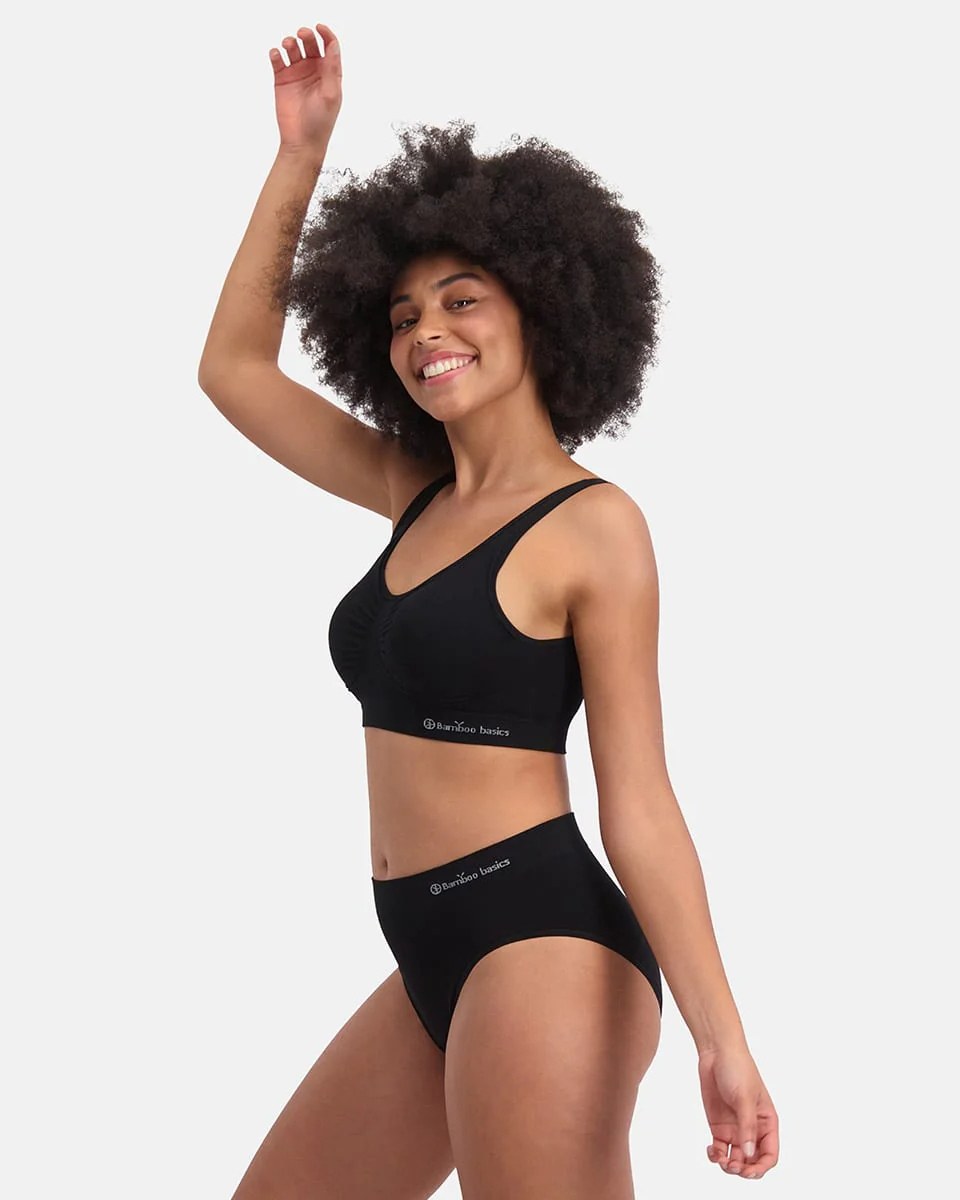
Bamboo viscose has a smoother fibre surface than cotton, and that registers as softness. See bamboo underwear for women and bamboo underwear for men, where the difference from cotton shows most clearly against the skin.
In socks too
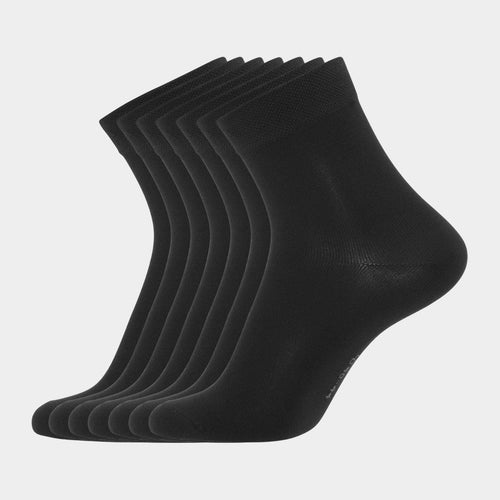
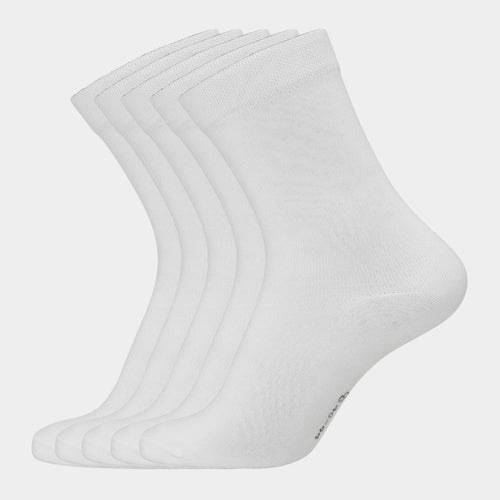
The same applies in socks, where the fabric sits close and is worn for many hours. See bamboo socks for men, where the smooth fibre matters most, because moisture has to leave the foot across the day.
What the label says
A care label usually says viscose from bamboo or simply viscose, because that is the formal term. If only bamboo appears on the front of the packaging, that is marketing, and the actual content is on the label inside.
The other names for the same thing
Besides viscose and bamboo viscose you meet the words rayon, modal and lyocell. All four are cellulose fibres, and the difference lies in how the cellulose was dissolved. That is why the same fabric can have several names from shop to shop.
The share matters most
A garment can contain twenty or ninety per cent bamboo viscose. The share decides how it feels and behaves, and it is always on the label. That is the number to look at, rather than the word on the front. See also bamboo lyocell vs. bamboo rayon and the guide to bamboo viscose and the environment.
Frequently asked questions
Are bamboo and viscose the same?
No. Bamboo is the plant, viscose is the process. Bamboo viscose is viscose made from the cellulose of the bamboo plant.
Why does my bamboo clothing say viscose?
Because viscose is the formal term for the fibre. Bamboo is the raw material, and both words describe the same fabric.
Is there bamboo fabric that is not viscose?
Yes, bamboo linen, where the fibres are extracted mechanically. It is coarser and almost never used for clothing next to the skin.
You can find the full range at Bamboo-Clothing.com.