Bamboo clothing for warm offices and what helps
Short answer: In a warm office, the layer closest to your skin decides whether you sweat through. An outer layer cannot make up for a dense inner layer, so start with what sits closest to you and build outwards from there.
The inner layer first
If the undershirt or top is made of dense synthetic fabric, moisture stops there. Everything on top becomes damp, whatever the quality. An inner layer of bamboo viscose absorbs moisture and spreads it out so it can evaporate through the next layers. This is the first thing to change. See bamboo undershirts for men.
Why offices get warm
Many offices are warm for several reasons at once: screens, people close together, sun through large windows and ventilation that cannot keep up. The temperature can also swing a lot during the day. That is why it makes sense to dress for the warmest hours and keep a layer you can remove in the morning.
Layers you can take off
When the temperature changes, a zip sweater is worth more than a thinner sweater. You can open it when the meeting room gets warm and close it when you sit by a cold window. A sweater that goes over your head often stays on too long because it is a hassle to remove. See sweatwear.
Colour hides a lot
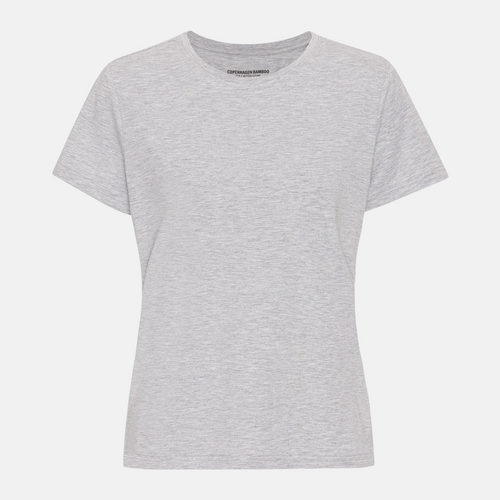
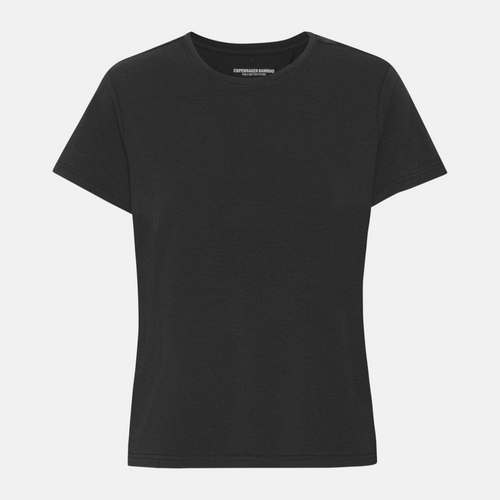
Navy and black hide sweat marks best. Light grey shows them most clearly of all colours, because moisture makes the fabric much darker. If you know you sweat easily, choose dark colours for office days and save the light ones for weekends. White can also be a better choice than light grey. See bamboo T-shirts for men.
A spare in the drawer
An extra T-shirt at work covers the days when it gets too much, such as after a bike ride in the sun or a long meeting in a small room. Keep it in a bag in your desk drawer and replace it once used. That way you are never stuck in a damp top. See bamboo T-shirts for women.
Fit matters
A loose T-shirt lets air circulate between fabric and skin, while a very tight model keeps heat closer to the body. In a warm office, a relaxed fit is often the most comfortable. The undershirt, however, should fit closely so it can take moisture straight from the skin and does not crease under the shirt.
Thickness is not everything
Thinner clothing is not automatically better. A thin fabric that does not move moisture quickly feels clammy, while a slightly thicker fabric that absorbs moisture can feel drier for longer. The material makes the biggest difference, not the thickness. So think about the fibres first and the weight second when you choose office wear.
Wash without fabric softener
Fabric softener leaves a film on the fibres and cancels exactly the moisture transport you need on a warm day. Wash at 40 degrees with a mild detergent and no softener. Air dry or use low heat in the dryer so the fibres keep their ability to absorb moisture. See washing and care.
Small habits at your desk
Beyond clothing, it helps to drink water regularly, stand up a few times an hour and sit where the sun does not hit you directly. A small desk fan can also make a difference. Clothing does not solve everything, but the right inner layer makes the other measures work better through a long working day.
Frequently asked questions
What helps most in a warm office?
The layer closest to the skin. An outer layer cannot make up for a dense inner layer, so start with an undershirt or top in a material that absorbs moisture and lets it evaporate.
Which colour hides sweat marks best?
Navy and black hide sweat marks best. Light grey shows them most clearly because moisture makes the fabric darker, so save light colours for days without warm meetings.
Is thinner clothing always better?
No. A material that moves moisture matters more than thickness. A thin fabric that does not absorb moisture can feel clammier than a slightly thicker fabric made of bamboo.
You can find the full range at Bamboo-Clothing.com.