Bamboo versus synthetic sports fabrics in practice
Short answer: Synthetic sports fabrics dry faster and hold their shape better, while bamboo viscose feels softer and takes longer to smell. The choice depends on how hard you train and what matters most to you.
Drying time
Polyester moves water along the surface and dries quickly, because the fibre absorbs almost nothing. Bamboo viscose takes moisture into the fibre and dries more slowly. On a long run in the rain, quick drying is an advantage. For an hour at the gym it matters less, since you change afterwards anyway.
Odour
Synthetic fabrics hold on to odour, because bacteria and oils from sweat cling to the surface. Natural and plant based fibres usually smell later. That is one reason many prefer viscose for clothes and socks. Read about what is myth in odour-free socks.
Shape retention
For hard training, technical fabrics hold their shape better. They are built to stretch and spring back, even when wet. Bamboo viscose stretches more and can give a little over a long session. That is why viscose training wear often contains elastane, so it keeps its fit.
Comfort
Against the skin, bamboo viscose feels softer and less synthetic. That is why many use it for strength training, yoga and calm sessions, where you do not sweat heavily but comfort matters throughout. It also feels pleasant if you go straight from training to other errands.
What to choose
For running and hard cardio, technical fabric is often best, because it dries fast and holds its shape. For everything else, comfort often matters more. Many end up with a mix in the wardrobe. See bamboo training wear for women for pieces for strength, yoga and calm training.
The socks
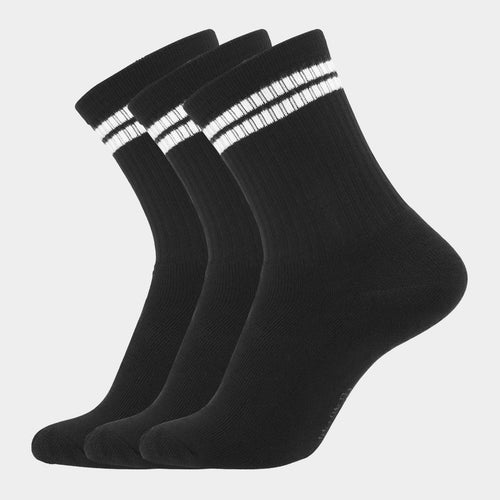
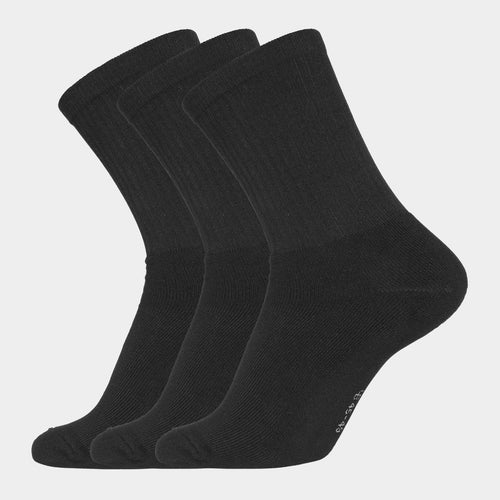
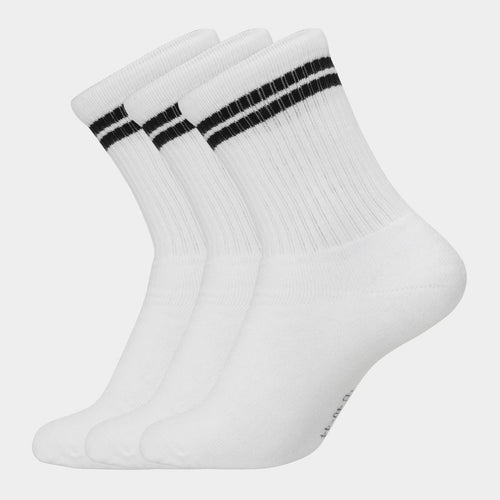
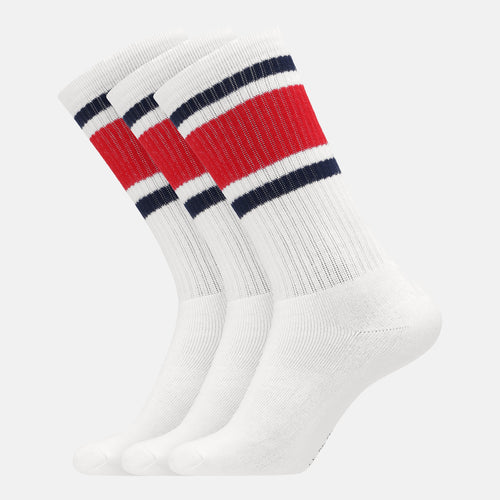
For socks, bamboo viscose wins for many, because odour matters more than drying time. Socks sit in closed shoes where moisture cannot escape, and here it helps that the fibre absorbs it. For tennis, padel and walks it is a good choice. See bamboo tennis socks for men.
Washing after training
Training wear should be washed soon after use, so sweat does not settle. Synthetics handle frequent washing but hold odour if left in the bag. Viscose is washed at 30 or 40 degrees without softener. Hang the clothes up straight away if you cannot wash them at once.
Layering
Many combine the two materials. A thin layer of bamboo viscose next to the skin gives comfort, while a technical layer on top protects against wind and rain. That gives you the best of both, especially for outdoor training in winter, when you both sweat and get cold on the same outing.
Durability in use
Synthetic fabrics often handle more abrasion, for example from backpacks and equipment. Viscose is softer and can pill where there is a lot of rubbing. Wash viscose inside out and avoid the tumble dryer. With the right care both materials can last many seasons, but each needs its own treatment.
See also
If you want to go deeper into the differences at fibre level and when one material makes more sense than the other, read on in bamboo versus technical sports fabric. There we compare the two types of fabric in more detail.
Frequently asked questions
Is bamboo good for training?
For calm training and strength work, yes, because it feels soft and smells later. For hard cardio where you sweat a lot, a technical fabric is often the better choice.
Why does my synthetic training wear smell?
Because bacteria and oils from sweat cling to the surface of synthetic fibres. Wash the clothes soon after training and do not leave them damp in your bag.
Can I combine bamboo and technical fabric?
Yes. Many wear a thin layer of bamboo viscose next to the skin for comfort and a technical layer on top against wind and rain, especially outdoors.
You can find the full range at Bamboo-Clothing.com.