Bamboo viscose versus modal
Short answer: The two fibers are close relatives and behave almost the same. Modal is a bit stronger when wet, bamboo viscose is a bit softer and cooler.
Same family
Modal and bamboo viscose are both regenerated cellulose fibers, where wood pulp or bamboo is dissolved chemically and spun into new threads. Modal is usually made from beech wood through a process that gives a stronger and more even yarn. Bamboo viscose follows a similar process, but the raw material is bamboo, and the result is a slightly softer and cooler fiber.
Strength and durability
Modal holds its shape better after many washes because the fiber is stronger when wet. Bamboo viscose is softer in structure and loses a bit more strength in water, so it should be treated gently in the machine. For an overview of both fibers, see bamboo clothing for women.
How it feels against the skin
Bamboo viscose often feels a touch cooler and softer against the skin than modal, because the fiber surface is smoother. Modal is soft too, but with slightly more firmness to the touch. The difference is small and shows up most in clothing worn close to the body all day, like bamboo underwear for women.
Shape and shrinkage
Modal shrinks less than bamboo viscose and keeps its shape through many washes, which makes it popular for knitwear meant to fit snugly. Bamboo viscose can give a little in high heat, but holds its shape well when washed normally at thirty degrees. Both fibers drape soft and heavy, without the stiffness you get from cotton.
What the label tells you
If the label lists modal and viscose together, it is usually a blend of two related fibers rather than an attempt to mislead. If it only says viscose with no further detail, that tells you nothing about the raw material, since both beech wood and bamboo end up as viscose through the same chemical process. Check the label closely.
Care and washing
Both fibers wash best at thirty degrees without fabric softener, which leaves a film that reduces the natural moisture transport. Avoid high spin speeds and never wring the fabric hard, since both fibers are weakest when wet. Hang the garments to dry instead of using a tumble dryer on high heat.
Price and range
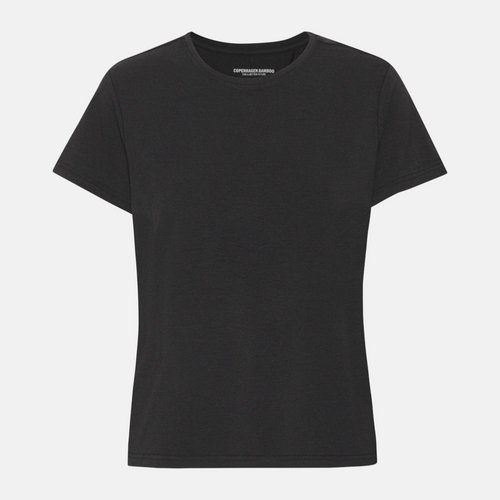
Bamboo viscose is usually cheaper to produce than modal, because the process is less specialized and the raw material is widely available. That shows up in the price of finished garments, where pure bamboo viscose often costs less than comparable modal. See bamboo t shirt for women for examples of pricing in practice.
Blended fabrics
Many fabrics blend modal and bamboo viscose on purpose to combine the best of both, such as extra strength and a softer surface. The blend often gives a more stable shape than pure bamboo viscose alone, while keeping some of the cooling feel. Read the care label to see the exact ratio between the two fibers used.
Which one to choose
Choose modal if you want a stable shape that holds up through many washes, especially in knitwear and pants meant to fit snugly. Choose bamboo viscose if you want the coolest feel against the skin and a soft drape in the fabric. Most people get the best of both in a good blend of the two fibers.
Frequently asked questions
Is modal stronger than bamboo viscose
Yes, especially when wet, where modal keeps more of its strength. The difference shows up most in clothing that gets washed often and worn close to the body every day.
Can you see the difference with the naked eye
Rarely. Both fibers are smooth and have nearly the same sheen in the fabric, so you usually need to read the care label to be sure which fiber you have.
Which one is cooler
Bamboo viscose feels cooler for most people, because the fiber conducts heat away slightly better. Modal insulates a bit more and therefore feels somewhat warmer by comparison in daily wear.
You can find the full range at Bamboo-Clothing.com.