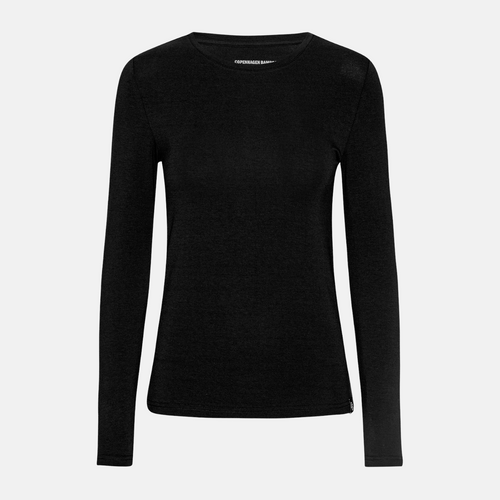
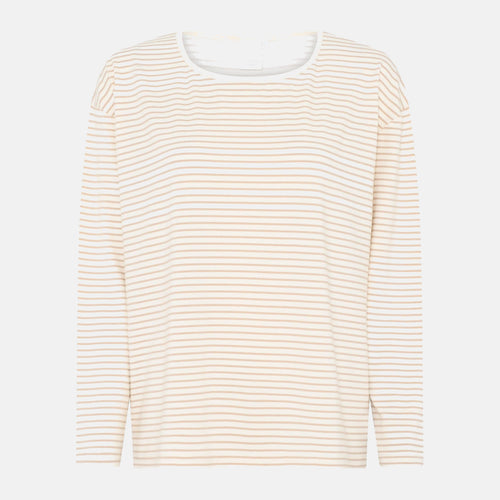
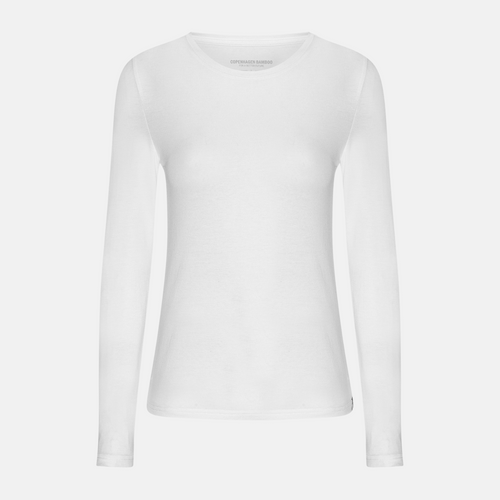
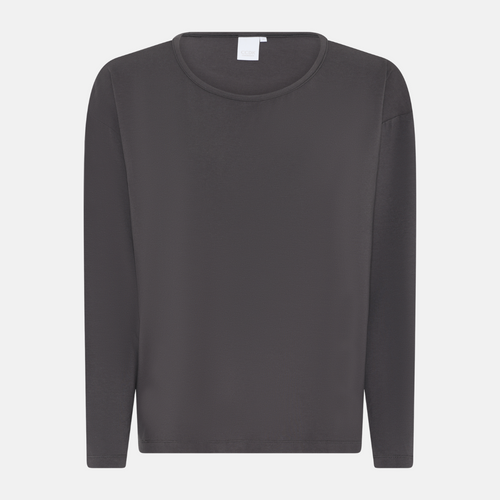
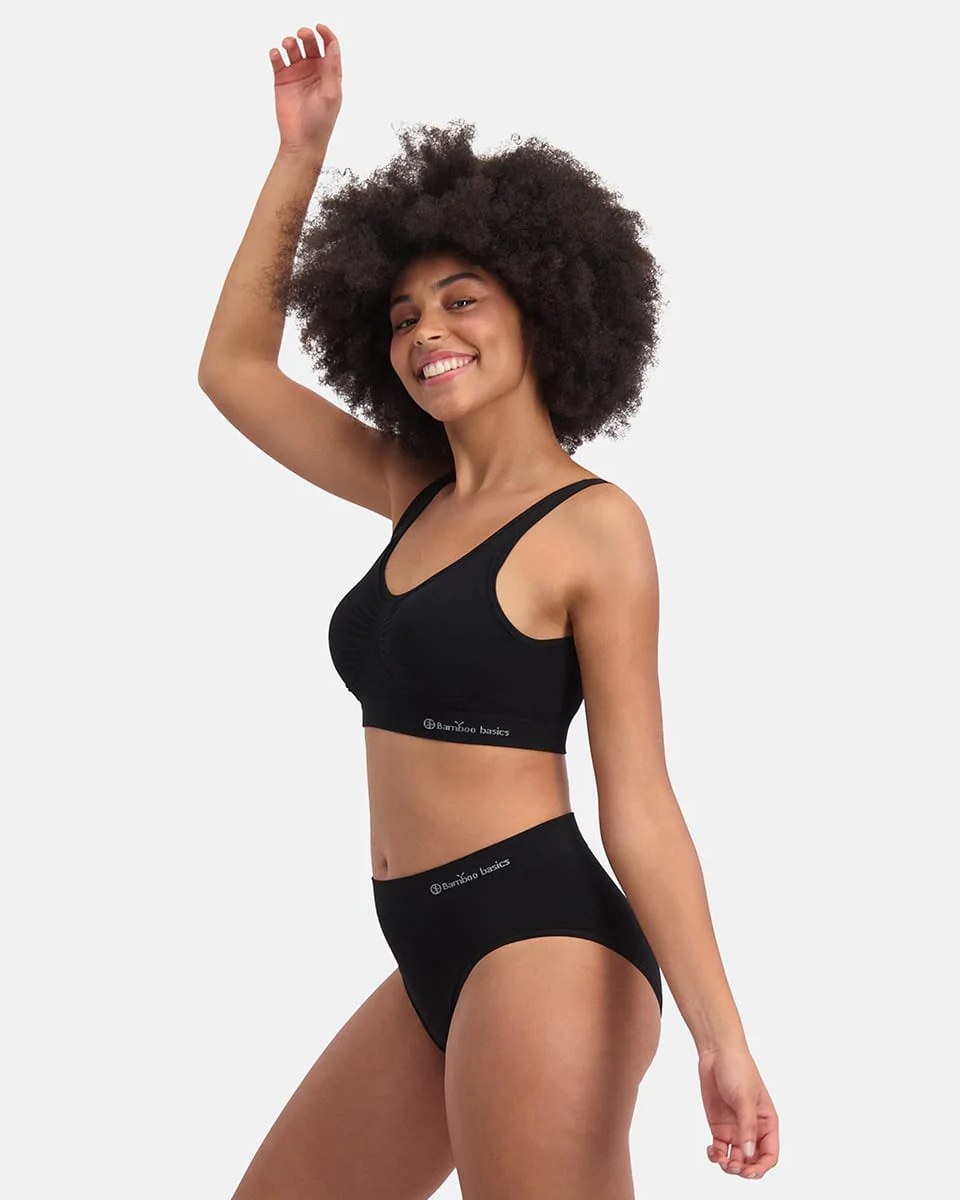
Binding against rib edge
Short answer: A binding is a narrow strip of fabric laid around the edge, while a rib edge is a knitted band that pulls itself together. The binding lies flat, the rib tightens. The two solutions each have their own job, and the choice decides how the edge sits and feels.
Two different jobs
Binding is used where the edge should lie still and neat, for example in the neckline of a top. Rib edge is used where the edge should hold on to the body. One is a finish that tidies and protects, the other an edge that works actively and keeps the garment in place while you move.
How a binding is built
A binding is a narrow strip of fabric laid around the raw edge and sewn down, so the edge does not fray. It can be folded once or twice and sewn in a single line. Because it has no stretch of its own, it follows the shape of the fabric and lies flat against the skin or the garment.
How a rib edge is built
A rib edge is a knitted band with rows of vertical ribs that pull together like an accordion. It is sewn on shorter than the opening and stretched slightly while sewing. Afterwards it pulls back and forms the typical elastic edge that holds around the neck, sleeves or waist.
Thickness and comfort
A binding can be made very narrow and adds almost nothing. A rib edge is thicker, but it can be stretched over the head and return again. That makes it practical at a neckline, where the head has to pass through. On the other hand it can be felt more than a flat band. See bamboo sweatpants for women.
What you see in practice
Thin tops and underwear mostly have binding, while T-shirts and sweatshirts have a rib edge at the neck. That suits the job of the two garments: fine underwear should lie almost unseen, and a T-shirt must be pulled over the head several times a day. See women's long sleeved bamboo t-shirt and period underwear.
Which edge lasts longest
The rib edge usually lasts longest if it is sewn correctly, because it can stretch and return without losing its shape. A narrow binding is more exposed, because it has no stretch and can be pulled too hard. Durability always depends on how the edge is sewn and how the garment is used.
Can one replace the other
Only if the stretch of the fabric matches. A rib edge on a stiff edge will ripple, because it pulls together while the edge beneath it does not. Conversely, a binding on an opening that has to stretch will block the movement and risk splitting. That is why the edge is chosen to suit the fabric and the garment.
Why a binding can feel tight
A binding can sometimes feel tight, because the band does not stretch and the edge therefore has a fixed length. If the opening is a little too small, you notice at once. A rib edge gives more room, because it moves with you and returns to its shape afterwards.
How to choose the right one
Look at what the edge has to do. If it should lie flat and almost unseen, a binding suits. If it should hold on to the body or stretch over the head, a rib edge suits better. Neither is better than the other, and what matters is that the choice fits the garment in front of you.
Frequently asked questions
Which edge lasts longest?
The rib edge, if it is sewn correctly, because it can stretch and return. A narrow binding is more exposed, since it has no stretch of its own.
Can one replace the other?
Only if the stretch of the fabric matches. A rib edge on a stiff edge will ripple, and a binding on an opening that has to stretch can block movement.
Why does a binding sometimes feel tight?
Because the band does not stretch and the edge therefore has a fixed length. If the opening is a little too small, you notice at once against the skin.
You can find the full range at Bamboo-Clothing.com.