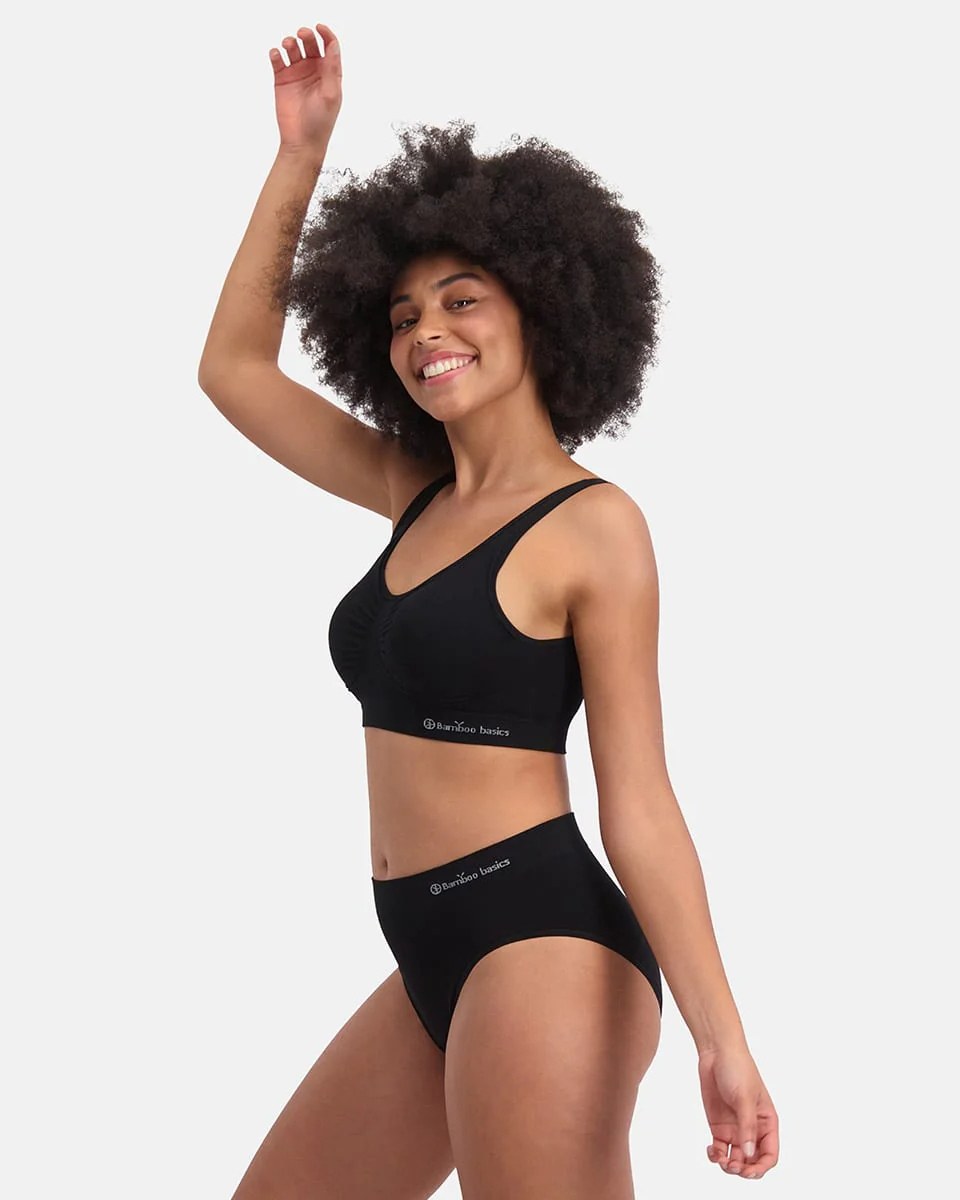
Cellulose, dissolving and spinning behind women's briefs
Short answer: Viscose from bamboo is made from the plant's cellulose, which is dissolved and pressed through fine nozzles into threads. The threads are spun into yarn and knitted into fabric. Here you get the steps one by one and what they mean for women's briefs.
From bamboo to cellulose
First the bamboo is chopped up and turned into a pulp, from which the cellulose is separated, the fibrous part of the plant. Cellulose is the basis of viscose. Bamboo in clothing is therefore not raw bamboo but a processed fabric made from the plant, and on a label you should read it as viscose.
The cellulose is dissolved
The cellulose is dissolved in a liquid so that it becomes a thick, syrupy mass. The method varies between producers, and the details depend on how the fabric is made. You cannot read the method off the finished garment, so the label and your own experience with the fabric are what you can go by.
The threads are spun
The mass is pressed through very fine nozzles and sets into thin threads called fibres. This is called spinning, and it is where viscose takes its form. The fibres are gathered and twisted into yarn. To see how it ends up as finished clothing, look at bamboo underwear for women, where the yarn is knitted into briefs and other underwear.
From yarn to knitted fabric
The yarn is knitted on machines into an elastic jersey fabric. A little elastane is often blended in so the fabric stretches and returns to shape. How much is in it is stated on the label of each garment, so check it if you want to know. The knitting decides how dense or thin the fabric becomes.
Why the label says viscose
On the label the fibre is often named as viscose, even when it is made from bamboo. That is why you may see both words for the same garment. It is the same fabric described in two ways, so neither word is wrong. Bamboo tells you the raw material, and viscose tells you how the fibre was made.
What it means for the briefs
Once the briefs are cut and sewn from the fabric, the cut, seams and elastic decide the comfort together with the fibre. Many people find viscose feels smooth and soft against the skin. That is personal, though, so try one pair before buying more and notice whether they sit well after a whole day.
Fit and the other layers
If you want a layer that works together, compare with bamboo tights for women in winter and a women's long-sleeved bamboo T-shirt on top. Choose the size by the chart, and let the elastic lie softly without cutting in or leaving marks at the waist or legs.
Washing so the briefs keep their shape
Follow the care label and avoid high heat, and the briefs keep their shape for longer. Wash them with clothes of similar colour and fabric, and use a mild detergent. Let them dry flat or in the shade, which protects the elastic in the waistband, and the leg edge stays where it should after many washes.
Frequently asked questions
Is bamboo viscose the same as bamboo?
Almost, because bamboo in clothing is viscose made from bamboo. The plant is the raw material, but the fabric has been processed into fibres, so it is not the same as a raw bamboo stalk.
Why does the label say viscose?
The label gives the name of the fibre, and fabric made from spun cellulose is called viscose. The product description may say bamboo to name the raw material, so both words can be right for one garment.
Can I see on the briefs how the fabric was made?
No, you cannot read the method off the finished garment. The label lists fibres and percentages, and the fabric itself tells you how it sits and feels on the body.