Why the wrong hangers ruin the shoulders of your clothes
Short answer: Thin hangers create bumps in the shoulders, because all the weight is concentrated on two points. Use wide hangers for heavy clothes, and lay knitwear and wet items flat to dry.
Bumps in the shoulders
A narrow metal hanger pushes the fabric out into two sharp points at the shoulders. If the garment hangs there for long, the fibres shape themselves to the hanger. The damage becomes permanent when the garment dries in that shape, because the fibres set as they lose moisture. The result is two small bumps sticking up.
Wet clothes are heaviest
The weight of the water pulls the shoulders down and out. A wet hoodie can weigh several times as much as a dry one, and all that weight rests on the two ends of the hanger. That is why wet clothes should never go on a thin hanger. Soft materials like bamboo viscose give way particularly easily.
Lay knitwear flat
Knitted and heavy items are laid flat to dry on a rack, a towel or a clean surface. The weight is then spread evenly and the garment keeps its shape. Gently pull seams and edges into the right form. More on the same principle in how your t-shirts keep their shape.
Wide hangers for shirts
A wide hanger with rounded ends spreads the weight across the whole shoulder instead of two points. This applies both when the shirt dries and when it hangs in the wardrobe. Choose a hanger that matches the width of the shirt, so the ends do not poke into the sleeves. See bamboo shirt for men.
Hoodies and robes
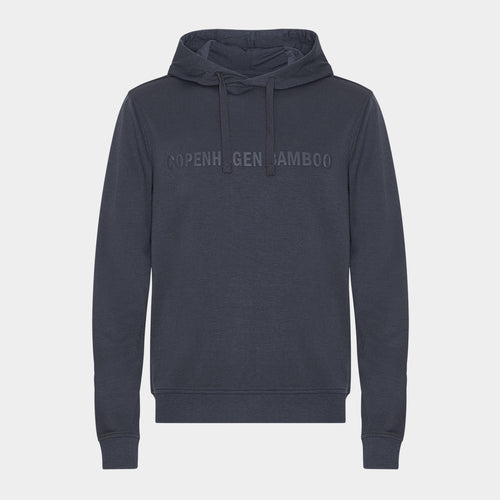
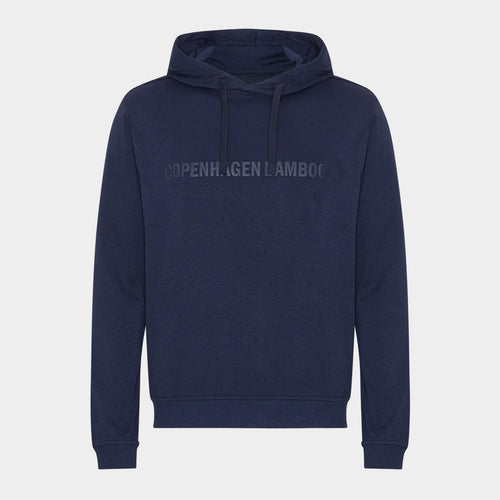
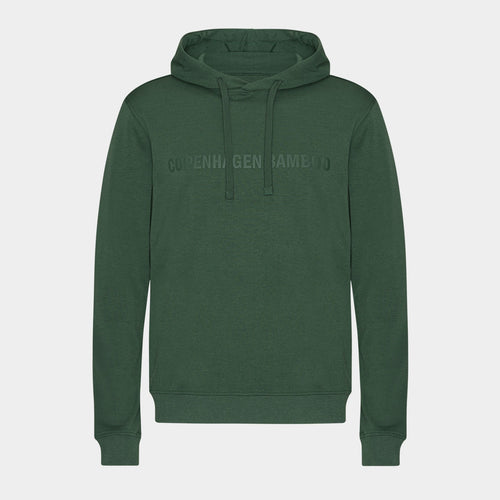
A hood and belt make the garment heavy when wet, and the weight pulls at the neck and shoulders. Hang it on a wide hanger with the hood pulled out over the back, or lay it flat. Close the zip so the front hangs straight. See bamboo hoodie for men for this kind of item.
The wardrobe
If the wardrobe is packed, the shoulders get squashed anyway, even on the right hangers. Clothes are pressed together and get creases and marks that are hard to remove. Leave a little space between hangers, and fold knitwear and sweatshirts on a shelf instead. See storing bamboo clothing.
Wood, plastic or felt
Hangers in wood or sturdy plastic with broad shoulders suit shirts and jackets. Hangers with felt or a soft surface keep thin tops in place so they do not slip off. Use the thin metal hangers from the dry cleaner only briefly. They are made for transport, not for storage.
T-shirts on hangers
A t-shirt can hang on a hanger in the wardrobe if the hanger is wide enough. Insert the hanger from the bottom rather than through the neck, so the neckline is not stretched. For drying, you can also hang the t-shirt over the line at the middle. Then the shoulders carry no weight.
If the damage is done
Shoulder bumps can rarely be removed completely. Steam can help a little, and so can washing the garment again and letting it dry flat. Gently press the bumps down while the fabric is wet. The best advice is to prevent them by choosing the right hanger from the start.
General washing
Shape also depends on the wash. For bamboo viscose that means 40 degrees, a gentle programme, moderate spin and no tumble dryer. Avoid wringing, and take the clothes out of the machine straight away. The rest of the rules are collected in the washing guide.
Frequently asked questions
Can shoulder bumps be removed?
Rarely completely. Steam can help a little, and a new wash with flat drying can reduce them. The best approach is prevention with wide hangers and flat drying of heavy items.
Which hanger is best for shirts?
A wide hanger in wood or sturdy plastic with rounded ends. It spreads the weight over the whole shoulder and keeps the shirt in shape, both when drying and in the wardrobe.
Can I hang a wet hoodie on a hanger?
Only on a wide hanger with the hood pulled out. It is best to lay it flat, because it is heavy when wet and the weight will otherwise stretch the shoulders.
You can find the full range at Bamboo-Clothing.com.