How a bra holds moisture under the band
Short answer: Under the band there are several layers of fabric, pressure against the skin and no air movement. Those are the three things needed for moisture to stay put all day. If you understand why it happens, you can choose a bra and a washing routine that make the day more comfortable, without it having to cost more.
The layers sit close
Elastic, lining and edge tape sit on top of each other right under the band. The fabric can hold a lot of water, and there is almost no free surface to evaporate from. The rest of the bra can feel completely dry while a narrow strip of moisture stays under the band with nowhere to go.
Pressure shuts out the air
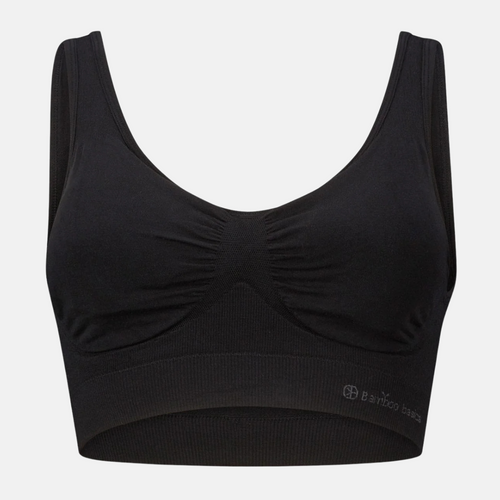
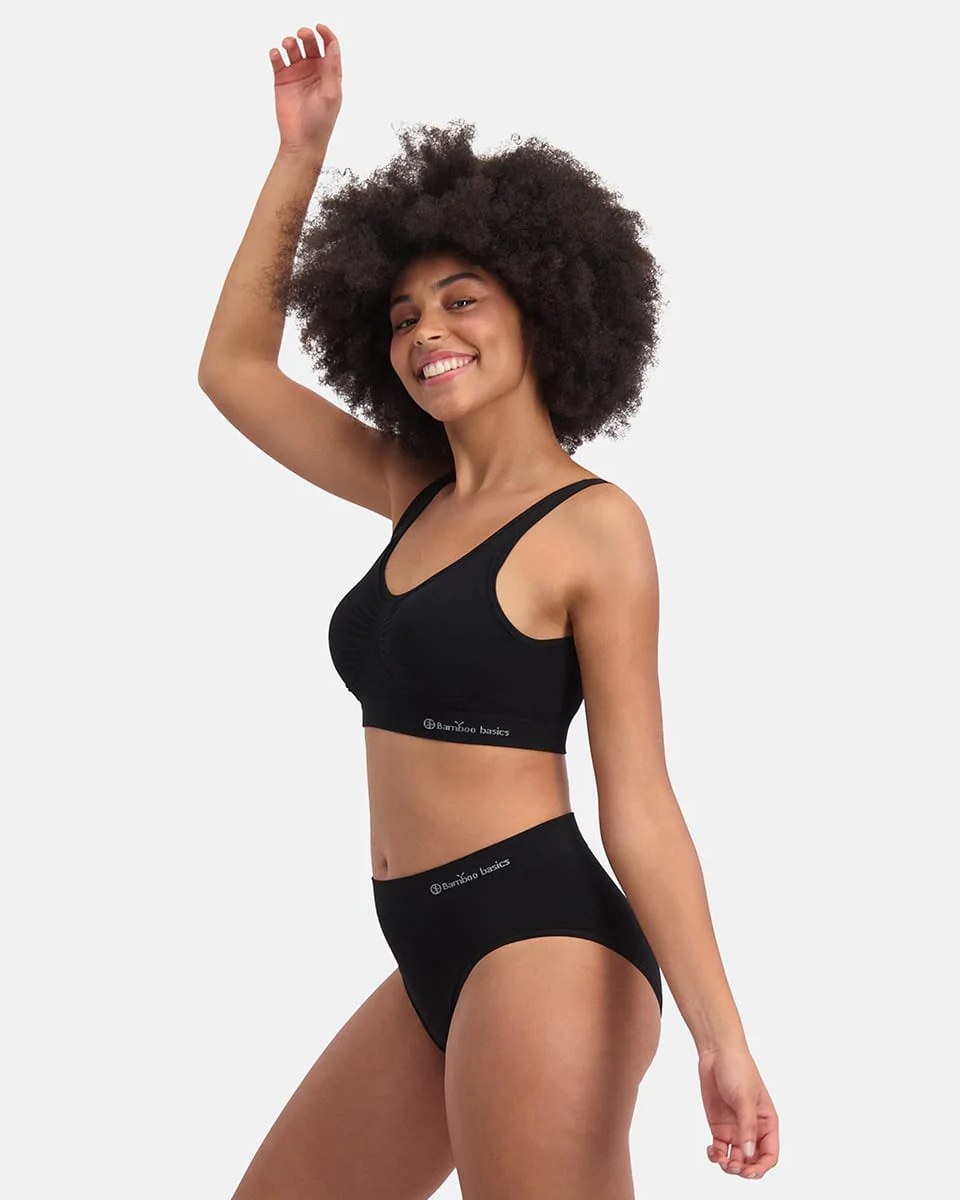
The band has to sit firmly to give support, and that pressure squeezes the air out of the fabric. Without air, sweat cannot evaporate, and it cannot move on to a drier spot either. Support and air pull in opposite directions, a trade-off every bra has to live with. See bamboo bra without underwire.
No air movement under the band
Even under a loose blouse, the air right against the skin under the band stays almost still. There is no draught and no movement that could carry the moisture away. In summer and after active wear this shows most, because the body makes more sweat than the narrow strip can shed during the day.
This is where skin reacts first
Moisture, warmth and friction in the same place can cause redness and itching. It is the most common cause of discomfort under a bra, and it often starts right under the band. If the discomfort lasts, or the skin looks irritated for a long time, talk to your doctor. See all bamboo clothing for women and bamboo panties.
A wider band helps
A wider band spreads the pressure over a larger area, so the fabric is not squeezed quite as hard. That gives moisture more room and lets it move out to the sides more easily. A narrow band digs in and gathers pressure and sweat in one thin line, where the skin has the hardest time.
A thinner material helps
The thinner the material, the less water it can hold and the faster it dries. This goes for the fabric itself and for the lining. A bra with few layers and a soft edge is easier to keep dry than a thick model with foam and several seams, which easily stays damp all afternoon.
Change after exercise
After exercise there is an extra amount of moisture in the fabric, and the band is where it stays. Change into a dry bra as soon as you can, instead of staying in the wet one for hours. Take the wet bra off and let it dry on its own before it is worn again.
How often should a bra be washed
After wearing it with sweat, it should be washed. Otherwise you can usually wear it two or three times before it goes in the laundry, as long as it can dry in between. Wash it according to the care label and use a wash bag, so straps and hooks do not catch on other clothes.
Dry it between wears
It helps to let the bra dry between wears. Hang it freely with the band open, so air reaches every layer, and let it dry completely before it is worn again. With two or three bras in rotation they also last longer, because the elastic gets time to recover.
Frequently asked questions
What helps most
A wider band, a thinner material and changing into a dry bra after exercise. Combine the three and you usually notice a difference after only a few days.
Should a bra be washed after every wear
After wearing it with sweat, yes, otherwise after two or three wears. Let it dry fully in between and wash it by the care label, so the elastic lasts longer.
Does it help to dry it between wears
Yes. Hang it freely and let it dry completely before it is worn again. That gives the moisture in the band a chance to disappear, and the elastic keeps its shape longer.
You can find the full range at Bamboo-Clothing.com.