Why moisture gathers at the waistband
Short answer: The waistband is denser than the rest of the garment, sits firmly against the skin, and often has an extra layer of fabric. Moisture can neither evaporate nor move on. That is a plain physical explanation and not a sign of poor quality, and it applies to almost any clothing with elastic at the waist.
Three layers instead of one
A waistband usually consists of elastic, fabric and a seam, which means several layers of material are stacked on a narrow strip. There is more material to hold water and less free surface to evaporate from. Sweat therefore stays right here, even when the rest of the garment feels dry and airy.
Pressure closes the fabric
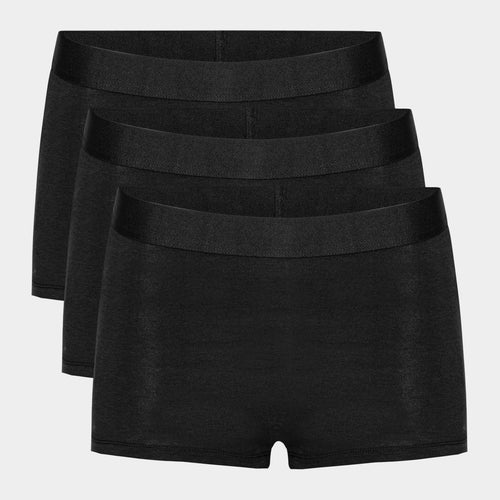
The elastic presses the threads together, and the air between them disappears. Without air, both transport and evaporation stop, because moisture has nowhere to go. That is why the waistband feels different from the fabric on the thigh, even though it is the same yarn. Try bamboo night shorts for women and feel the difference at the edge.
Why the moisture does not move on
Moisture prefers to travel from a damp place to a dry one, but a dense waistband has no dry areas nearby. The fabric on both sides is just as closed as the edge itself. The moisture ends up in a small closed space, where it can only slowly release into the outside air.
Why the edge feels damp late in the day
Sweat from the stomach and hips travels downward and collects in the waistband through the day. After eight or ten hours enough has gathered for the edge to feel clammy, while the rest of the garment still works well. It is the same mechanism as under a bra band. See also bamboo bra without underwire and bamboo underwear for women.
Width and elastic make a difference
A wider waistband spreads the pressure over a larger area, so the fabric is not pressed together quite as hard. That leaves a little air between the threads and lets moisture move more easily. A narrow, hard elastic does the opposite and cuts into the skin, so pressure and moisture gather in the same spot.
Thin fabric helps
The thinner the fabric, the less water it can hold and the faster it dries. This applies to the area around the waistband too. A soft, light fabric with a soft elastic gives a more comfortable day than thick material with a heavy edge, especially if you sit down for most of the day.
Odour starts at the edge
Moisture and warmth sit together for many hours under the waistband, and those are exactly the conditions that let a faint smell develop. That is why many people notice it at the waist before anywhere else. It says nothing about how clean the clothes were when you put them on, only how long the moisture was allowed to stay.
How to look after the waistband
Wash the clothes after wearing them, and let them dry completely before you use them again. Hang them freely so air reaches the waistband from both sides, and avoid folding them damp. A waistband that dries properly between wears keeps its shape and freshness noticeably longer.
Can you avoid it altogether
No, because every waistband collects a little moisture as long as it sits close to the skin. You can still make it noticeably better with a soft elastic, a wide edge and a thin fabric. Choose the right size as well, since a waistband that is too small presses harder and holds more moisture than necessary.
Frequently asked questions
Does a wider waistband help
Yes. It spreads the pressure over a larger area and gives the fabric room to breathe, so moisture moves more easily. You notice it most toward the end of a long day.
Why do waistbands smell first
Because moisture and warmth sit together there for many hours with nowhere to go. Those are the conditions a faint smell needs, and it says nothing about how clean the clothes are.
Can you avoid it altogether
No, but a softer elastic, a wider edge and a thinner fabric make it noticeably better. Choose the right size too, so the waistband does not press more than necessary.
You can find the full range at Bamboo-Clothing.com.