How an elastic returns to its shape
Short answer: The molecule chains in elastane are coiled at rest. When pulled out, they lose their disorder, and when you let go, they seek that state again by themselves. So the fabric returns because the coiled form is the most natural one for the chains, not because something presses them back.
Disorder is the natural state
Long molecules prefer to lie in a random, coiled shape. When stretched, they are forced to lie in parallel, which is a less likely state. The chains want to return to disorder, just as a heap of cables prefers to lie tangled. That urge drives the pull back when you let go.
The stretch orders the chains
When you pull the fabric, the coiled chains straighten and lie more in parallel. That takes force, which is why the fabric feels tight. The further you pull, the more ordered the chains become, and the harder they pull back. That is why elastic feels firmer the more it is stretched.
The pull back is built in
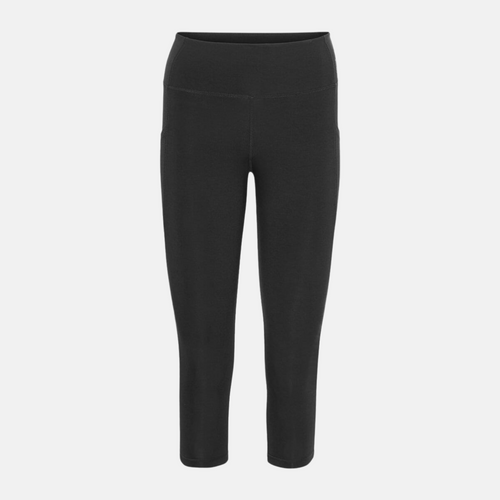
As soon as the force disappears, the chains return to their coiled shape. It is not a spring in the mechanical sense, but the result is the same. The chains use no extra energy to return, as it is simply the state they prefer. So it works fast. See bamboo leggings for women.
Anchor points hold the chains in place
Without anchor points, the chains would slide past each other and never find their way back. The anchor points hold the chains so they can only yield, not move away from each other. They make the thread remember its shape. If the anchor points are sound, the thread returns. If they are damaged, it does not.
Why quick recovery matters more than stretch
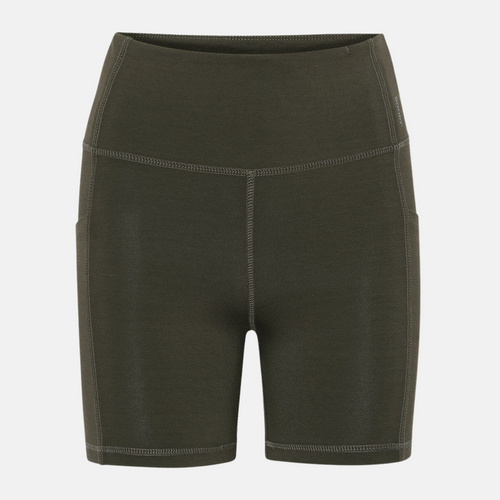
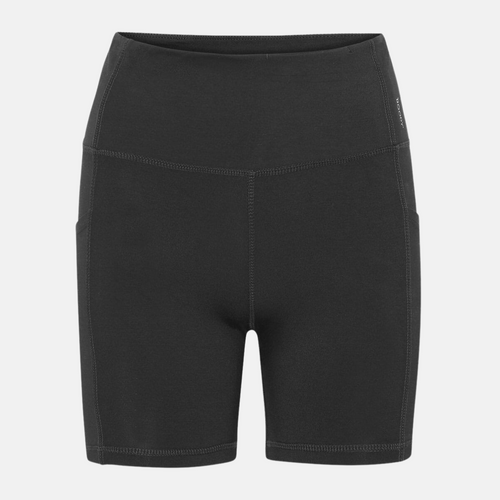
A fabric that stretches far but does not return will bag out within an hour. Recovery decides the fit. A fabric with moderate stretch that returns fully every time sits better all day than one with lots of stretch and slow recovery. See bamboo training pants for women.
How to test the recovery
Stretch a piece of the fabric and let go. If it returns at once, the recovery is good. If a ripple or bulge remains, or it returns only slowly, it is weaker. Test it somewhere like the waistband, as that part works the most and shows problems first.
Why recovery gets worse over time
The anchor points in the molecule chains are broken down by heat and chemistry. Each time clothes are washed hot, tumble dried or exposed to sweat and chlorine, a little of them is lost. The chains lose their hold, and eventually can slide past each other. Then the thread no longer returns fully, and the garment sits looser.
Does rest between wears help
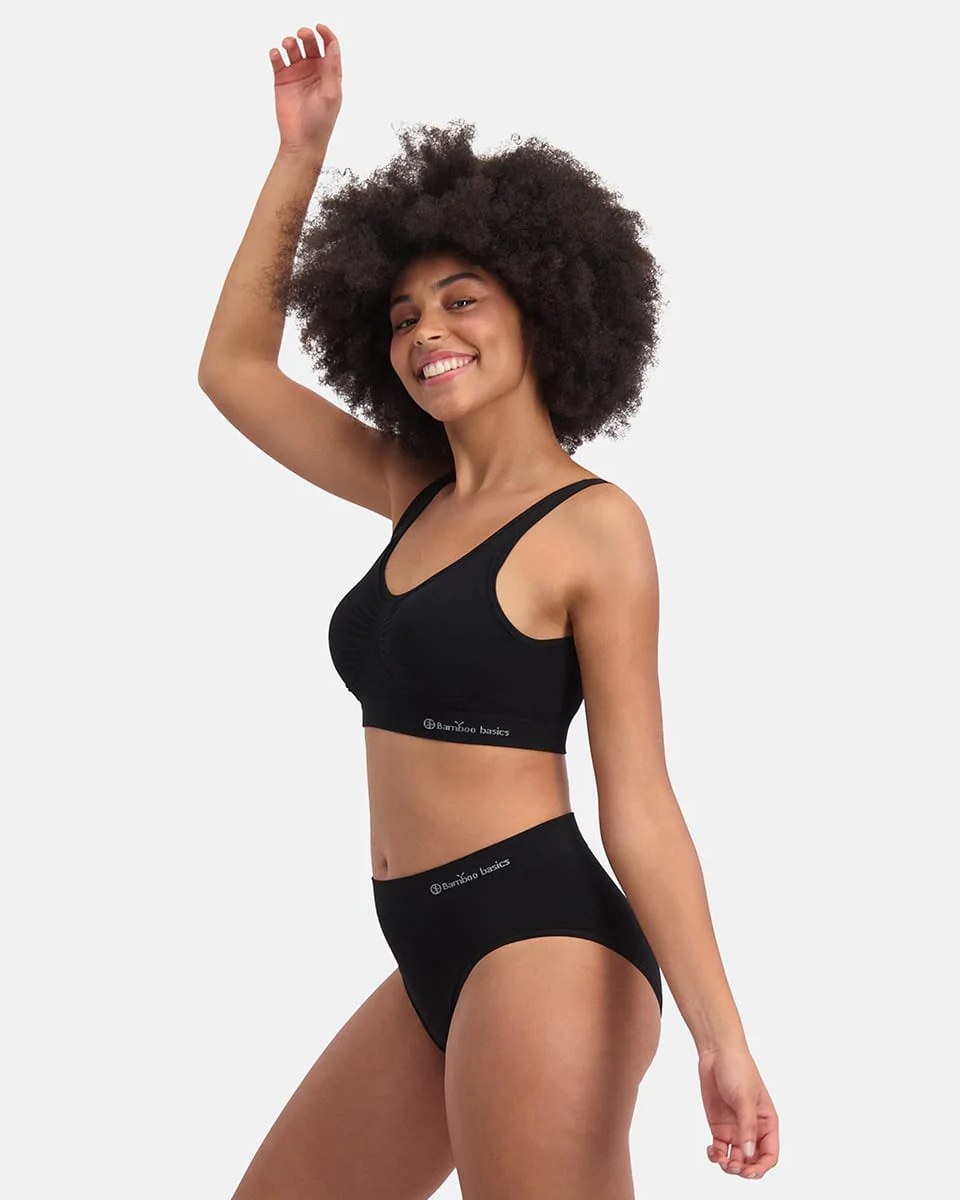
Yes. A day of rest lets the fabric find its shape again. If you wear the same garment day after day, the elastic gets no time to relax and tires sooner. If you own several of the same kind, alternate them. That gives every piece a longer life. See bamboo training clothes for women.
Habits that protect recovery
Wash cool, use a mild detergent and avoid the tumble dryer. Lay the garment flat or hang it to dry, and do not leave it damp beside other clothes. Protect the elastic from chlorine if you wear it in a pool. These habits protect the anchor points, and so the recovery.
Frequently asked questions
Can you tell if a fabric returns
Yes. Stretch a piece and let go. If it returns at once, recovery is good. If ripples remain or it returns slowly, it is weaker.
Why does recovery get worse over time
Because the anchor points in the molecule chains are broken down by heat and chemistry. The chains lose their hold and do not fully return, so the garment sits looser.
Does rest between wears help
Yes. A day of rest lets the fabric find its shape again. If you own several of the same kind, alternate them so each gets time to relax.
You can find the full range at Bamboo-Clothing.com.