How bamboo becomes viscose
Short answer: The bamboo is chopped, dissolved into a thick mass and pressed through fine nozzles into long threads. It is a chemical process rather than a mechanical one, where the fibre itself is formed entirely anew along the way.
From plant to cellulose
The bamboo stalks are chopped and boiled, so that everything except the cellulose itself is removed from the plant material during the process. What remains is a pure cellulose mass resembling thick cardboard in consistency. That is the same starting point as viscose made from wood, only with bamboo instead of spruce or beech as the raw material.
From mass to thread
The cellulose is dissolved with chemicals into a syrupy, thick liquid ready for spinning. The liquid is pressed through a nozzle with thousands of microscopic holes into a bath, where the threads solidify instantly into fine fibres. The threads are then washed, stretched and dried before being spun further into yarn ready for weaving or knitting.
Why it is called regenerated
The fibre is neither pure synthetic plastic nor completely untouched nature in its final form. The cellulose originally comes from a plant, but it is fully dissolved and then formed anew into a completely different structure. That is why it is called regenerated cellulose, unlike natural fibres such as cotton or linen, which stay unchanged.
Where the bamboo comes from
Most bamboo for viscose is grown in Asia, where the plant grows quickly without needing irrigation or pesticides in the actual cultivation. Bamboo is a grass rather than a tree, so it can be harvested again and again from the same root without needing to be replanted after each harvest.
The difference between fibre and viscose
Untreated bamboo fibre also exists, but it is coarse and stiff and is rarely used for clothing, because it scratches against the skin. Bamboo viscose, on the other hand, is soft and smooth, precisely because the chemical process breaks the fibre down completely and rebuilds it as a fine, even thread suited to textiles.
Chemistry in the finished fabric
The fibre is washed thoroughly after manufacturing to remove residues of the chemicals used in the dissolving process. A certification such as OEKO-TEX certified products tests the finished fabric for harmful substances and gives independent confirmation that the limits are met in the clothing you end up wearing.
Properties that follow from the process
Because the cellulose is formed entirely anew as a fine, even thread, bamboo viscose gains a natural ability to absorb moisture and release it quickly back into the air. The same process also gives the fabric its soft drape and smooth surface, which stands out clearly from the coarser feel found in untreated bamboo fibre.
Where the process shows up in clothing
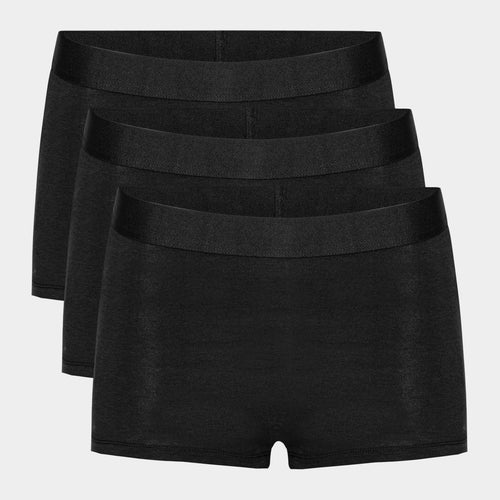
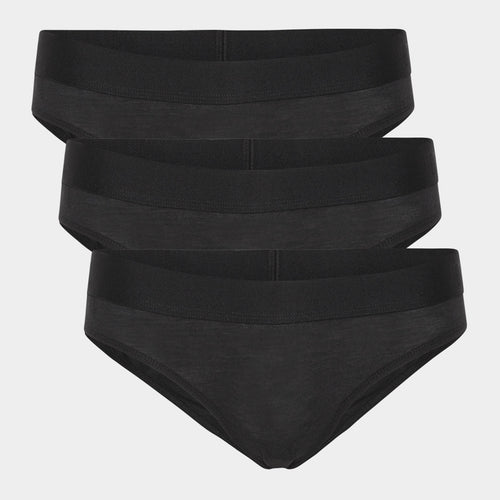
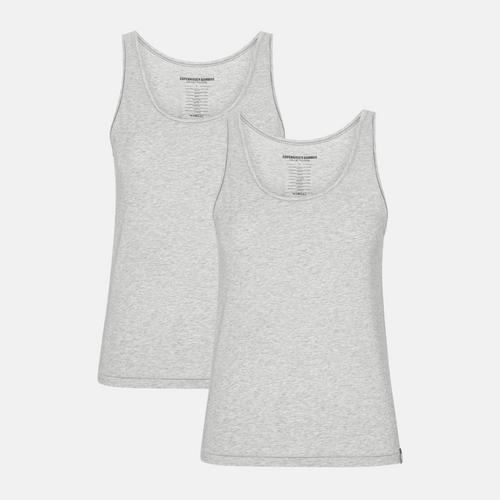
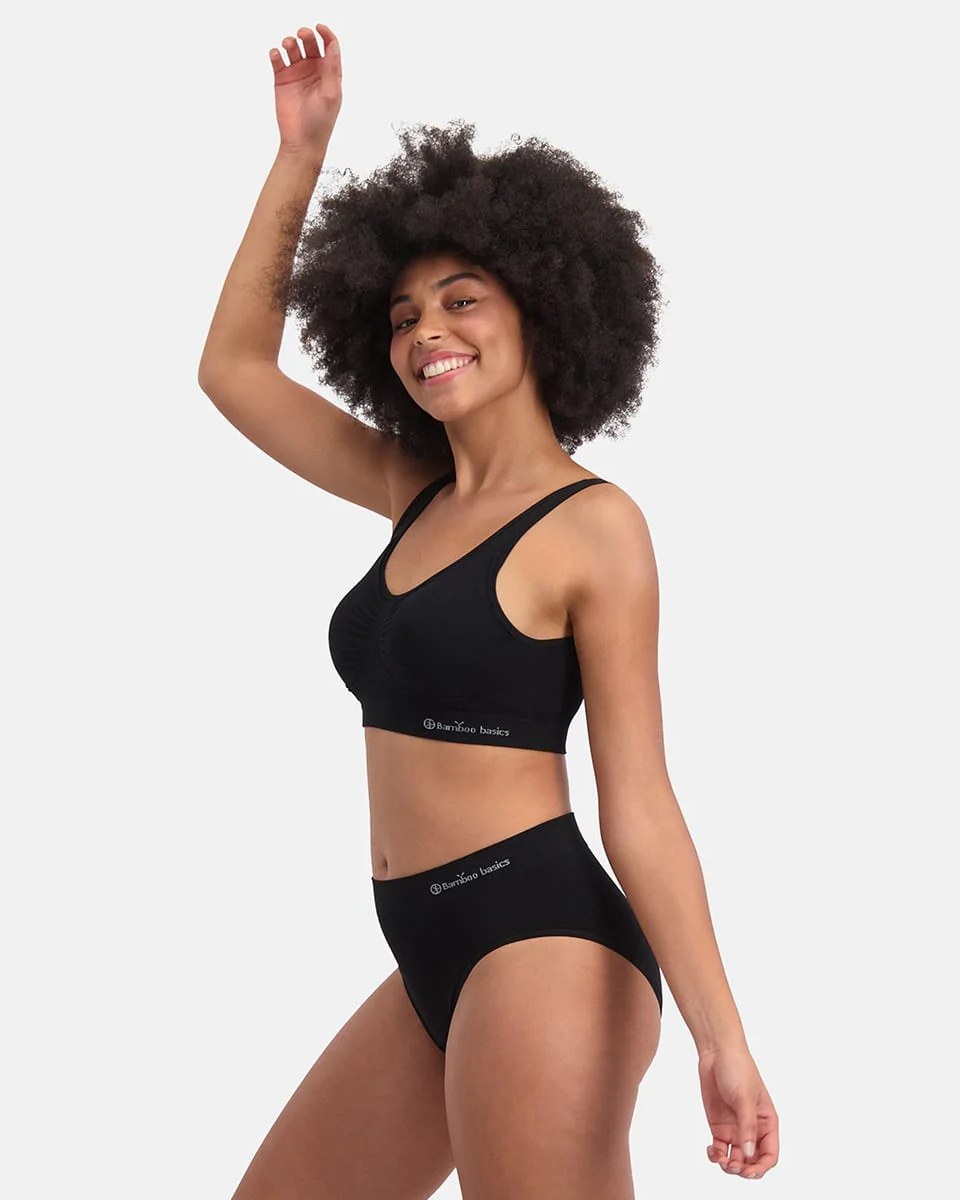
Bamboo viscose from this process runs through most of the range for women, from everyday clothing to closer fitting styles. See bamboo clothing for women and bamboo underwear for women, where the fibre's softness and moisture absorbing properties are put to use close to the skin.
Frequently asked questions
Frequently asked questions
Is there chemistry left in the finished fabric
The fibre is washed thoroughly after manufacturing. OEKO-TEX certification also tests the finished fabric for harmful substances and confirms the limits independently.
Is bamboo viscose the same as bamboo fibre
No. Untreated bamboo fibre exists, but it is coarse and stiff and rarely used for clothing, because it scratches and does not feel comfortable against the skin.
Where does the bamboo come from
Most is grown in Asia, where the plant grows quickly without irrigation. Bamboo is a grass that can be harvested repeatedly from the same root without replanting.
You can find the full range at Bamboo-Clothing.com.