Spun yarn versus filament yarn
Short answer: Spun yarn is short fibres twisted together into a thread and gives a soft, airy fabric. Filament yarn is long, unbroken threads and gives a smooth, shiny fabric without the visible fibre ends.
How the two yarn types differ
In spun yarn, thousands of small fibre ends stick out from the thread itself in every direction. It is those ends that give the fabric its soft, slightly matte surface, but they are also the ones that over time form snags through wear. Filament yarn has no loose ends and is therefore smooth all the way through.
Where the two yarn types are used
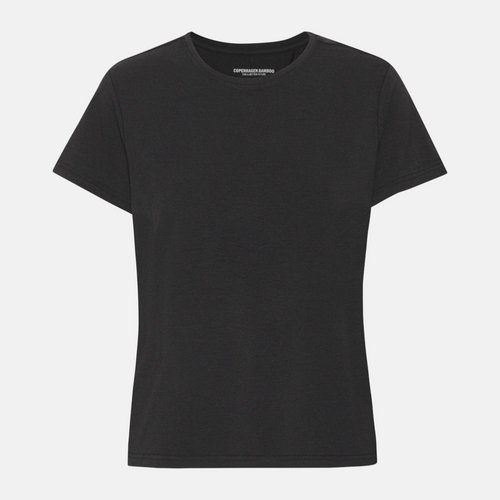
Almost all bamboo fabric in clothing is made from spun yarn, because it is soft and comfortable directly against the skin. Filament yarn is typically used in linings and in shiny, smooth fabrics, where sheen and a cool surface matter more than softness itself. See bamboo t shirt for women made from spun yarn.
Snagging and sheen
Spun yarn snags over time, because the many fibre ends slowly work their way out of the thread through ordinary wear and washing. Filament yarn barely snags at all, but is instead cooler to the touch and more vulnerable to pulled threads if it catches on a sharp edge or a ring.
What it means for you
If you want softness and a comfortable, matte surface close to the body, spun yarn is the right choice. If you instead want sheen, smoothness and a more formal finish, filament yarn is the choice. See bamboo clothing for women, where most items are made from spun yarn for exactly that reason.
Strength and wear resistance
Filament yarn is often stronger lengthwise, because the thread runs unbroken from end to end without weak points. In return, it is more prone to pulled threads, because a single broken thread can pull far through the fabric. Spun yarn spreads the wear more evenly across many short fibres instead.
Breathability and comfort
Spun yarn has microscopic air pockets between the many short fibres, which makes the fabric more breathable and better at moving moisture away from the skin. Filament yarn sits more tightly with fewer air pockets, which can feel cooler to the touch but is less effective at moving moisture away from the body.
How to spot the difference
Hold the fabric up to the light. Spun yarn has a slightly airy, somewhat hazy surface, while filament yarn reflects light evenly and looks more uniformly shiny. Look closely at the thread, and you will often see the small fibre ends sticking out of spun yarn, but not out of filament yarn.
Blends of the two types
Some fabrics combine spun yarn in the main fabric with filament yarn at edges or seams, where strength matters more than softness. That gives a fabric that feels soft to wear but holds up better at stressed points such as shoulder seams. See bamboo dresses, where the soft spun yarn dominates the whole fabric.
Caring for both yarn types
Spun yarn tolerates ordinary machine washing well, but should be washed inside out to protect the surface and reduce snagging over time. Filament yarn is more robust against the washing itself, but should be kept away from rough surfaces and zippers, which can easily pull a single thread out of the fabric.
Frequently asked questions
Frequently asked questions
Can you see the difference between spun and filament yarn
Yes. Hold the fabric up to the light. If there is a slightly airy, matte surface with visible fibre ends, it is spun yarn rather than filament yarn.
Which yarn snags the most
Spun yarn snags the most over time, because the fibre ends work their way out. In return, it is softer from the start and more comfortable against the skin daily.
Is filament yarn stronger than spun yarn
Often yes lengthwise, because the thread is unbroken. But it is more prone to pulled threads if it catches on something sharp, such as a zipper.
You can find the full range at Bamboo-Clothing.com.