How complaints are used as data
Short answer: Every complaint is recorded with model, size, colour and cause. Collected over time, they show where a problem sits and whether it is a single case or a pattern.
Every complaint is recorded
When a customer makes a complaint, the model, size, colour and cause are noted in the same form every time. It sounds dull, but it is what makes the information usable later. Without a fixed format, each case is a separate story that is hard to compare and almost impossible to learn from.
A single case says little
One loose seam in one garment can be bad luck. Ten loose seams in the same model is a production fault. That is why you look not only at the single case but at how often the same fault appears. One case rarely justifies a change, but it should always be recorded anyway.
Patterns appear over time
When complaints are collected over weeks and months, patterns start to show. Perhaps the fault only affects one colour or one size, or it appears only after many washes. Such details are invisible in a single case but clear once the numbers are added up. See also the CCDK collection.
The cause must be written down
Without a cause, the numbers cannot be used, so what the customer actually experienced is written down. Was it a split seam, a hole, running colour or a size that did not fit? Precise words make it possible to separate production faults from expectations that the product description did not meet.
The customer's own words count
The customer's description is valuable because it shows how the item is used in real life. A customer can spot something a factory check never catches, such as how a seam behaves after many washes. That is why the words are kept in the case and read before anyone draws a conclusion about the cause.
Numbers must be set against sales
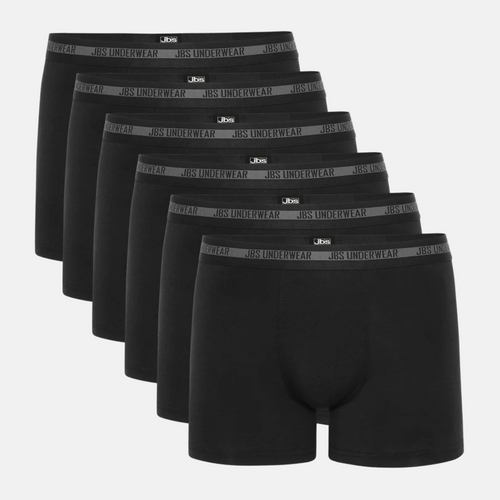
Five complaints on a thousand sold is something else than five on twenty. The share is what counts, not the raw number. So the complaint figure is always set against the sales of the same model, to avoid being fooled by big totals. See also the collections from Moodies and JBS.
The factory gets the numbers
The numbers are useful because they can be shown to the factory. A list with model, cause and share makes a conversation concrete. The factory can see where the fault arises and what must change in the next production run. Without data, talks often end with two opinions and nothing to support either.
A model can be taken off the site
If the complaints point to a fault that cannot be fixed, a model can be taken off the site. It is a hard decision, but it protects customers from buying something that will probably disappoint. The model can return later if the factory fixes the fault and a new check shows the fix holds.
What you can do as a customer
As a customer, you help most by describing the fault precisely when you write to customer service. State the model, size, colour and how many times the item has been washed, and attach a photo if you can. The more precise your message, the easier it is to use as data and spot a pattern.
Frequently asked questions
How many complaints are normal
It varies with the type of product, but a low share of sales is what you would expect. What matters most is the share for each model, not only the total.
Are complaints used with the factory
Yes. They are the best proof that something needs to change in the next production run, because they show concrete faults, model by model, with the cause and a share of sales.
Can a model be taken off the site
Yes, if the complaints point to a fault that cannot be fixed. The model can come back later if the fault is solved and a new check shows that it holds.
You can find the full range at Bamboo-Clothing.com.