How Danish sizes relate to European ones
Short answer: Danish and European sizes rest on the same idea of body measurements, but numbers and letters are used differently from brand to brand. No fixed conversion always holds. The size chart in centimetres is the safest place to look.
Same idea, different practice
Danish and European sizes start from the same basic thought: a size should match a body with certain measurements. The difference lies in how numbers and letters are used. Each country and brand has developed its own habits over time, and they were rarely merged into one shared system.
Letters and numbers are mixed
Some brands use S, M and L, while others use numbers such as 36, 38 and 40. The same body can therefore carry two different labels, depending on where the garment was made. It is a common source of confusion when shopping across borders without knowing the brand's habit.
Conversion tables are only a guide
A table saying that M equals a certain number only applies to the brand it came from. Use it as a hint rather than an answer. If in doubt, compare your own measurements with the chart on the product page. See bamboo T-shirt dresses and compare with your own numbers.
Measurements are the only fixed point
Centimetres are the same everywhere, whatever the country or brand. That is why the size chart is the safest place to look when choosing. Take a tape measure, measure chest, waist and hips, and compare the numbers with the chart. Measure loosely without pulling the tape tight.
How to measure yourself
Stand relaxed with your arms down at your sides and hold the tape level around your body. Measure the chest at its widest point, the waist where you naturally bend, and the hips at the fullest point. Write the numbers down so you have them for the next purchase.
Stretch in knitwear helps
Elastic fabrics stretch and forgive a few centimetres, which is why letters are often used for knitwear. That does not mean all letters are equal. Always look at the chart, even when a garment is soft and stretchy. On bamboo bodystocking, fit also depends on body measurements and the stretch of the knit.
When you are between two sizes
If your measurements fall between two sizes, think about how the garment should sit. For a close fit you usually choose the smaller size, and for a loose fit the larger. Read what others write about fit, and check whether the chart lists body measurements or the garment's own before you decide.
Shopping across borders
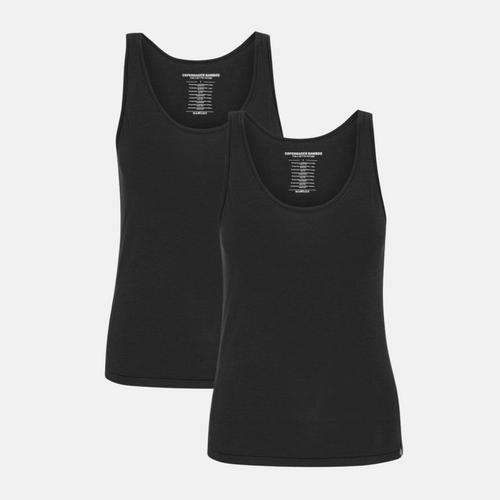
When you buy abroad, do not ask for your Danish size but for the measurements behind it. An M from one country can be an L from another. Look at the chart and put your own centimetres next to it. Also see bamboo undershirt for women, where you can compare measurements before buying.
Keep your own measurements
Write your measurements in a note on your phone and update them if your body changes. With the numbers at hand, you can choose within minutes, whatever the brand or country. It is a small habit that saves many returns and makes shopping calmer and more certain.
Frequently asked questions
Why are there so many systems?
Because they arose separately in different countries and were never merged. Each brand also starts from its own body shape, which widens the differences further.
Can I use my Danish size abroad?
In principle yes, but always check the size chart before buying. A letter or number can mean something slightly different, and the centimetres decide the fit.
Which system is most precise?
The one that gives body measurements in centimetres, whatever the letter is called. Numbers compare directly, while letters only mean something within one brand.
You can find the full range at Bamboo-Clothing.com.