How lyocell differs from viscose
Short answer: Lyocell uses a solvent that can be reused in a closed loop, and the process has fewer steps. The fibre becomes stronger, especially when wet. On the other hand, it can fibrillate and become fuzzy on the surface.
A different solvent
Where viscose uses a base and a sulphur compound, lyocell dissolves the cellulose directly in an organic solvent. Fewer chemical conversions take place along the way, because the cellulose is simply dissolved and not first turned into another substance. That is the most important difference, and it causes most of the others.
The loop is closed
The solvent is collected and used again. A large share can be recovered, so the loss is smaller than in classic viscose, where the additives end up in the baths and in the wastewater. How well this works depends on the plant, however. See bamboo dresses.
Fewer steps in the process
Because the cellulose is dissolved directly, lyocell skips some of the steps viscose needs, among them the conversion into an intermediate product. That makes the process easier to control. It does need specialised equipment, and that partly explains why lyocell costs more to make.
The fibre turns out different
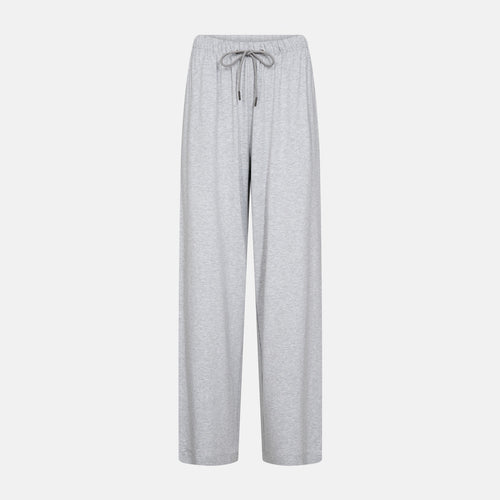
Lyocell has more ordered molecule chains and loses less strength when wet than viscose. That gives a fabric that is stable both dry and wet, and that often has a slightly firmer drape. Viscose drapes heavier and softer, and many prefer exactly that. See women's bamboo pants.
Fibrillation and fuzzy fabric
Lyocell can fibrillate, meaning fibres loosen at the surface as fine hairs, especially when the fabric is wet and rubbed. That can give a fuzzy look. Many fabrics are therefore treated with enzymes to remove the loose ends, so the surface becomes more even and neat.
The raw material can be the same
Both viscose and lyocell are regenerated cellulose, and the cellulose can come from bamboo, wood or other plants. The difference lies in the process and the fibre, not the plant. So lyocell is not the same as bamboo viscose, even if the raw material can be the same. See Egtved.
Which one feels softest
Both fibres are soft, but in slightly different ways. Viscose drapes heavier and often feels silky, while lyocell is somewhat firmer and more stable. What feels best is a matter of taste, and it also depends on the yarn, the weave or knit and the finishing of the fabric.
Why the price differs
The plant and solvent for lyocell cost more than the classic process, and that is often reflected in the price. On the other hand, there are fewer steps, and the solvent can be reused. Price alone says nothing about quality, though, since that depends on every link from raw material to finished fabric.
How to choose
Read the content label and see which fibre is listed. Choose lyocell if you want a slightly firmer and more stable fabric, and viscose if you prefer a soft, heavy drape. Either way, both should be washed gently to keep their shape, and a low temperature and mild detergent are a good starting point.
Frequently asked questions
Is lyocell the same as bamboo viscose?
No. The raw material can be the same, but the process and the fibre are different. Lyocell is dissolved directly, while viscose is first chemically converted in several steps.
Which is softest?
Both are soft. Viscose drapes heavier and often feels silky, while lyocell is often somewhat firmer. It is a matter of taste, and yarn and fabric construction matter too.
Why is lyocell more expensive?
Because the plant and solvent cost more than the classic process. Price alone does not say anything about quality, which depends on every link in production.