How seam strength is tested
Short answer: Seam strength is tested by clamping a sample with a seam in the middle and pulling until the seam gives way. The force is recorded, along with whether the thread or the fabric failed. The result shows whether the seam holds up to real use.
Why seams are tested
The seam is often the weakest part of a garment, because it joins two pieces of fabric with thread. When you bend, sit or pull clothes on, the seams take the strain. A laboratory test shows beforehand whether they cope, instead of the customer finding out after a few weeks.
The seam must lie across
The sample is cut so the seam lies at right angles to the pull in the machine. That way the seam itself is loaded and not the fabric next to it. If the seam lies at a slant or along the pull, the number is useless, because the force spreads in a different way.
The machine pulls to breaking
The sample is clamped in two jaws and the machine pulls evenly until the seam gives way. The force is noted along the way. The highest value reached is the strength of the seam. Afterwards you look at the sample and see how the seam failed, which says at least as much as the number.
Two kinds of break
Either the thread snaps, or the seam is pulled through the fabric. The two kinds of break point to different problems in production. If the thread snaps, it may be too weak or too tight. If the fabric pulls apart, it may be too open or the stitches too close. See Decoy.
The result changes the setting
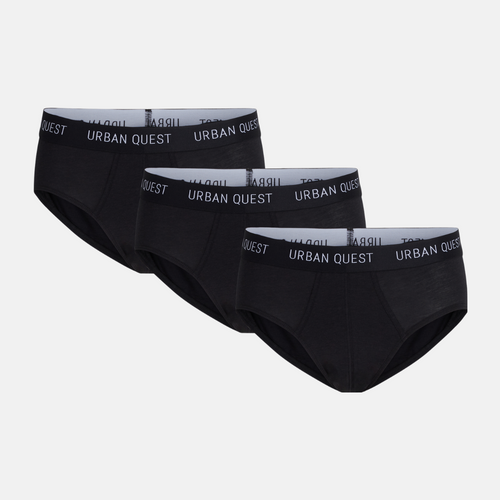
If the seam pulls through, the stitches are too loose or the fabric too open, and the machine is adjusted. You can change stitch length, tension or thread type and test again. Here the test is used to correct production, not just to give a grade. See Urban Quest and Egtved.
The seam at the crotch
The crotch takes a lot of strain when you walk, cycle or sit down. That is why exactly these seams are checked extra carefully, especially in underwear and trousers. A seam that gives way here is noticed at once, which is unpleasant and cannot be repaired neatly.
Thread, stitch and fabric belong together
A strong thread is not enough if the stitches sit too far apart or the fabric is thin and loose. Seam strength is a balance of thread, stitch density and fabric. That is why two garments with the same thread can behave very differently, which is what the test should reveal.
Which seams are chosen
Not every seam on a garment is tested. Instead you choose those that take the most load in use, such as the crotch, shoulders, sides and armholes. If they are strong enough, there is good reason to think the rest will cope. It saves time without skipping what matters most.
Frequently asked questions
Why do seams split at the crotch
Because it is the place with the most strain. When you walk, bend or sit, the fabric stretches most here, so these seams are checked extra carefully before the clothes are sent out to customers.
Can a strong thread save a bad seam
No. If the stitches are too long or the fabric too thin, even a strong thread does not help. The seam is only as strong as its weakest part, so the whole join is tested, not the thread alone.
Are all seams tested
No. You pick the seams that take the most load in use and test those. If they are fine, it gives a good picture of the whole garment without cutting open every single seam in the laboratory.
You can find the full range at Bamboo-Clothing.com.