How seams open over time
Short answer: The thread in a seam tires from repeated pull, and stitch by stitch it gives way. The opening usually starts in one place and spreads from there. It is ordinary wear and can often be spotted and mended before the hole grows big.
The thread tires from repeated pull
A seam is held together by thread, and the thread is stretched and relaxed each time you move. One single pull does nothing, but many thousand repeats tire it, and in the end it gives way. It is the same principle as a paper clip that snaps if you bend it back and forth enough times.
The pull is unevenly spread
Some stitches carry more than others, for example at the crotch, under the arm or at a shoulder. They tire first, because they take most of the movement. Stitches in places with little pull can last many years. That is why a seam rarely opens all at once, but starts in one spot.
A stitch that breaks shifts the load
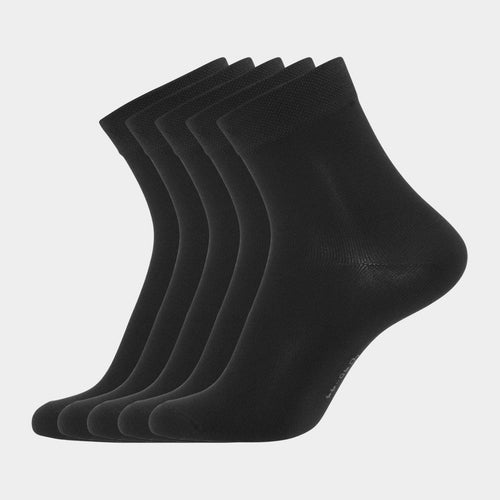
If one stitch breaks, its neighbours must carry more, and then they break sooner. It is a chain reaction, and it can move fast once it has started. That is how a small hole becomes an open seam in a short time. See bamboo footies for women, where the seam at toe and heel takes much movement.
Chain stitches run
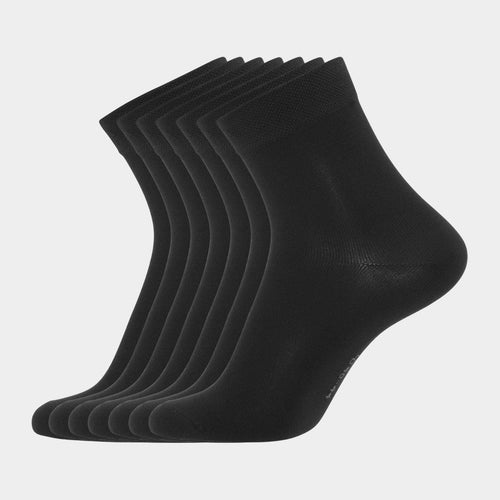
Some seam types run like a zip when one stitch goes. Others stop by themselves, because each stitch is locked on its own. Which type a garment has, you can often see from the look of the seam and from how it behaves when you tug gently on the fabric. See bamboo underwear for women and all bamboo socks for women.
Crotch, arm and waist take most
Some places on a garment are loaded far more than others. The crotch is stretched and rubbed with every step, the armhole is pulled when you lift your arms, and the waistband holds the clothes in place all day. Those are the places where seams are tested most, so that is where the first opening often shows.
Washing and drying load the seams
The washing machine pulls and twists clothes, and that loads the thread in the seams. High temperature and a hard spin make it worse. The tumble dryer heats and throws clothes about, which tires the thread further. If you wash on a gentle programme and air dry, seams last longer and hold for several years.
The seam type matters
A seam must be able to move with the fabric when it stretches, and it must sit close enough that the edge does not fray. Some seams are more elastic than others, and some are flatter and rub less against the skin. If a garment has a tight, stiff seam, it may give sooner when the fabric works.
How to spot an opening early
Check seams now and then, especially at the crotch, under the arm and at the waistband. Look for loose threads and small gaps between stitches. If you tug gently at the fabric on both sides of the seam, you can often feel whether it is starting to give. The earlier you spot it, the easier it is to fix.
How to sew an open seam
Take a needle and thread in a colour that suits the fabric. Sew a few stitches into the intact part of the seam on both sides of the opening, so the repair has something firm to hold. Make small, close stitches across the whole opening and finish with a firm knot. Use a slightly stretchy thread if the garment stretches a lot.
Frequently asked questions
Can I sew an open seam myself
Yes, with needle and thread. Sew a bit into the intact seam on both sides of the opening so you have something firm to hold, and use small close stitches all the way.
Why does it often happen at the crotch
Because that is the place with the most pull and movement. The seam is stretched, rubbed and pressed with every day of wear, so it tires sooner than elsewhere.
Is an open seam a fault
Not necessarily. After long use it is ordinary wear that the thread gives way somewhere. It can often be mended, so the garment can go on being worn.
You can find the full range at Bamboo-Clothing.com.