What wear does to the colour
Short answer: Wear removes the outer layer of the fibre, where the dye sits closest. That is why worn areas turn lighter, even when the rest of the garment holds its colour. It is a normal result of use and washing and says nothing on its own about poor fabric.
The colour sits unevenly in the fibre
Dyeing carries the colour into the fibre from the outside in. So there is most colour at the outer edge of the fibre and less in its centre. While the surface is intact, the whole fabric looks even. Once the outer part begins to wear, the uneven spread of dye becomes visible.
Rubbing uncovers the pale part
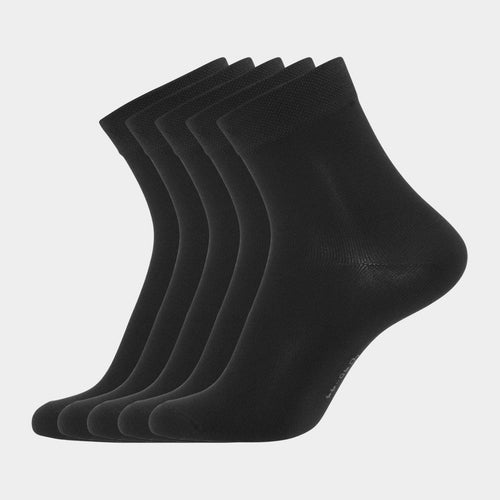
When the outer layer wears off, the less coloured part of the fibre shows and the area looks lighter than the rest. It happens first where rubbing is greatest, and the pale patches grow slowly. See bamboo footies for men, where heel and forefoot meet shoe friction daily.
Wear and washing work together
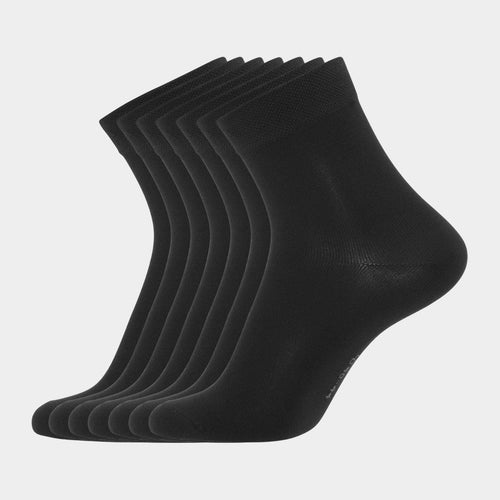
Washing pulls loose dye out of the fibres, and wear removes what sits at the surface. Alone, each is mild, but together they give an even, visible lightening over time. So the most worn and most washed pieces are often the ones that have lost the most colour. See Turiform and bamboo socks for men.
Why worn spots lighten first
Wear does not hit the whole garment equally. Knees, elbows, heels and seats are bent, stretched and rubbed, and colour goes fastest there. When the fabric is stretched too, the fibres sit further apart and the pale inside shows more. That is why the pattern is almost always the same from garment to garment.
Black and navy show it most
Dark colours have the largest contrast between coloured surface and pale fibre inside, so the difference is clear once wear begins. Black clothes can get greyish or brownish areas, and navy can fade. On light colours the difference is hardly seen, because there is no contrast to measure it against.
Sunlight bleaches too
Direct sun breaks down dye, especially when clothes hang outdoors for long. It lightens the side that faces the sun, and it happens apart from wear. To avoid it, hang dark items inside out or in a shaded spot. Drying indoors or in shade is often the gentlest choice.
How to slow colour loss
Turn clothes inside out so the rubbing happens on the inner side of the fabric. Wash at low temperature on a gentle programme, and wash dark clothes with dark. Do not use more detergent than needed, since residue makes fabric stiffer and rougher. Avoid the tumble dryer, as heat and rubbing remove fibre ends and colour.
Can the colour be restored
You can redye clothes at home with a textile dye, and it can give a nice result. But it is rarely fully even, because worn areas take the colour differently from less worn ones. Consider whether it is worth it for a favourite garment, or whether slightly paler colours are simply part of its story.
Is a paler colour a sign of poor fabric
No, not in itself. Lightening is a natural result of use and happens to almost every dyed textile. What matters is whether the fabric is still whole and whether the garment still does its job. A slightly faded but intact garment can last a long time yet if it is treated gently.
Frequently asked questions
Why do knees and elbows turn lighter
Because they bend and rub most, and the fabric stretches there, so the fibres sit further apart. The paler part of the fibres then shows more clearly than elsewhere on the garment.
Can I redye the garment
Home dyeing works, but the result is rarely fully even, because worn and unworn areas take the dye differently. Follow the dye instructions and try a small hidden spot first.
Which colours show it most
Black and navy show it most, because the contrast between coloured surface and pale inside is greatest. On light colours the difference is hardly seen, even though the wear is the same.
You can find the full range at Bamboo-Clothing.com.