How to hang and store dresses so they keep their shape
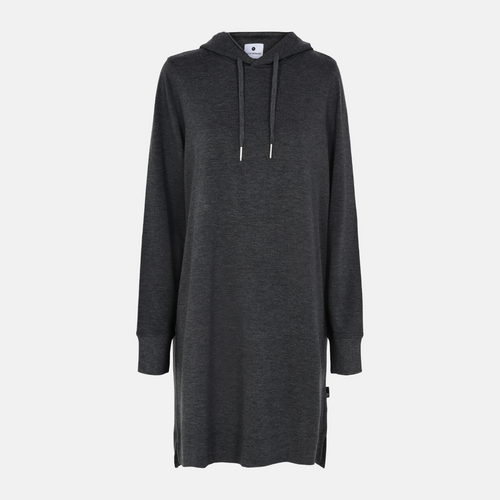
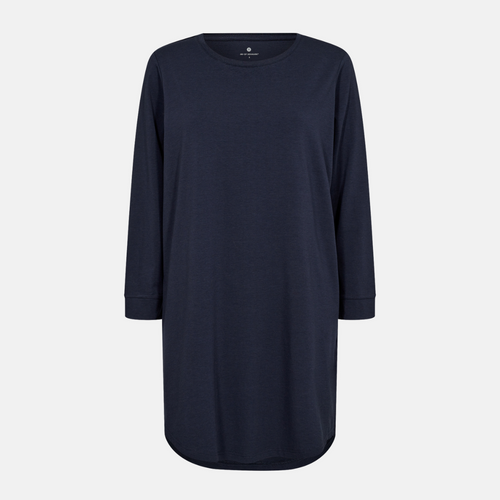
Short answer: Heavy dresses should be folded, light ones can hang. Hang a heavy jersey dress on a thin hanger and the weight pulls the shoulders out of shape, which cannot be undone afterwards.
The hanger matters more than you think
A wide hanger spreads the weight across the whole shoulder. A thin wire hanger concentrates it on a small point and leaves a dent that stays. You see it clearly when the dress is worn, because it sticks out as a small bump. This applies to all bamboo dresses, most of all the heavy qualities.
Heavy dresses are folded
If the dress is heavy enough to stretch, it should lie flat. This is especially true of knitted qualities, where the stitches slowly pull out of shape under their own weight. Fold the dress loosely lengthwise and then once across, so there are no sharp creases in the middle of the front.
How to tell if a dress is heavy
Hold the dress up by the shoulders for half a minute. If you feel the fabric pulling down and the neckline getting wider, it is too heavy to hang for long. A light dress in thin jersey hangs still without changing. The test takes seconds and can save a dress.
Air rather than wash
A dress worn for one evening rarely needs washing. An hour in fresh air is usually enough to remove smells from food and smoke. Wash only when there is a stain or you have worn it in the heat. Fewer washes mean the fabric and colour last longer. See washing and care.
Hang it damp
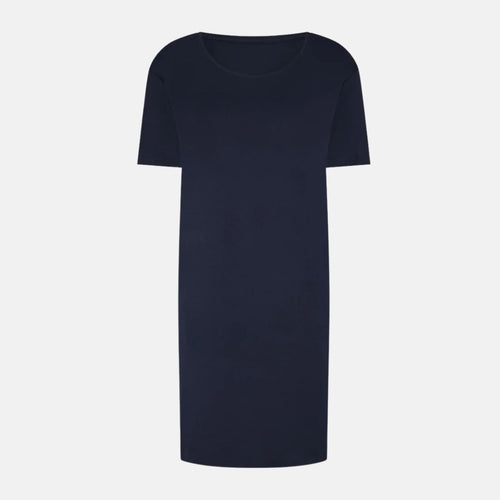
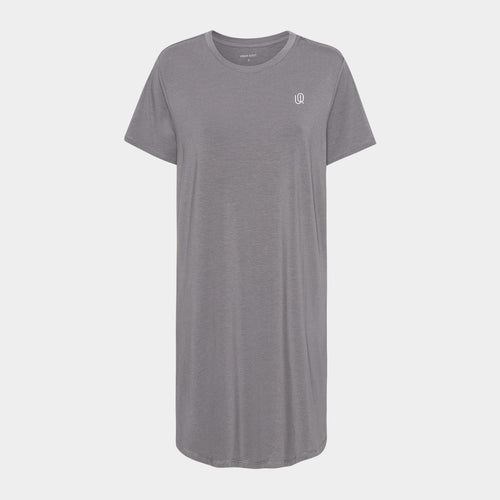
If you hang the dress straight from the machine while it is damp, it smooths itself under its own weight. Give it a gentle shake and pull the seams into place with your hands before hanging. That often saves you the iron. It works especially well on light cuts like bamboo T-shirt dresses.
Dry heavy dresses flat
A heavy dress weighs even more when wet. If it hangs to dry, it gets longer and narrower, and that shape can stay. Lay it flat on a drying rack or a towel instead and turn it once. It takes longer, but the shape is the same afterwards as before.
Room in the wardrobe
Dresses that hang tightly together crease and get pressure marks. Give them a few centimetres of space so the fabric can hang freely. Hang long dresses so the hem does not touch the wardrobe floor, or it bends and creases. If the wardrobe is too low, fold the lower part over the hanger bar.
Storage between seasons
Dresses that go unworn for half a year should be clean before they are put away. Stains and sweat left in the fabric become harder to remove over time. Store them in a fabric bag or a lidded box, not a plastic bag, so the fabric can breathe. Keep them somewhere dry and dark.
When the dress already has a dent
A small dent from a hanger can sometimes ease if you dampen the area lightly and let the dress dry flat. It does not always work, especially if the dent has been there a long time. That is why the hanger is the most important choice. A wide hanger costs little and protects the dress daily.
Frequently asked questions
Should dresses be hung or folded?
Light dresses can hang on a wide hanger. Heavy ones should lie flat, because otherwise the weight slowly pulls the shoulders and neckline out of shape.
Why does my dress get dents at the shoulders?
Because the hanger is too narrow. A wide hanger spreads the weight across the whole shoulder, while a thin one concentrates it on a small point.
How often should a dress be washed?
After two to three wears in normal use. Airing in between extends the time, and a stain or a hot day are the clearest signs that it needs a wash.