How to read a fibre composition label
Short answer: The fibres on a garment label are listed in descending order by weight. If viscose comes first, it is the main material in the item. Elastane almost always comes last because the amount in the fabric is small.
The order follows the weight
The material listed first makes up the largest share of the garment's total weight. If it says viscose 95 percent and elastane 5 percent, the fabric is mainly viscose with a small amount of stretch added. The further down a material sits, the less it makes up of the finished fabric.
Bamboo viscose is listed as viscose
Labelling rules require the fibre name, not the raw material the plant came from. Bamboo viscose is made by dissolving the bamboo stalks chemically into a pulp, which is then spun into thread like ordinary viscose. See bamboo t-shirt for women for an example of a product where the material is listed as viscose.
A small amount of elastane does a lot
Two to five percent elastane is enough to give a fabric stretch and the ability to spring back into shape after wear. Without elastane a fitted piece would quickly stretch out and lose its shape. The small amount rarely changes the soft feel of the main material in the fabric.
Blends behave like their most delicate part
A fabric with several materials should be washed according to the most delicate of them, no matter how small its share. A top with 95 percent viscose and 5 percent elastane follows the care instructions for viscose. See bamboo clothing for women for more styles where the material mix is clearly listed on the product page.
Cotton and viscose are not the same
Cotton comes from the seed pods of the cotton plant and is processed mechanically, while viscose comes from wood or plants such as bamboo and is processed chemically into a fibre. The two fabrics can feel similar but behave differently in the wash and age differently over time.
Percentages must add up to a hundred
The percentages listed for a single layer of fabric must always add up to a hundred percent. If a garment has several layers, such as lining and outer fabric, each layer can carry its own label. See bamboo underwear for women for an example of how a single fabric layer is normally labelled.
Symbols and the fibre label go together
The material mix and the care symbols usually sit on the same label inside the garment, because one explains the other. Knowing the material helps you understand why a symbol shows low heat or gentle wash. The two pieces of information should always be read together before washing a new item for the first time.
Quality is more than the fibre name
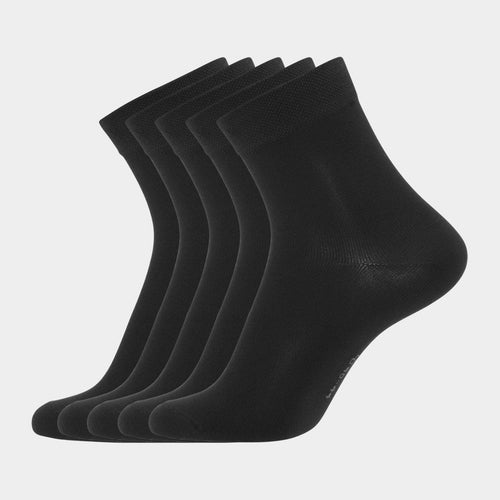
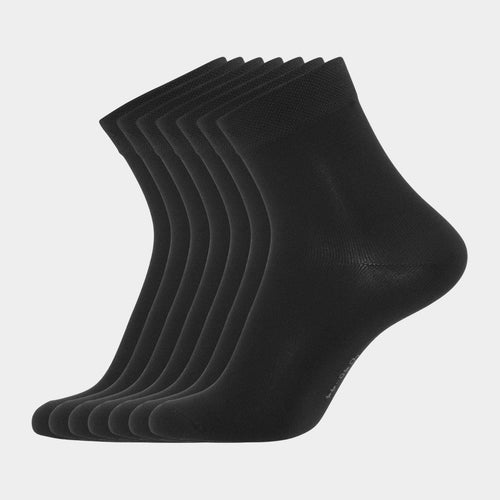
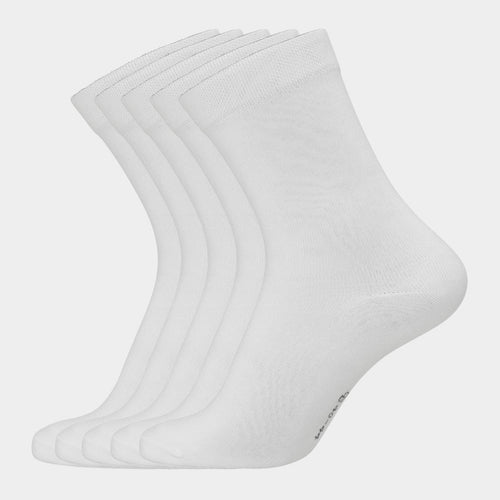
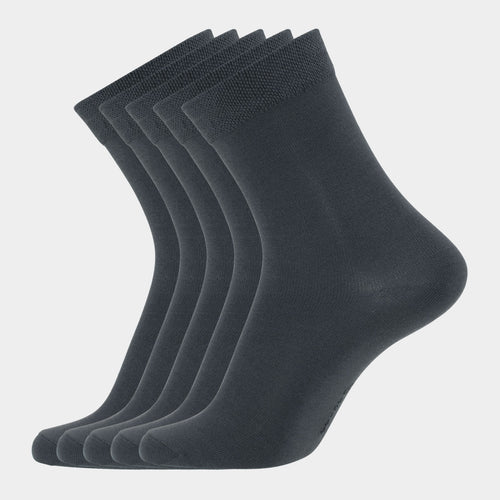
Two products can both be a hundred percent viscose and still feel very different, because the weave, density and finishing of the fabric vary. See bamboo socks for women for an example of how the same fibre type can be used for very different garments with a different feel.
Keep the label or note the material
Never cut off the care label before noting the material mix somewhere else, such as in a note on your phone. That makes it easier to recognise the material later if you are considering a similar purchase or want to wash an item correctly without the original label left in it.
Frequently asked questions
Why does bamboo not appear on the label?
Because labelling rules require the fibre name. Bamboo viscose is listed as viscose, since that is the name of the fibre itself.
What does the order of materials mean?
Descending by weight. The material listed first makes up the largest share of the garment's total weight.
Why does elastane always come last?
Because the amount is small, usually two to five percent. That is enough for stretch without changing the fabric's basic feel.
You can find the full range at Bamboo-Clothing.com.