How wind removes insulation
Short answer: Wind blows the warm air away from the fabric and pushes cold air into it. The insulation leaves with the air, and a thin layer can lose most of its effect. That is why a cool, windy day can feel much colder than the thermometer says.
The air is swapped out
Wind pushes in between the threads and shoves the warmed air out. The body then has to heat fresh air again and again. As long as it blows, there is no time to build a stable layer of warm air, so the cold feels as fresh as when you first stepped outside.
How much it matters
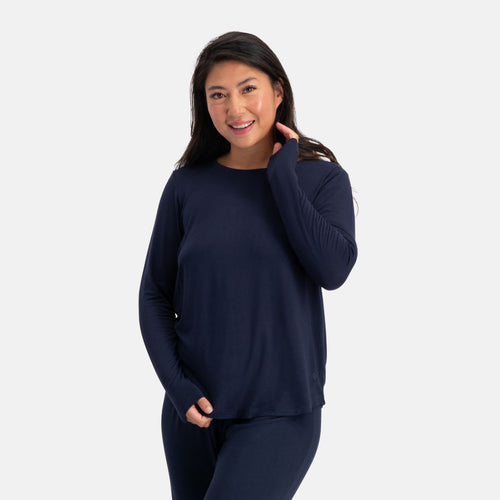
At ten metres per second an open knit can lose most of its insulating effect. That is why the felt temperature drops so sharply in wind. With a thin, open fabric next to your skin you notice at once. See for example bamboo night pants for women, which you wear indoors where the wind is weak.
Felt temperature is not imagination
When a forecast mentions the feels-like temperature, it explains how wind affects the body's heat loss. The thermometer measures the air, but the body feels how fast warmth disappears. At the same temperature a windy day feels colder than a still one, because wind carries off the thin layer of warm air near the skin.
Open and dense fabrics
An open knit has large gaps the wind can pass through. A tightly woven fabric has small gaps and lets less air through. The fibres are the same, but the protection is quite different. If you pick a loose garment for a windy day, you will need something dense over it.
A windproof layer solves it
A dense outer layer does not need to be thick. It only has to stop the airflow so the insulation beneath can work. See bamboo pajama shirts for women and bamboo sleepwear for women if you want clothes for quiet hours at home, where nothing blows.
Wind indoors
Wind is not only an outdoor thing. An open window, a fan or a draughty door can move air across the skin and remove the warm air near the clothing. The effect is smaller than outside but noticeable, especially at night, when you lie still and the body produces little heat.
Openings let the wind in
Wind always finds a way through armholes, necklines and hems. If a garment fits loosely, air can flow freely through it and takes much of the insulation along. A garment that closes snugly at wrist, neck and waist keeps warmth better, even if the fabric itself is no thicker.
Wind and moisture
Wind and moisture make a poor combination. If the clothes are wet, wind speeds up evaporation and draws even more heat from the body. That is why dry clothes and a dense outer layer work best in wind. Before you head outside, make sure the innermost layer is dry before you put the outer layer on.
How to keep warm in wind
Think in layers: an insulating layer inside and a dense one outside. Close the openings at neck, sleeves and hem, and choose an outer layer that does not let wind through. You do not need thick clothes to stay warm if the wind stays out and the air can sit still in the fabric.
Frequently asked questions
Why does it feel colder than the thermometer shows?
Because wind carries off the warm layer of air at the skin faster than the body can replace it. The thermometer only measures air temperature, while you feel how fast the body loses heat, and that difference gives the feels-like temperature.
Does wind matter indoors too?
Yes, near an open window or a fan, but to a lesser degree. The moving air still removes warm air near the skin, and you notice it most when you sit still in a thin fabric.
Is a dense fabric enough?
Often yes. Even a thin, tightly woven layer stops most of the wind. What matters is that the outer layer closes snugly at neck and sleeves, and that an insulating layer sits underneath.
You can find the full range at Bamboo-Clothing.com.