Knickers for training
Short answer: For training, your briefs should stay put without chafing and move moisture away from the skin. Flat seams and a fabric that does not hold on to sweat matter most, and they should be changed soon afterwards.
Moisture first
Sweat that stays between skin and fabric causes chafing and odour. The longer the moisture sits against the skin, the more irritation it causes. Bamboo viscose moves moisture away from the skin and feels less clammy than many other fabrics when you sweat. See bamboo briefs.
Flat seams
During movement, the seams are what chafe first. A thick seam at the crotch or leg rubs against the skin thousands of times during a run. Flat seams and printed labels instead of sewn ones remove much of the problem. Read more about underwear without labels and seams.
It has to stay put
Briefs that ride up are a distraction during training, and you end up adjusting them between every set. This is often down to the wrong size or a style cut too low at the leg. Choose one that fits close without squeezing. See knickers that do not ride up.
The right style
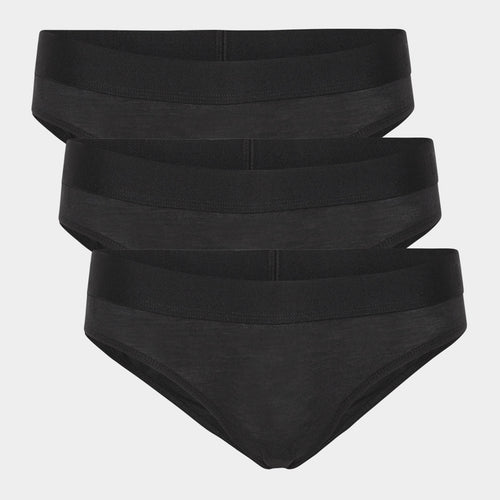
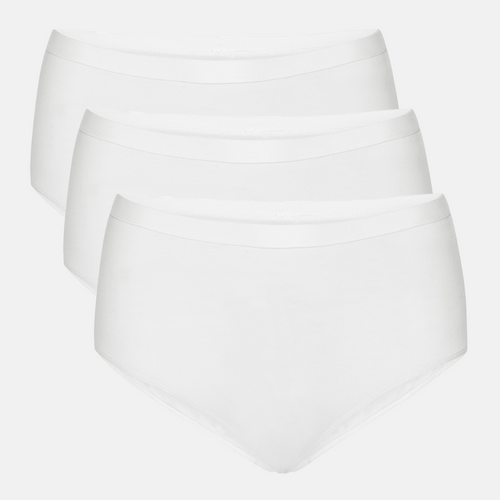
For yoga and strength training, many wear a regular brief with a high or mid waist. It stays in place when you bend and stretch. For cycling and running, it matters more that the edge at the leg does not rub. Try a few styles and stick with the one you notice least.
For hard training
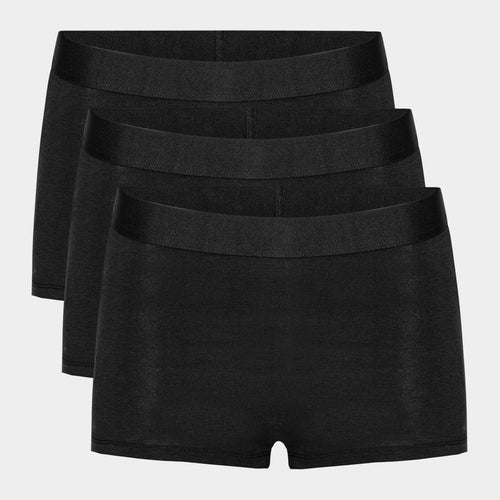
For running and long sessions, many prefer a style with longer legs. The fabric sits between the thighs and takes the friction, so skin does not rub against skin. This helps especially on warm days, when sweat makes chafing worse. See bamboo under shorts.
Change after training
Wet underwear in a bag smells within a few hours, and the same goes if you keep it on after training. Change into something dry as soon as you can, and put the used pair in a separate bag. Read more about clothing after training.
How many you need
If you train several times a week, it is a good idea to keep a few pairs only for training. Then there is always a clean pair in the bag, and they do not wear out as fast as the ones you also wear every day. Three to four pairs are enough for most people.
See the range
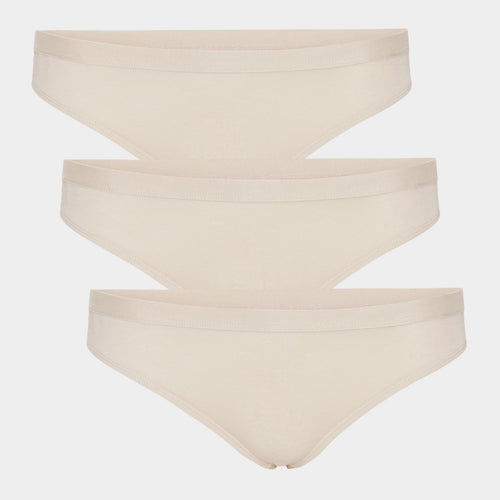
Training underwear does not have to be special. What matters most is the fabric, the seams and the fit, and that also applies to regular underwear made the right way. Many wear the same style for training and everyday. See the whole group in bamboo underwear for women.
Washing
Wash training underwear soon after use at 40 degrees without fabric softener. Softener leaves a film on the fabric that makes it harder for moisture to escape. Do not leave it wet in the laundry basket, and hang it to dry afterwards. Read more in the washing guide.
When the smell will not go
If training underwear still smells after washing, there are often traces of sweat and detergent left in the fabric. Use less detergent, skip the softener, and wash it sooner after training. Air drying helps too. If the smell stays, it is time for new pairs.
Frequently asked questions
What matters most in training underwear?
That moisture is moved away from the skin and the seams lie flat. Fit comes next, because briefs that ride up are more distracting than anything else.
Why does it chafe during training?
Because sweat and movement together create friction against the skin. Thick seams and a fabric that holds moisture make it worse, especially on long sessions.
How soon should I change after training?
As soon as possible. Wet underwear smells within a few hours and can irritate the skin, so change into something dry when you are done.
See our range of bamboo panties.