Rib or jersey, what is the difference
Short answer: Jersey is smooth on the right side and used for t-shirts. Rib has vertical ridges, stretches more across the width, and is used for edges, underwear and close fitting tops. Both are knits, not different materials.
Jersey is the standard
Jersey is the most used knit in t-shirts and nightwear, because it is smooth, light and falls softly over the body without pulling tight anywhere. See bamboo t shirt for women. Its simple structure makes jersey cheap to produce in large volumes, which is why you find it in almost all everyday clothing worn close to the skin.
Rib gives stretch and recovery
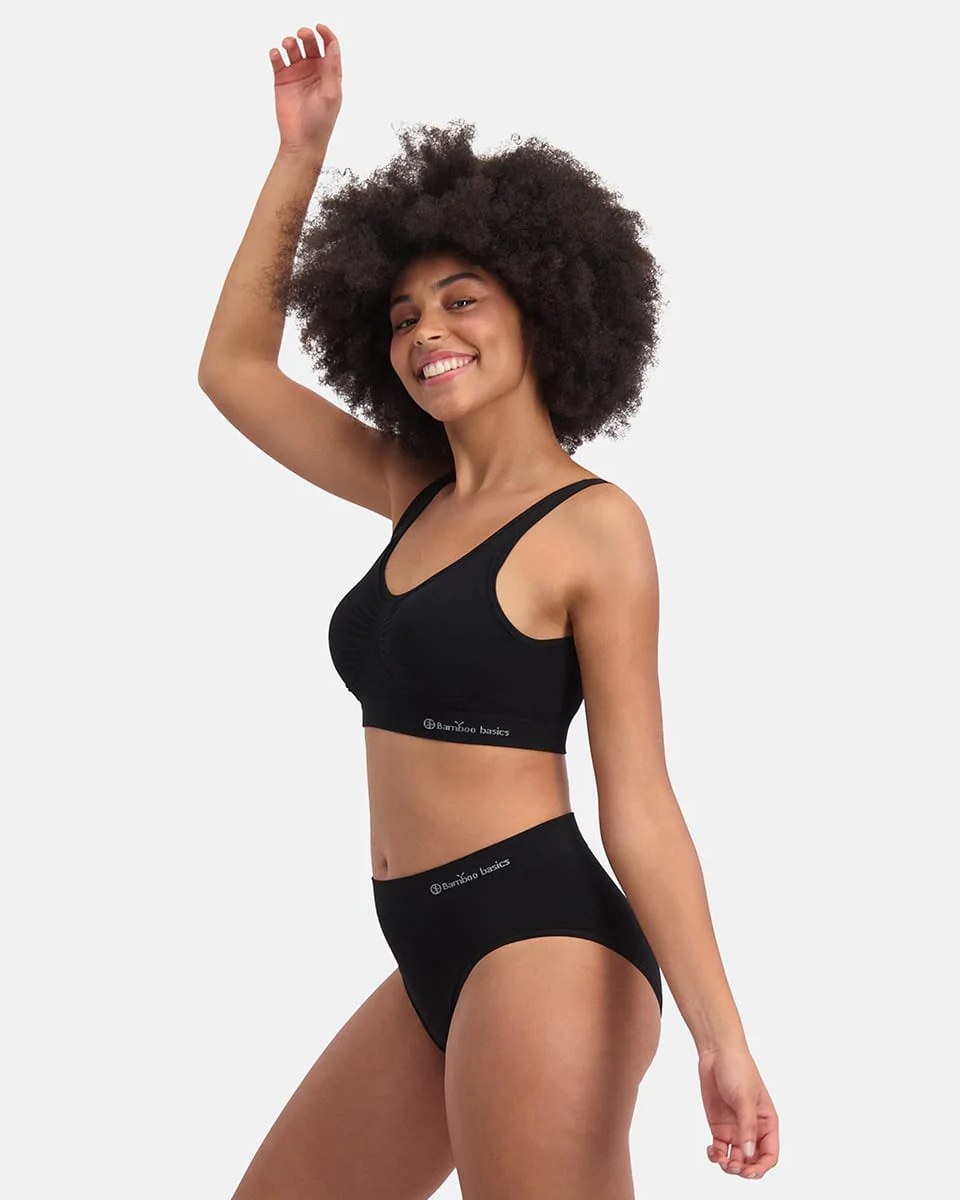
The vertical ridges of rib knit act like an accordion, stretching out and pulling back together on its own. That is why rib is used at neck edges and close fitting styles, where the fabric needs to follow the body's shape without going slack. See bamboo tops for women. The same trait makes rib popular for leggings and close fitting dresses.
Interlock is the dense variant
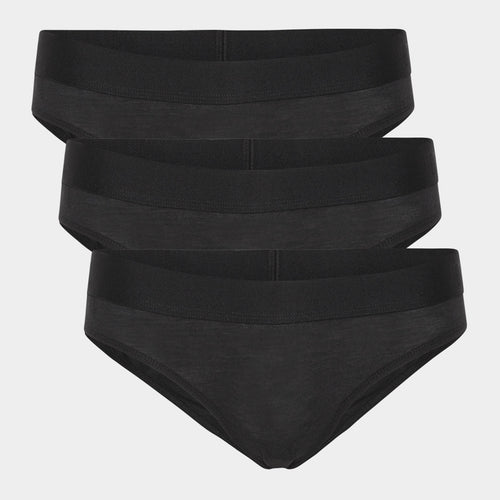
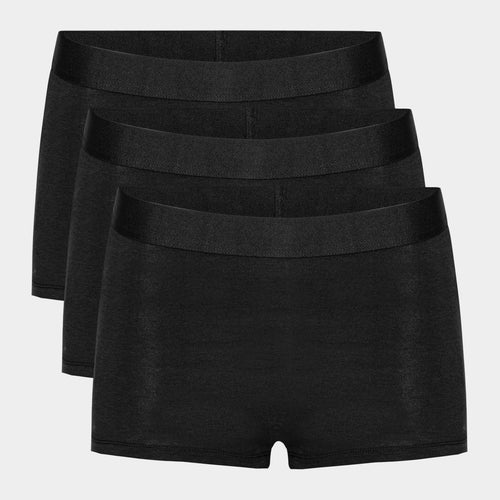
Interlock is double knit and looks the same on both sides, unlike jersey and rib, which have a clear right and wrong side. It is denser, heavier and less see through than ordinary jersey. See bamboo underwear for women. That makes interlock a good choice for underwear, where you want to avoid the fabric turning too thin over time.
How to tell the knits apart
Look at the right side of the fabric: if it is fully smooth, it is jersey, while clear vertical ridges mean rib. Turn the fabric over and check the wrong side too, since interlock looks the same on both sides, while jersey and rib clearly change pattern between the front and back of the fabric.
Why jersey curls at the edge
Jersey typically curls at an unfinished edge because the knit is one sided, and stitches on the right and wrong side pull the fabric differently. That is why jersey is usually finished with a sewn hem or a rib edge, which does not have the same tendency to curl up on its own after washing.
Choice of knit affects the fit
A dress or top in plain jersey follows the body's shape loosely and moves freely, while the same style in rib sits closer and highlights the silhouette more clearly. Neither is better on its own, but the choice should reflect whether you want a loose or a close fitting shape in the finished garment.
Care is largely the same
Both jersey and rib handle ordinary washing at low temperature and should avoid high heat in the tumble dryer, since both knits can lose some of their stretch under too harsh treatment. Rib edges are often a little more sensitive to heat though, because they contain more elastane than an ordinary jersey surface.
Frequently asked questions
What is the difference between rib and jersey?
Jersey is smooth and light, rib has ridges and stretches more across the width. Both are knits, the difference lies in the pattern, not the yarn itself.
Which knit works best for underwear?
Rib or interlock. Both hold shape better than thin jersey and sit closer to the body without going slack through the day.
Why does jersey curl at the edge?
Because the knit is one sided. That is why jersey is usually finished with a rib edge or a sewn hem, which does not curl up after washing.
You can find the full range at Bamboo-Clothing.com.