Small holes by the seam and where they come from
Short answer: Small holes right at a seam almost always come from rubbing against a buckle, a button or a table edge, not a sewing fault. Move the rubbing away from the spot and they stop.
The classic pattern
Holes that sit in a horizontal line low on the stomach come from a belt buckle or a table edge. Holes on the side usually come from a bag or a keychain hanging against the fabric. Look at the position rather than the fabric itself, and you can almost always point straight to the cause.
Why the seam is the weak spot
At a seam, fabric sits in several layers and cannot give the way the rest of the garment does. When something hard rubs exactly there day after day, threads wear through in one small, limited area instead of spreading the strain. That produces a hole instead of ordinary wear.
Saving the garment
Sew the hole with small stitches from the inside while it is still small and easy to reach. Using a thin darning thread or an iron-on patch on the inside makes the repair last longer and look neater. Do not wait too long, since a small hole quickly grows after only a few washes.
Avoiding them
Loosen the belt one notch, turn the buckle so the edge does not face inward toward the fabric, and avoid resting your stomach against a sharp table edge all day at the office. Rotate between several garments through the week, so the same spot on one piece is not strained daily.
Other spots where holes often appear
Besides seams at the waist, the same pattern shows up at pocket edges, where a phone or keys rub against fabric from inside. Sit down with a full pocket many times a day, and the friction becomes constant. Empty pockets when sitting for a longer stretch, whenever that is possible.
Fabric thickness matters
Thin knit fabric like an ordinary t-shirt tolerates less rubbing before threads give way than a heavier woven material. That is why the same habits produce more holes in thin t-shirts than in thicker shirts, even though both face exactly the same everyday strain during a typical week.
Repairing with an iron-on patch instead
A small iron-on patch on the inside can be faster than hand sewing and works well for a quick fix. Choose a patch in a thin, soft material, so it does not press through the fabric or feel uncomfortable against the skin when the garment sits close to the body.
When the damage is too large
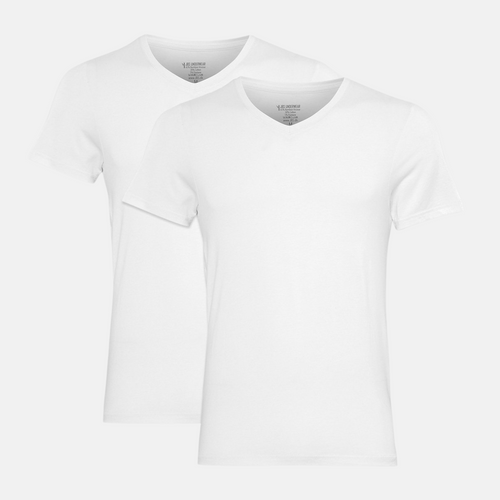
If the hole has grown to several centimetres, or several holes sit close together along the same seam, an ordinary repair rarely holds for long. At that point replacing the garment is often more durable than continuing to patch the same weak spot. See bamboo clothing for men.
See also
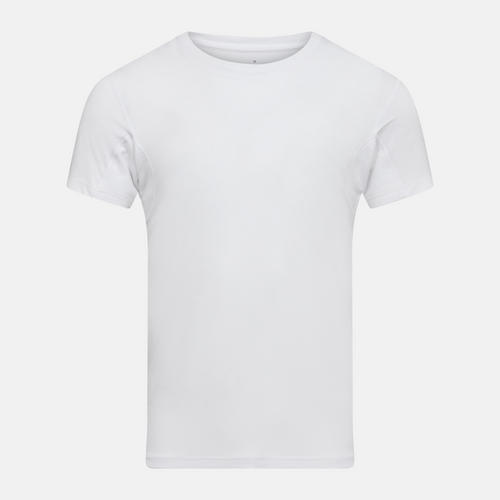
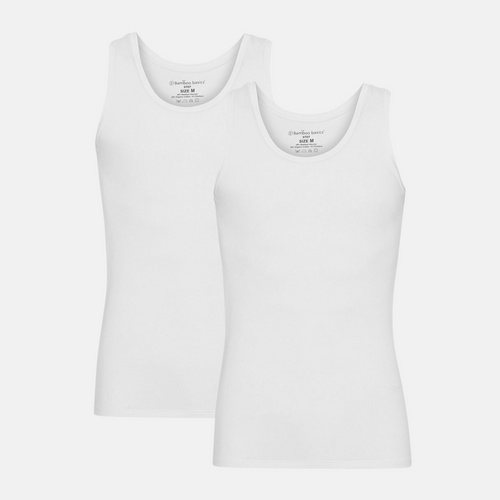
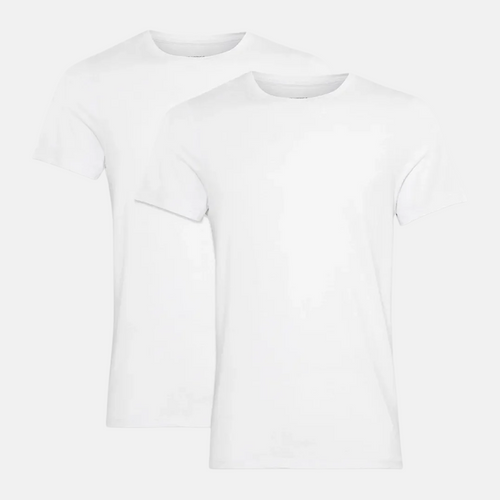
If you want clothing that handles daily rubbing better, look for a slightly heavier knit or a reinforced seam. See bamboo undershirt for men and bamboo t-shirts for men for pieces with good everyday durability built in.
Frequently asked questions
Are small holes grounds for a complaint
Rarely. If they sit in a clear line or at a specific spot on the body, it is almost always wear from something external and not a fault in the item itself.
Does washing in a wash bag help
Yes, a little. The bag removes some rubbing against zippers and hooks from other laundry, but it does not change wear that builds up during the day.
Why do they only appear in my t-shirts
Because they are thin and sit outermost against belt and table edge. Thicker fabric like shirts and trousers tolerates the same rubbing markedly longer before a hole forms.
You can find the full range at Bamboo-Clothing.com.