Socks for a cast, a bandage and a sore foot
Short answer: If your foot is sore or bandaged, the sock needs to go on without squeezing. A soft sock without hard elastic and without a thick toe seam is what most people end up with, and one size up may be needed over a bandage.
No hard cuff
A tight elastic cuff is hard to get over a sore or swollen foot, and it presses on the tissue once it is on. A softer cuff spreads the pressure and leaves fewer marks on the skin. Read more about socks without elastic.
No thick seam
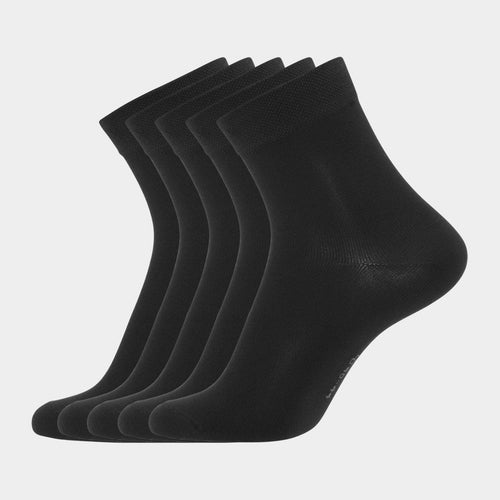
A thick toe seam can press on a sore spot, especially when the foot is swollen and there is less room in the sock than usual. A flat or seamless toe lies smooth against the skin and does not create a hard point. See bamboo socks without a seam.
One size up
If the sock has to go over a bandage, one size up may be needed to avoid pressure. The bandage adds bulk, and a sock in your normal size gets stretched so much that it squeezes. For a foot without a bandage, your normal size is the right choice.
How to put it on
Roll the sock down to the heel before you put it on, rather than pulling it up from the toe. That way you can guide it gently over the bandage without tugging at the fabric. If it is hard to reach your foot, it helps to sit down and get a hand.
Soft material
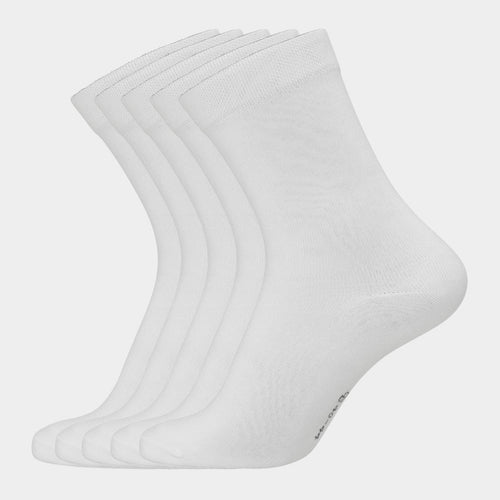
A smooth fabric glides over the skin instead of rubbing, and that matters when the foot is already sore. Bamboo viscose is soft, feels smooth and moves moisture away from the skin. See the models in bamboo socks for women.
For men
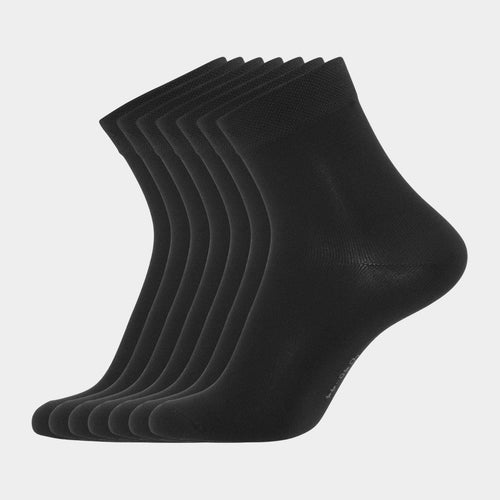
The same advice applies to men: a soft cuff, a flat toe and one size up if the sock has to go over a bandage. Larger feet and wider bandages often mean even less room in the shoe. See the matching models in bamboo socks for men.
Change often
A foot in a bandage or cast can get warm and damp, because air cannot reach it. Change the sock daily, or more often if it feels damp. A dry sock is more comfortable and keeps the skin around the bandage in better condition.
Ask your care provider
If you have wounds, pressure sores, reduced feeling or diabetes, your care provider should advise you on footwear and socks. A sock can make daily life more comfortable, but it does not replace treatment. If in doubt, talk to your doctor or podiatrist.
Washing
Wash the socks at 40 degrees and without fabric softener, which leaves residue against the skin. That matters more when the skin is already sensitive. Air drying keeps the fabric soft and the elastic intact. The rest of the rules are in the washing guide.
When the foot has healed
Once the bandage is off and the swelling has gone down, you can go back to your normal size. A sock that is too big for a healthy foot rolls and folds in the shoe. Keep a couple of the larger socks if you know the foot may swell again.
Frequently asked questions
Should I choose one size up?
Only if the sock has to go over a bandage or a swollen foot. For a healthy foot without a bandage, your normal size is the best choice.
Which model is the gentlest?
One with a soft cuff and no thick toe seam. It goes on without squeezing and does not create hard pressure points on a sore spot.
Can socks relieve pain?
They can make walking more comfortable, but they do not treat pain. If you have wounds or reduced feeling, talk to your doctor.
See our range of men's bamboo socks.