Socks for new shoes
Short answer: New shoes rub most in the first weeks, while the heel counter has not yet shaped itself to the foot. A smooth sock without a thick seam over the toes reduces friction and with it the risk of blisters while the shoes are broken in.
The heel counter
Most blisters in new shoes form at the heel, where the counter is stiff and has not yet given. With every step, the heel rubs slightly up and down against it, and that repeated movement irritates the skin. A smooth sock reduces friction, because it glides instead of catching on skin and lining.
No seam over the toes
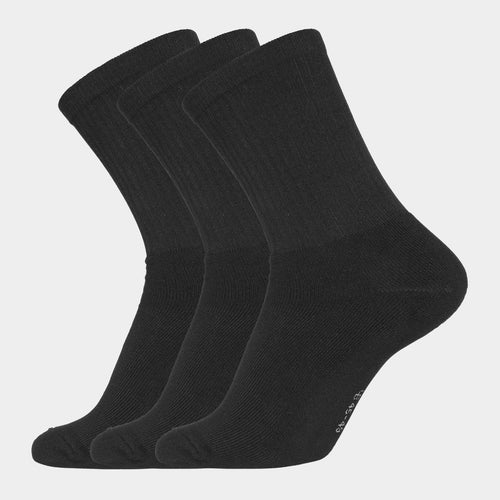
A thick toe seam creates a pressure point that you notice most in a new shoe, where there is little room at the front. The seam presses down on the toes with each step, and after a few hours it can leave a sore spot. A sock with a flat toe seam avoids that. See bamboo socks without a seam.
The right size
A sock that is too big folds in the shoe and creates new pressure points under the foot and at the heel. One that is too small pulls the heel under the foot and tightens over the toes. Both are worst in a new shoe that is already snug. Choose your size by shoe size. Read more about sock sizes.
Moisture
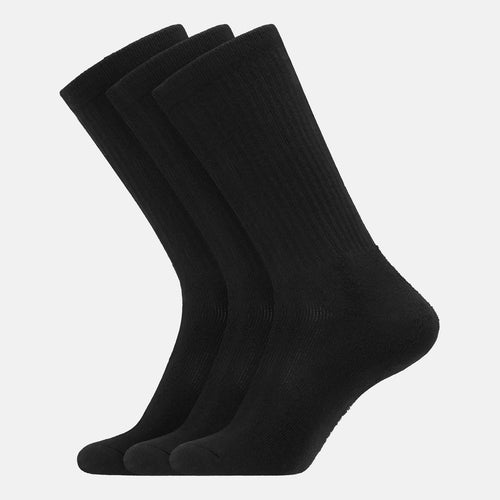
A damp sock softens the skin and makes it more prone to rubbing. That is why blisters often appear late in the day, after the foot has sweated for hours. A sock that moves moisture away from the skin keeps it drier and tougher. Bring a spare pair in the first days so you can change. See all bamboo socks for men.
Short spells at first
At first, wear new shoes for a few hours at a time so the leather or material can shape itself to your foot at a gentle pace. Wear them at home or on short trips before spending a full working day in them. If you feel a sore spot, switch back to your old shoes before it becomes a blister, and try again the next day.
For women
The same principles apply for women, but many new women's shoes are cut lower and narrower, leaving less room for a thick sock. A thin, smooth sock without a heavy seam is the best choice here, so no new pressure points appear. Choose a size that fits and does not fold. See the matching models in all bamboo socks for women.
Washing
Wash the socks at 40 degrees and let them air dry. High heat and the tumble dryer can shrink the yarn and roughen its smooth surface, and that surface is what reduces rubbing. Skip fabric softener as well, since it makes the sock worse at moving moisture away. Read more in the washing guide.
After breaking in
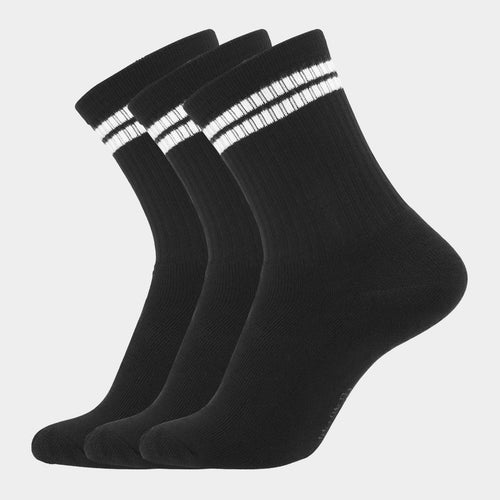
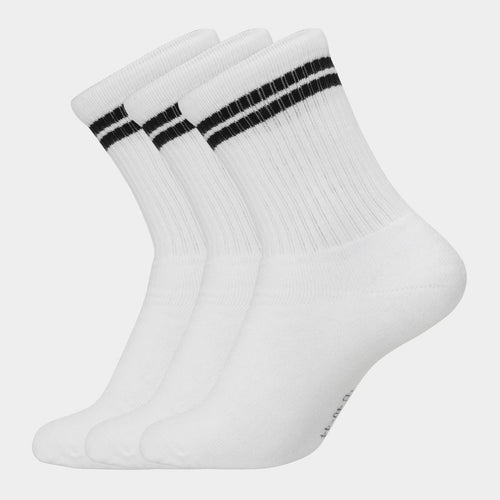
Once the shoes have shaped themselves to the foot, the rubbing usually fades on its own. That typically takes a few weeks, depending on the material and how often you wear them. Until then, a smooth sock is the simplest help. With new sneakers, a lightly padded sock can also soften the pressure from a stiff sole. See bamboo tennis socks for women.
Frequently asked questions
Where do blisters form most often
At the heel, where the counter is stiff in new shoes. The repeated rubbing with each step irritates the skin, especially when the foot is damp late in the day.
Does a thicker sock help
Only if the shoe has room. In a tight new shoe a thick sock adds pressure, so a thin and smooth sock is usually the better choice.
How long does breaking in take
Usually a few weeks, depending on the material and how often you wear them. Start with a few hours at a time and build up to a full day.
See our range of men's bamboo socks.