Socks for wellington boots
Short answer: Rubber boots do not breathe, so your feet usually get wet from the inside through sweat rather than from the outside through rain. A sock that moves moisture away from the skin and reaches above the top of the boot is the right choice for long days.
No ventilation
Rubber seals completely, which is exactly why the boot keeps water out. But it also means that all the moisture your foot releases during the day stays inside. Unlike leather, rubber lets none of it escape, so the sock matters more here than in most other shoes.
Why your feet get cold
Many people think cold feet in rubber boots come from the weather outside. Most often it is sweat. A damp sock draws heat away from the foot, so your toes feel cold even when the boot is dry on the outside. Keep the sock drier against the skin and your feet stay warm for longer.
The length
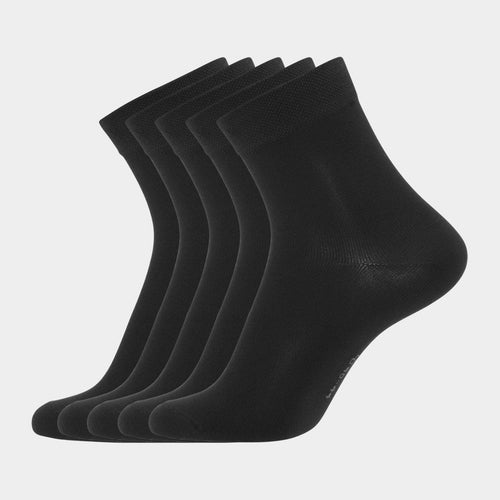
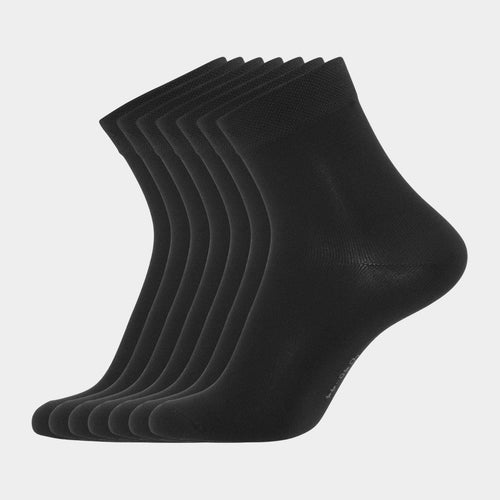
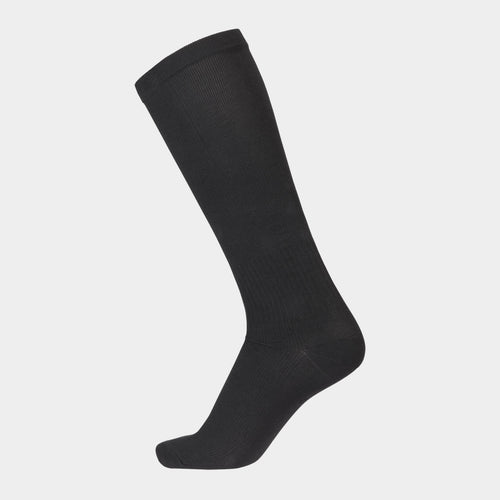
The sock should reach above the spot where the top of the boot rubs against your calf. If it ends below, the rubber rubs directly on the skin with every step and leaves a red mark around your leg. Choose a regular length. See bamboo socks for men for examples.
The thickness
A thick sock sounds like the safe choice, but it takes up room in the boot and presses on the foot. When the foot is squeezed, circulation suffers and the toes get cold faster. A medium sock that moves moisture away from the skin works better for most people.
Room in the boot
Rubber boots do not give like leather does. Try them on with the sock you actually plan to wear and check that you can move your toes. With too little room, no sock will help. With too much, the foot slides back and forth and the heel rubs.
Change after use
Take the sock off as soon as you come inside. A sock that has been in rubber boots for several hours is often damp, even if it does not feel wet. Put it in the laundry and pull on a dry pair. If you need to go out again later, take a fresh pair instead of reusing the old one.
Air the boot
The boot needs time to dry as well. Place it somewhere with air around it, ideally with the top open, and not in a cold shed where the moisture stays. If the boot has a loose insole, take it out and let it dry separately. That way the boot is dry next time, and odour does not settle in.
For women
The same applies to boots for women. The shaft is often narrower, so it is extra important that the sock does not bunch up in folds around the ankle or calf. A smooth sock with a soft cuff sits best. See the matching styles in bamboo socks for women, where you can choose between short and long versions.
The range
If you wear rubber boots often, it makes sense to keep a few pairs of socks just for them. Then you always know the length is right and the sock lies flat under the shaft. See the full range in all bamboo socks for women.
Washing
Wash the socks at 40 degrees and skip fabric softener. Softener leaves a film on the fibres, and that reduces the ability of the sock to move moisture away from the skin. Let the socks air dry so they keep their shape and the cuff does not stretch out. Turn them inside out. See the washing guide.
Frequently asked questions
Why do feet get wet in rubber boots?
Because rubber does not breathe. Sweat from the foot cannot escape the boot, so it stays in the sock. A sock that moves moisture away from the skin makes a clear difference.
Should the sock be long?
Yes, it should reach above the spot where the top of the boot rubs against your calf. Otherwise the rubber rubs directly on your skin and easily leaves a red mark.
Do thick socks help?
Not necessarily. A thick sock can squeeze the foot so circulation suffers. A medium sock that moves moisture well usually keeps the foot both drier and warmer inside the boot.
See our range of men's bamboo socks.