Sweat in a dress and what you can do
Short answer: Sweat on a dress shows most clearly under the arms and on the back. A thin layer under the dress absorbs moisture before it reaches the outer fabric, and a few simple choices about colour and fit make a big difference.
The layer underneath
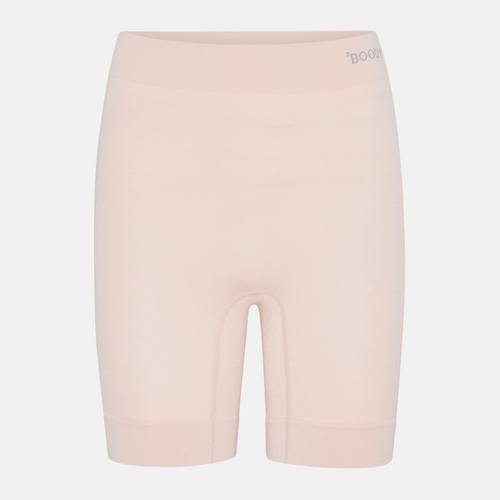
A slip or a thin top under the dress takes the sweat before it reaches the outer fabric. It then does not show on the dress, and after a warm day only the under layer needs washing. It also makes a thin dress less see-through. See bamboo slip.
The dress fabric
A dress in bamboo viscose moves moisture away from the skin rather than holding it close to the body. That makes the fabric feel less clammy on a warm day. Synthetic fabrics more often trap moisture and can start to smell sooner. See bamboo dresses.
Choosing a colour
Sweat shows most on mid blue, grey and other mid tones, where the wet patch turns much darker than the rest. Dark colours such as black and navy, and very light colours such as white and off white, hide it best. Keep that in mind when choosing a dress for a warm day.
Loose rather than tight
Air between fabric and skin means less sweat, because moisture can evaporate before it builds up. A loose dress is therefore cooler than a close fitting one, even in the same fabric. On the hottest days, choose a cut that is not tight under the arms or across the back.
Deodorant marks
Yellow marks under the arms usually come from deodorant mixing with sweat and setting into the fabric. Let deodorant dry fully before putting the dress on, and use a smaller amount. If the marks are already there, read how to remove deodorant marks from bamboo clothing.
Chafing in summer
Sweat and heat cause not only marks but also chafing between the thighs, when damp skin rubs against itself. A pair of thin under shorts beneath the dress keeps the skin apart and absorbs some of the moisture. See bamboo under shorts.
Plan the day
If you know the day will be long and warm, pack an extra top in your bag and change along the way. That is often enough to keep the dress fresh until evening. A thin cardigan can also hide any marks if you are going on somewhere after work.
Air the dress
Hang the dress up to air after wearing instead of leaving it in a pile. The air removes some of the moisture and odour, and you can see whether it needs washing or can be worn again. A dress left crumpled and damp starts to smell sooner.
Washing
Wash the dress within a couple of days so the sweat does not set into the fibres and form yellow marks. Wash at 40 degrees inside out with a mild detergent, and let the dress air dry. Read more in the washing guide.
When to talk to your doctor
It is normal to sweat on warm days and when you are busy. If you notice that you sweat much more than before, or that it comes for no reason, it may be a good idea to talk to your doctor. Clothing can make the day more comfortable, but it does not solve the cause.
Frequently asked questions
Which colour hides sweat best?
Dark colours such as black and navy, and very light colours such as white. Mid blue and grey show it most clearly, because the wet patch turns much darker.
Does a layer under the dress help?
Yes. A slip or a thin top absorbs the moisture before it reaches the outer fabric, so the sweat does not show and you only need to wash the under layer.
Why do yellow marks appear under the arms?
They usually come from deodorant mixing with sweat and setting into the fabric. Let the deodorant dry before dressing, and wash the dress within a couple of days.
You can find the full range at Bamboo-Clothing.com.