The overlock seam and what it can do
Short answer: Overlock stitches the pieces together, trims the edge and wraps it in one pass. The seam can stretch with the fabric, which is why it is used in almost all knitted clothing. You know it by the threads that loop along the edge.
Three things at once
The machine has a knife that trims the edge, and three or four threads that lock it. The result is a seam that neither frays nor pops when the fabric is pulled. It all happens in one pass, which is one reason the method is so common in knitted clothing.
Why it tolerates stretch
The threads run in loops around the edge instead of in a straight line. The loop can straighten out, and the seam follows the fabric instead of snapping. A straight seam on a knit can pop when you pull the garment, because the thread cannot give. See bamboo sweatpants for women.
Why the seam does not fray
The knife trims the edge cleanly so no loose ends remain to pull on, and the thread loops enclose the freshly cut edge so the fibres stay in place. Without that enclosure, jersey could curl and run at the cut edge. That is why an overlock edge looks dense and feels soft.
Where you find it
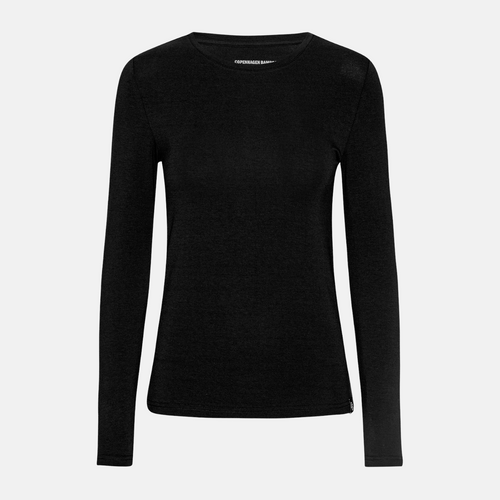
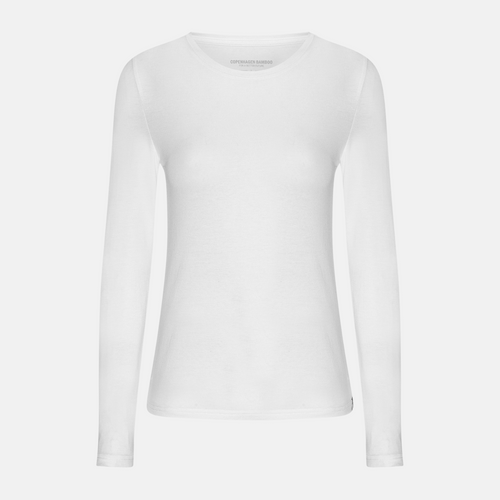
Turn any knitted garment inside out. Side seams, sleeve seams and shoulder seams are almost always overlock. You know it by the small loops along the edge of the seam on the inside, and by the fabric being trimmed right up to the threads. See women's long-sleeved bamboo T-shirt.
Three or four threads
Four threads give a stronger seam. Three are used where the fabric is thin and soft. So there is no single right number, only a choice made for the fabric and the purpose of the garment. A thin fabric can turn stiff and bulky if the seam is too heavy, so the seam must suit the fabric.
How to make the seam last
The seam lasts best when it is not pulled hard while you put the garment on or take it off. Use calm movements and do not tug the seam to make the garment sit. Wash gently and do not hang heavy wet pieces from the shoulders, where the seam takes the most strain.
Can an overlock seam be repaired at home
Yes, with a narrow zigzag on an ordinary machine. The seam becomes a little stiffer, but it holds. Use a needle for knits and a thread close to the colour of the garment. If the seam has opened over a long stretch, have a tailor sew it so it stays even.
Can overlock chafe
Rarely, but the seam builds up a little. In close-fitting underwear, flatlock is chosen instead, because it lies flatter. Also see period underwear to see how seams can look on underwear.
How to check a seam
Turn the garment inside out and look at the seam. If the loops are even and the seam lies smooth, it was probably sewn with care. Loose threads, skipped stitches or wavy fabric along the seam point to too much tension. Always check the shoulder and side seams before you decide.
Frequently asked questions
Can an overlock seam be repaired at home
Yes, with a narrow zigzag on an ordinary machine. The seam becomes a little stiffer but holds up for everyday wear.
Why are there three or four threads
Four threads give a stronger seam. Three are used where the fabric is thin and soft, so the seam does not get too stiff.
Can overlock chafe
Rarely, but the seam builds up a little. In close-fitting underwear, flatlock is chosen instead, because it lies flatter.
You can find the full range at Bamboo-Clothing.com.