The upper body and layers that must not bunch up
Short answer: Several layers on the upper body give warmth, but they can also end up as an uneven lump under the arms and at the waist. With thin, smooth layers in the right order you stay warm without feeling wrapped up.
Why layers bunch up
Layers bunch up when the fabric of one layer is pulled together by the next. It typically happens under the arms and around the waist, where the body bends and twists. If the innermost layer is too long or too loose, it folds under your jumper. If it is too tight, it drags the outer layers with it. The answer is rarely fewer layers, but layers that are cut to suit each other and lie in the same direction.
Start with a thin, smooth base layer
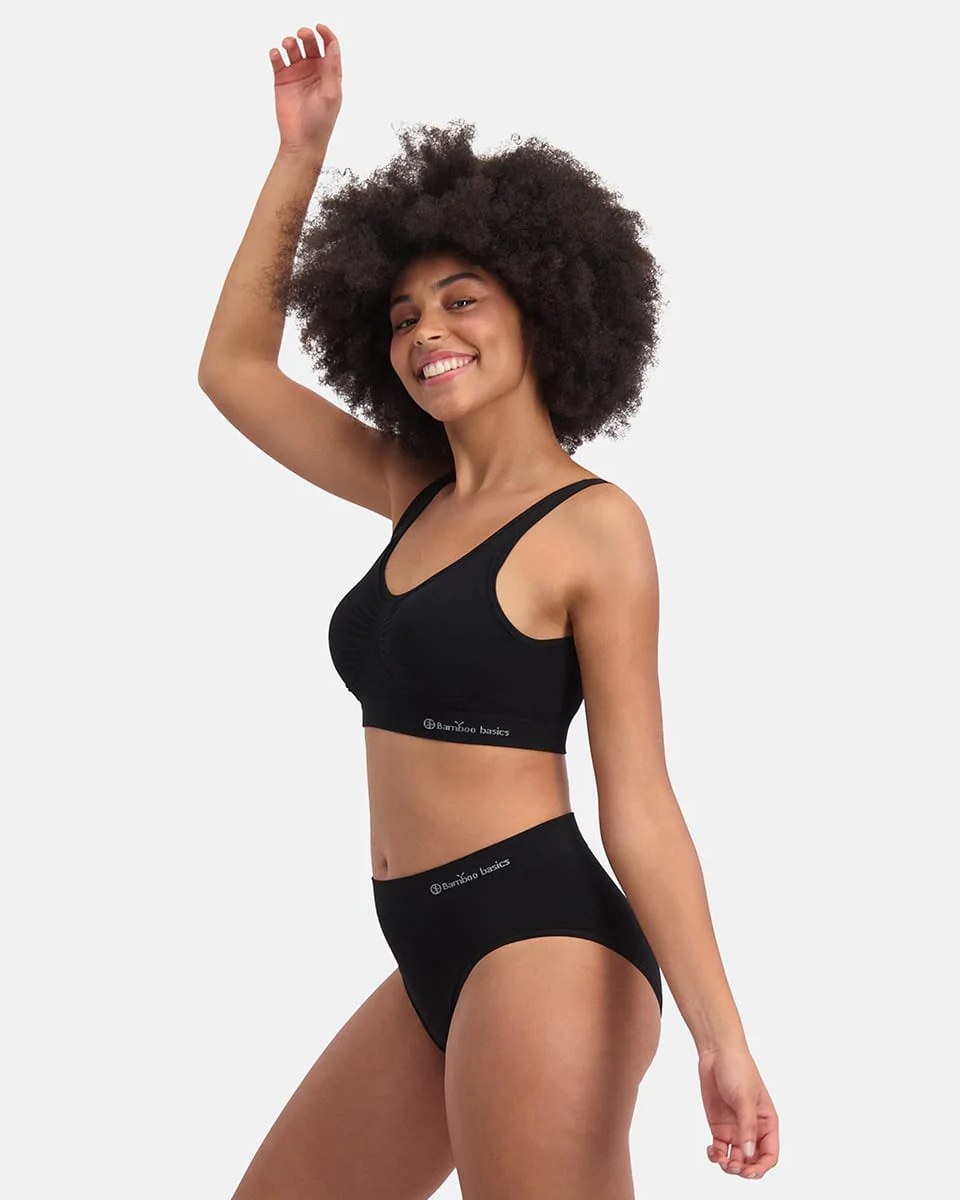
The base layer should be as thin as possible with a smooth surface, so the next layers slide over it. A layer made of viscose from bamboo has an even, soft surface and adds almost no bulk. See bamboo undershirt for women. Choose a fit close to the body but without squeezing, so no folds appear when you move. Check that the hem at the hip does not roll up under the other layers.
The difference in length between layers
One of the most common causes of bunching is that the layers are not the same length. If the undershirt is shorter than the jumper, the jumper hangs loose at the waist. If the undershirt is longer, it peeks out and collects in the waistband. Aim for the base layer to be slightly longer than the next, and for the outermost to cover the others. See women's long-sleeved bamboo T-shirt for a length that works as a middle layer.
Sleeves and armpits
Most layering problems arise under the arms. Thick seams and several layers of fabric gather there, which causes rubbing and heat. Use sleeves that are not too wide, so no loose folds form, and avoid having several layers with thick seams in exactly the same spot. If one layer is sleeveless, it helps if the armhole sits straight without cutting in. Lift your arms fully and notice whether anything pulls or hangs.
Weight and order of the fabrics
Think in three layers, where the innermost is thinnest, the middle one keeps you warm and the outer one protects against wind and rain. The outer layer may have a little more room, so the layers beneath are not squeezed together. If all three layers are tight, bunching appears. If only the outer one is roomy, there is air in between, and air insulates. Choose two good layers rather than four mediocre ones. See also the brand Lindbergh if you are looking for tops in a classic Scandinavian style.
Care to keep layers smooth
Bobbles and worn edges lead to bunching. Wash the layers at 30 to 40 degrees inside out, and do not use fabric softener, which can leave a film on the fabric and make it less smooth. Dry them flat or on a hanger, and do not iron on high heat. If a layer starts to curl at the edge, replace it before it affects the other layers. A little extra thought at washing time keeps layers smooth for much longer.
Frequently asked questions
How many layers should I wear on the upper body
It depends on the temperature and how much you move. Two to three thin layers is often a good starting point, so you can add and remove them.
Why does my jumper gather at the waist
Typically because the layers differ in length, or because the innermost layer is too loose. Choose layers cut to suit each other that lie smoothly.
Does the base layer have to be tight
No. It should lie close but not squeeze. If it is too tight, it drags the other layers with it.
You can find the full range at Bamboo-Clothing.com.