The weave in bedding and what you can feel
Short answer: The weave decides whether bedding feels smooth, matte or stretchy. Percale is matte and crisp, sateen is smooth and slightly glossy, and jersey stretches like a T-shirt. Which suits you best depends mostly on what you like to lie in.
Percale
Percale is a dense, simple weave where the threads cross one over and one under. This gives a fabric that feels firm, matte and slightly crisp. It feels cool to the touch when you get into bed, but it creases more than the other types. Many people associate it with classic hotel bedding.
Sateen
Sateen is woven so that several threads lie on top of each other before they cross. The surface therefore has more long, loose threads, and the fabric becomes smooth and slightly glossy. It feels soft and gliding against the skin. The smooth surface can, however, be a little more sensitive to rough hands and nails.
Jersey
Jersey is not woven but knitted, just like a T-shirt. This makes the fabric stretchy and soft, and it gives as you move. Jersey feels more like clothing than classic bedding, and many find it cosy to sleep in. It creases the least of the three and rarely needs ironing.
What to choose
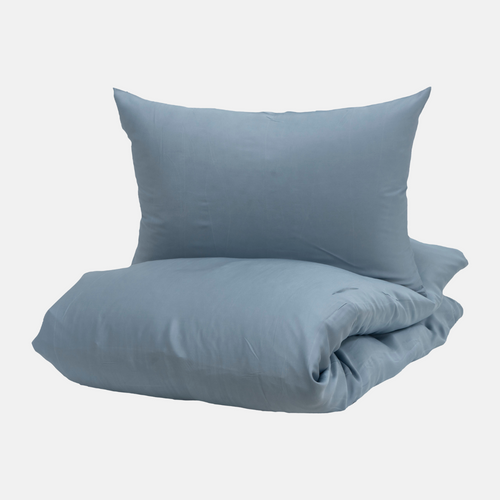
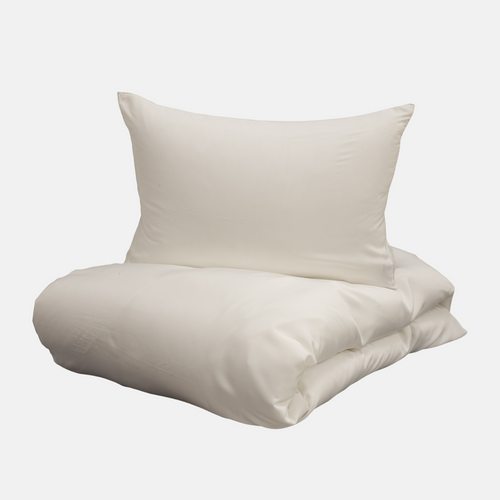
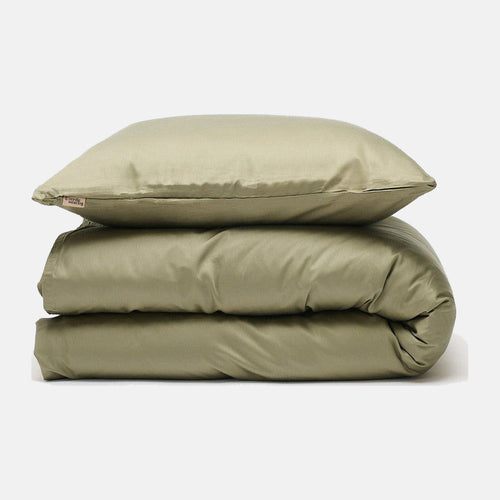
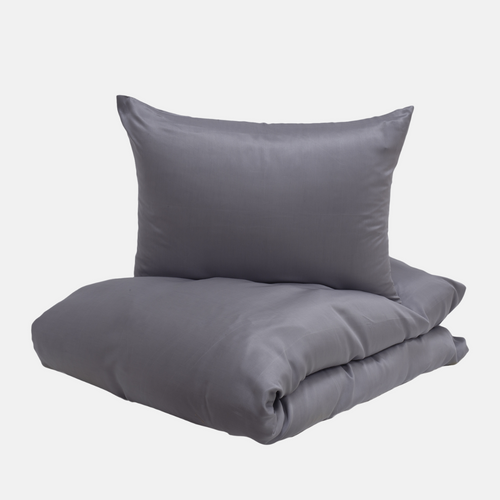
If you like a firm, cool layer that feels fresh, percale is a good choice. If you want something smooth and gliding, look at sateen. If you prefer soft and forgiving, choose jersey. There is no single right answer. You can see the current sets in bamboo bedding.
Creasing and ironing
Jersey creases the least, because the knitted fabric straightens itself out. Percale creases the most, as the dense weave holds on to folds. Sateen sits somewhere in between. That is why some people iron their bedding and others never do. Hang bedding spread out to dry and you avoid most creases without an iron.
The fibre matters too
The weave is only half the story. The fibre the fabric is made from also affects how it feels. Bamboo viscose usually feels smoother than cotton in the same weave, because the fibre itself is smooth. To learn more about how the two materials differ, read bamboo bedding versus cotton percale.
Summer and winter
In summer many prefer percale or a smooth fabric that feels cool at first touch. In winter some choose jersey, because it feels warmer and more like clothing. This is mostly about the feel against the skin, not about one fabric holding much more heat than another. The duvet thickness matters more.
Washing by weave
All three types can usually be washed the same way, but always follow the care label. Skip fabric softener, which can dull the surface, and dry bedding in the air rather than in a tumble dryer. Sateen is best washed without rough items such as zips and hook and loop fasteners that can pull threads.
More about the types
The difference between weaves is easiest to understand once you have tried them, but a description can help you choose. For a longer explanation of how the three types are built and what that means in everyday use, read our piece on percale, jersey and sateen.
When in doubt
If you are unsure, think about what you sleep best in today. If you like a crisp shirt, percale often suits you. If you prefer a soft T-shirt, jersey is a better fit. If you like something smooth and gliding, sateen is a good option. The feel you know from clothing applies in bed too.
Frequently asked questions
Which weave feels coolest?
Percale feels coolest to the touch, because the surface is firm and matte and makes good contact with the skin. Smooth fabrics such as sateen also feel cool at first touch.
Which weave creases least?
Jersey. It is knitted and straightens itself out, so it rarely needs ironing. Percale creases the most, while sateen sits somewhere between the other two.
Is sateen the same as silk?
No. Sateen is a way of weaving, not a fibre. It can be made from many materials, and it is the weave that gives the smooth, slightly glossy surface.
See our range of Nordic Weaving bedding.