What spinning does to the fibres
Short answer: Spinning presses the laundry against the drum wall with great force and pulls the water out through the fabric. The fibres are pressed flat and stretched in the direction the force acts.
How spinning works
When the drum spins fast, the laundry is pressed against the wall. The wall has small holes, and the water is flung out through them while the laundry stays behind. The faster the drum turns, the more water comes out, and the drier the laundry is when the programme ends.
The force is greater than you think
At high speeds, many times the force of gravity acts on the laundry. That is why it is pressed together so hard, and why you feel a wet, heavy bundle when you take it out. The force is useful for getting the water out, but it also acts on the fibres.
Fibres are pressed and stretched
The fibres are pressed flat and stretched in the direction the force acts. The fabric can therefore feel different right after spinning, and most fibres straighten again as it dries. But hard pressure repeated many times can make some garments slowly lose their shape.
Creases get stuck
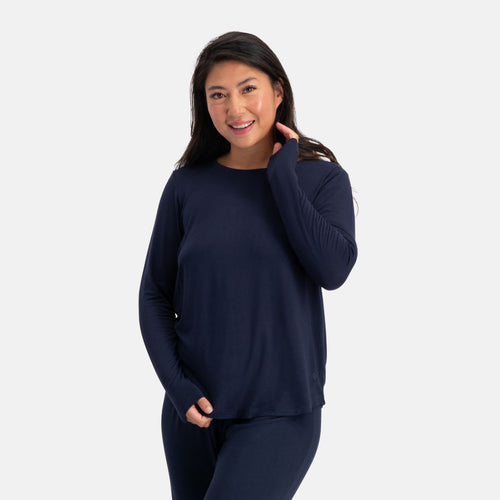
If a garment lies crumpled during spinning, the creases are pressed in and become hard to get out again. Shake garments out before they go in the machine, and take them out soon after the programme ends. See bamboo sleepwear for women, where smooth pieces are more comfortable to wear.
Heavy items pull the rest along
A wet towel or a sheet can pull thin garments out of shape when the drum flings them around together. The heavy weight tugs at the light fabric. See bamboo towels and home and homewear in bamboo, which are best washed on their own.
Why spin at all
Spinning removes water and shortens the drying time considerably. Without it the laundry would be dripping wet and take many hours to dry. It also lets you dry indoors without the damp lingering. In a tumble dryer you save energy, because there is less water to evaporate.
What is a good setting for knitwear
Low to medium. That is enough to take most of the water without pressing hard. Knitwear stretches easily, especially when wet, so a gentle spin is better than a hard one. Choose a programme made for wool or delicates, if your machine has one.
Does high spinning crease laundry more
Yes. Higher speeds give more and deeper creases, because the laundry is pressed together harder. If you have smooth fabrics you would rather not iron, choose lower speeds. Shake the laundry out and hang it up at once, so the creases fall out on their own.
Choose the setting by the laundry
There is no single right answer. Towels, sheets and sturdy clothes can take high speeds, while knitwear and thin fabrics do better with lower ones. Sort the laundry so similar things are washed together, and set the spin by the most delicate item in the machine. Then every piece gets what it needs.
Frequently asked questions
Why spin at all
Because it removes water and shortens the drying time considerably. Without spinning the laundry would be dripping wet and take many hours to dry, on a line or in a dryer.
What is a good setting for knitwear
Low to medium. That is enough to take most of the water without pressing hard, and it protects both the shape and the fibres of the knitted fabric.
Does high spinning crease laundry more
Yes. Higher speeds give more and deeper creases, because the laundry is pressed together harder. Shake the laundry out and hang it up at once, so the creases can fall out.
You can find the full range at Bamboo-Clothing.com.