What stitch density means for sheerness
Short answer: Light passes through the gaps between the stitches. The smaller and tighter the stitches are, the less light gets through, and the less the fabric shows through. Colour, stretch and yarn also matter, so density is only part of the explanation.
The gaps are small but many
Even a dense knit has air between the loops. The amount of light that gets through is the sum of all the small openings across the surface. So a fabric can look tight from a distance and still let some light pass when you hold it up to the window.
Colour and density work together
A light fabric reflects light and looks more see-through than a dark one of the same density. That is why white T-shirts are usually knitted more tightly than black ones. Colour can hide or reveal what lies beneath. See bamboo jogging suit for men to compare colours.
What stretch does
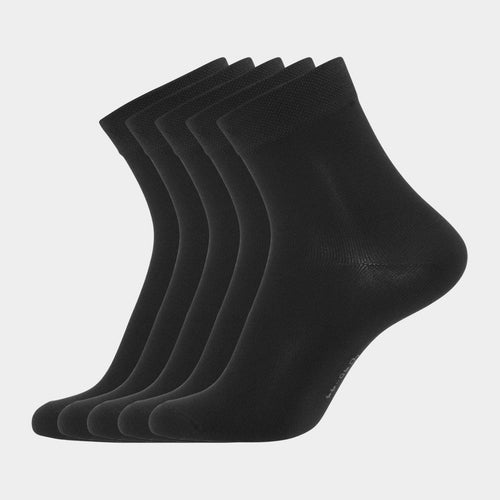
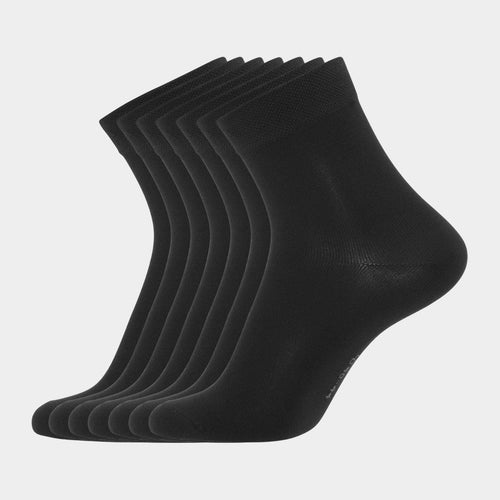
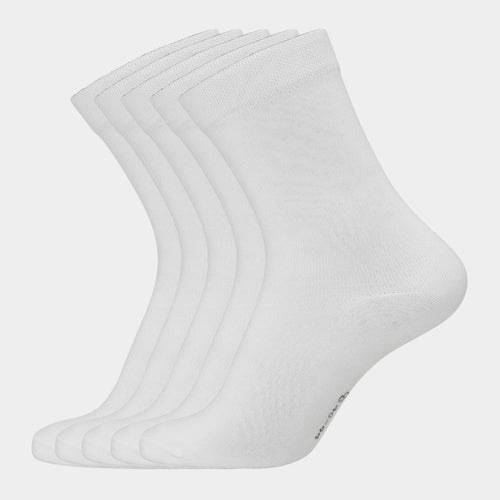
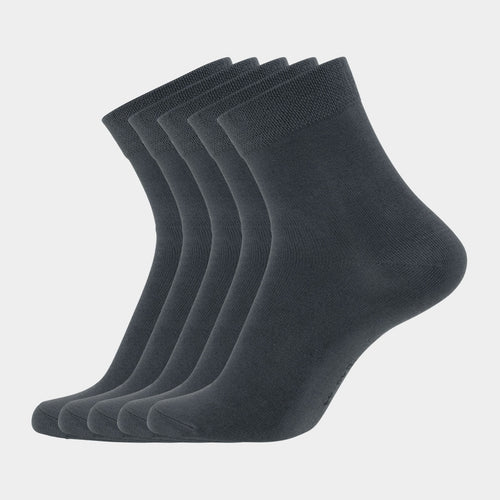
When the fabric is stretched over the body, the gaps grow larger. A garment that fits is therefore less see-through than one that is too tight. If you choose a size with a little room, the fabric sits at its natural density. See bamboo loungewear for men and bamboo socks for men.
The thickness of the yarn matters
A thick yarn fills more of each stitch and lets less air pass than a thin one. Two fabrics with the same stitch size can behave differently if the yarn is not the same. Thickness and density must be read together when judging whether a fabric is opaque.
Check the fabric against the light
The best test is to hold the fabric up to the light. If you can clearly see the window frame or the outline of your hand through it, it will show through on the body too. The test takes seconds and tells you more than a written description.
Why light colours are most exposed
Skin has a warm tone that shows clearly through a light, thin fabric such as white or pale grey. Dark colours absorb light instead of sending it back, so they hide more. If you want to avoid see-through fabric, a darker colour is often the easiest choice.
Layer on layer
An extra layer underneath usually makes the biggest difference. A thin light garment works well if you wear a layer in a darker colour beneath it. It is a simple fix that needs no change of garment, and it helps with light tops and light trousers when the sun is low.
Wear and washing
Over time the fibres wear down and the stitches open slightly. A fabric that was dense when new can become more see-through after many washes. Gentle washing, less heat and fewer tumble dryer cycles help keep the density. Avoid rubbing the fabric against rough surfaces.
How to choose
Choose the colour first, then the weight of the fabric. If in doubt, hold the fabric up to the light in the shop or at home before you decide. Also look at the fit: too tight gives transparency, too loose gives folds. The aim is a fabric that lies calmly and covers evenly.
Frequently asked questions
How do I test it before buying
Lay the fabric over your hand and see whether the skin can be made out through it. Try the test in daylight, since it shows more clearly than artificial light how much really gets through.
Does a heavier fabric always help
Usually yes, but a heavy and loose knit can still let light through. What matters is how tight the stitches are, not only how much the fabric weighs per square metre.
Does fabric become more see-through over time
Yes, when the fibres wear thin and the stitches open. Gentle washing and low heat in drying help the fabric keep its density for as long as possible.
You can find the full range at Bamboo-Clothing.com.