What the thread in a seam is made of
Short answer: Sewing thread is almost always polyester, even in a viscose garment. The thread has to be stronger than the fabric and withstand the heat of the needle at high speed. That is why it is not the same fibre as the rest of the garment.
Why it is not the same fibre
A sewing machine drives the needle through the fabric thousands of times a minute. Friction heats the needle, and a viscose thread would lose strength along the way. Polyester handles heat and strain better, so it is used for the seams, even when the fabric itself is a different fibre.
Stronger than the fabric
The thread in a seam carries all the load when you move, while the fabric spreads the pull over a larger surface. That is why the thread must be stronger than the fabric around it. If the thread goes first, the seam opens even though the fabric is intact.
Core thread and textured thread
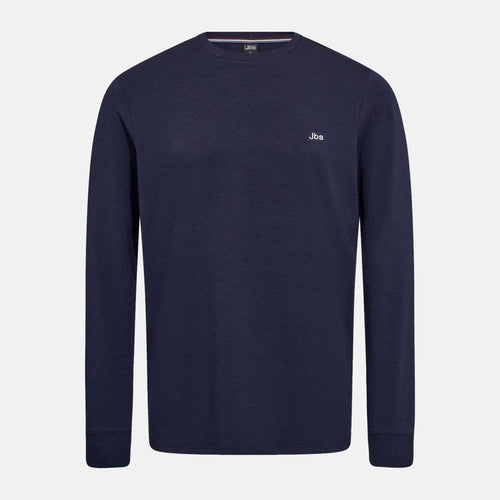
Many seams are sewn with a core thread, with polyester inside and a softer fibre outside. Overlock seams often use an airy, textured thread that fills more and feels soft against the skin. See Jack and Jones.
What it means for you
The thread shrinks less than the fabric, so a seam can feel slightly tight after many washes. It is not a fault but the result of two materials that react differently to water and heat. The seam is often the first place you notice that the fabric has settled.
Look at the seams in the shop
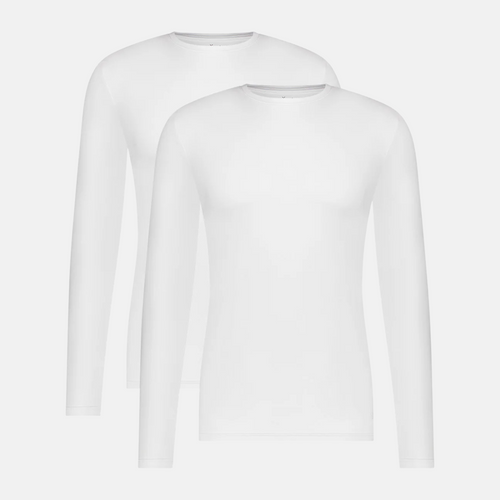
Look at the seams before you buy. Even stitches, no loose ends and a seam that lies flat point to careful work. Pull the fabric lightly on both sides of the seam and see whether it gives with the fabric. See bamboo T-shirts for men.
Seams in long sleeve tops
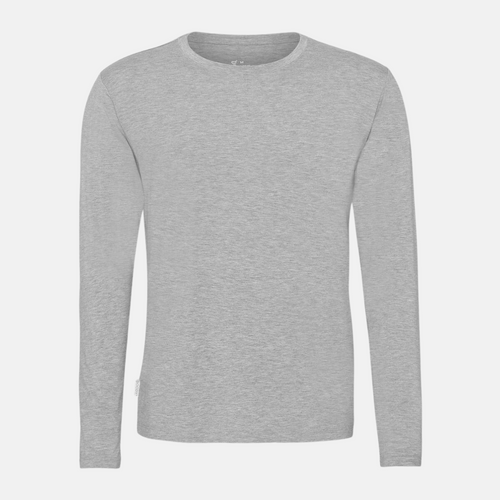
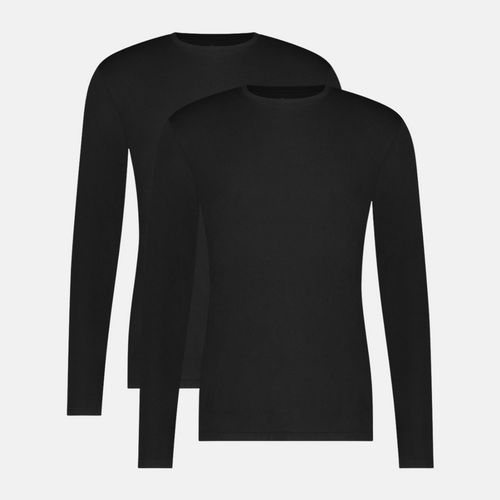
At the sleeves and shoulders the seam moves most, because the arms are constantly raised and bent. Here it matters even more that the thread has some give, so the seam can follow the fabric without breaking. See bamboo long sleeve T-shirt for men.
When a seam comes open
If a seam comes open, the fabric is usually still fine. The thread has typically given way at the point where the load was greatest. Small seams can be repaired at home with polyester thread and a small zigzag stitch, and bigger damage is best left to someone who sews.
Care that spares the seam
Wash as the label says and do not overfill the machine, so the clothes are not pulled about. Tumble drying stresses both fabric and thread, and air drying is gentle on both. Turn the garment inside out so the seams meet less rubbing.
In short about the thread
Thread is the least visible part of a garment, but it holds everything together. That it is polyester in a viscose garment is a choice made on purpose, based on what works and not on what the fabric label says.
Frequently asked questions
Can you see which thread was used?
Partly. A textured thread looks airy and matt, a core thread looks smooth, but without a magnifier it is hard to tell for sure.
Why does the thread sometimes break first?
Because it carries all the movement in the seam, while the fabric spreads the load over a larger surface, so the pull hits the thread hardest.
Can you sew bamboo viscose with viscose thread?
It can be done, but the seam becomes weaker and tolerates less, because viscose thread loses strength with both heat and moisture.
You can find the full range at Bamboo-Clothing.com.