What twist direction has to do with fabric twisting
Short answer: A yarn is twisted either to the right or to the left. When all the thread in a circular knit fabric is twisted the same way, the side seam can turn around the body over time, usually after the first few washes.
Twist has a direction
Yarns are described as Z or S depending on which way the twist leans, like the slant of the letter. The direction is a setting on the spinning machine and has no effect on the strength of the yarn. The problem only arises when the whole fabric is made from yarn with the same direction, because then all the fibres pull to the same side.
Why a fabric twists
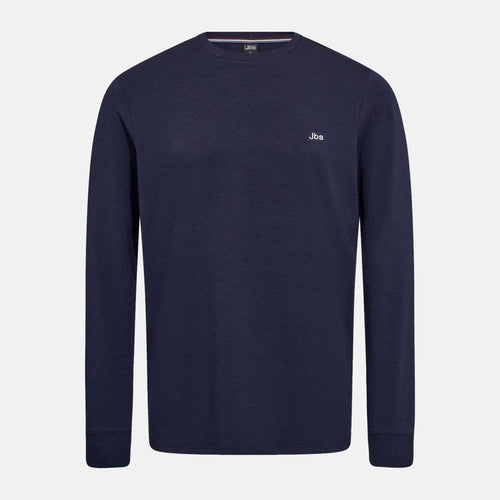
In circular knit, the single-direction twist pulls the fabric slightly askew when it relaxes in washing and drying. The result is the crooked side seam known from cheap T-shirts, where seam and sleeves drift toward the front. It can also show on brands like Jack and Jones if the fabric has not been treated after knitting.
What counteracts it
The factory can blend yarns with opposite twists so the forces cancel out. It can also fix the fabric before cutting. Both take time and money, and it is one of the less visible differences between cheap and expensive basics. You can see the range in bamboo T-shirts for men.
When you notice it
It usually shows after the first few washes, when the fabric relaxes for the first time. The side seam starts to sit a little in front of or behind the centre line of the body, and the shirt feels crooked. After that it usually changes only a little. If nothing shows after several washes, there is rarely cause for concern.
Can it be fixed at home
Rarely completely. If you stretch the garment slightly in the opposite direction while damp, you can reduce the skew a little. The effect is not lasting, though, and often disappears again in the next wash. The best option is to choose a fabric where the factory has already allowed for the problem.
Is it a production fault
Not necessarily. All circular knit fabrics have some tendency to twist, and the factory works to a tolerance. Only if the skew exceeds that tolerance can you call it a fault. If you are unsure, compare with another garment of the same kind and see whether the difference is clear.
Washing that protects the shape
You can lower the risk of strong twisting by washing gently and avoiding hot tumble drying. A low temperature and light spinning put less strain on the fabric. Lay the garment flat to dry and pull the seams straight while damp. That way the fabric starts from a calmer state and the shape holds better.
Long sleeves show it most clearly
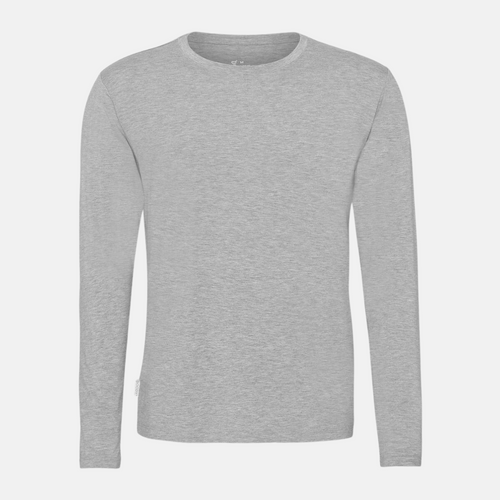
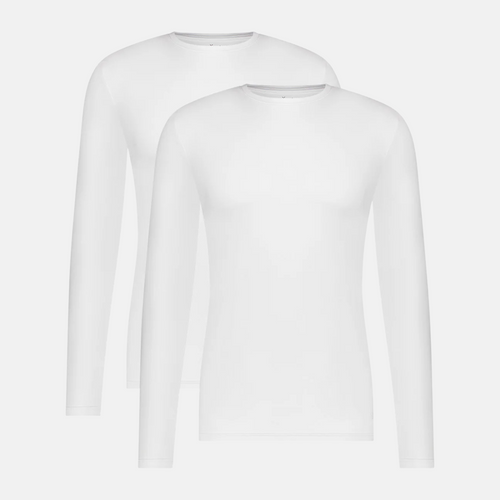
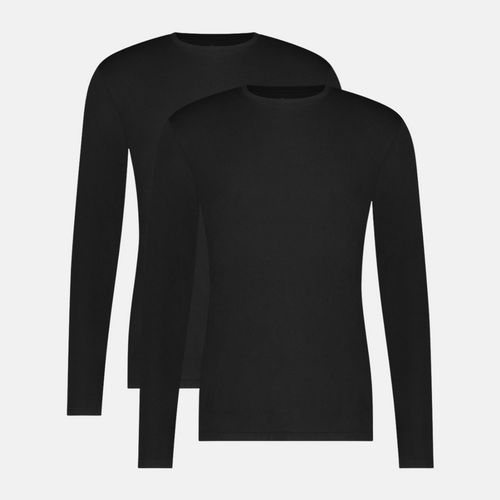
Long sleeves make the skew more visible, because the seam runs over a longer stretch and a small twist becomes a clear shift down the arm. If you have a long sleeve top, you can check it quickly by laying it flat. See the range in bamboo long sleeve T-shirts for men.
How to check before you buy
Lay the garment flat and see whether the side seams run straight from the armpit to the hem. If they are crooked already in the shop, they rarely get better after washing. Also feel the fabric and see whether it seems stable. A calm, dense knit is often a sign that the factory spent time on finishing.
Frequently asked questions
Can a twisted seam be fixed at home
Rarely completely. Stretching in the opposite direction after washing can reduce the skew a little, but the effect is seldom lasting and often returns.
Does it get worse over time
It usually shows after the first few washes and then changes little. If the seam has stayed straight through several washes, it is rarely a problem.
Is it a production fault
Only if the skew exceeds the tolerance the factory works to. Some fabrics made from twisted yarn have a slight tendency to twist, and that is normal.
You can find the full range at Bamboo-Clothing.com.