Why a wet garment hangs longer
Short answer: The weight of the water pulls on the fabric, and the fibres have become softer at the same time. Together that makes loops and seams give way, and the garment grows longer while wet, most of all in knitted fabric.
Two things happen at once
The weight increases with every gram of water, and the inner bonds of the fibre grow weaker as they take on moisture. The fabric can therefore be stretched by its own weight. Neither is dramatic alone, but together they explain why a wet garment suddenly seems too long.
Knit gives the most
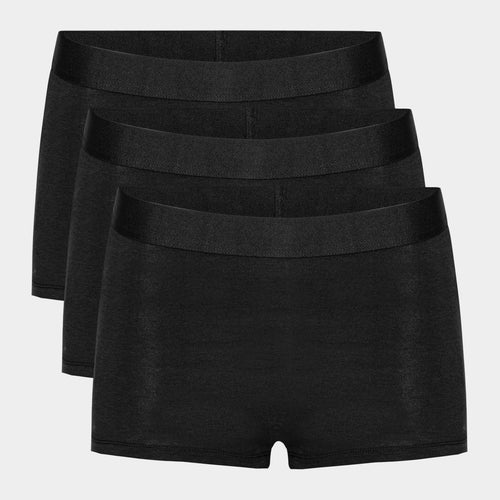
In knit the loops can straighten out, and a wet knit hanging freely can grow many centimetres longer. Woven fabric moves far less, because the threads lie in fixed directions. That is why jumpers, underwear and other knitted pieces need special care while wet. See bamboo night shorts for women.
Why knit is laid flat to dry
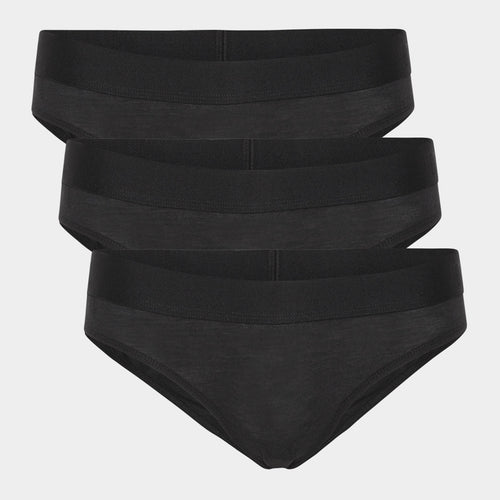
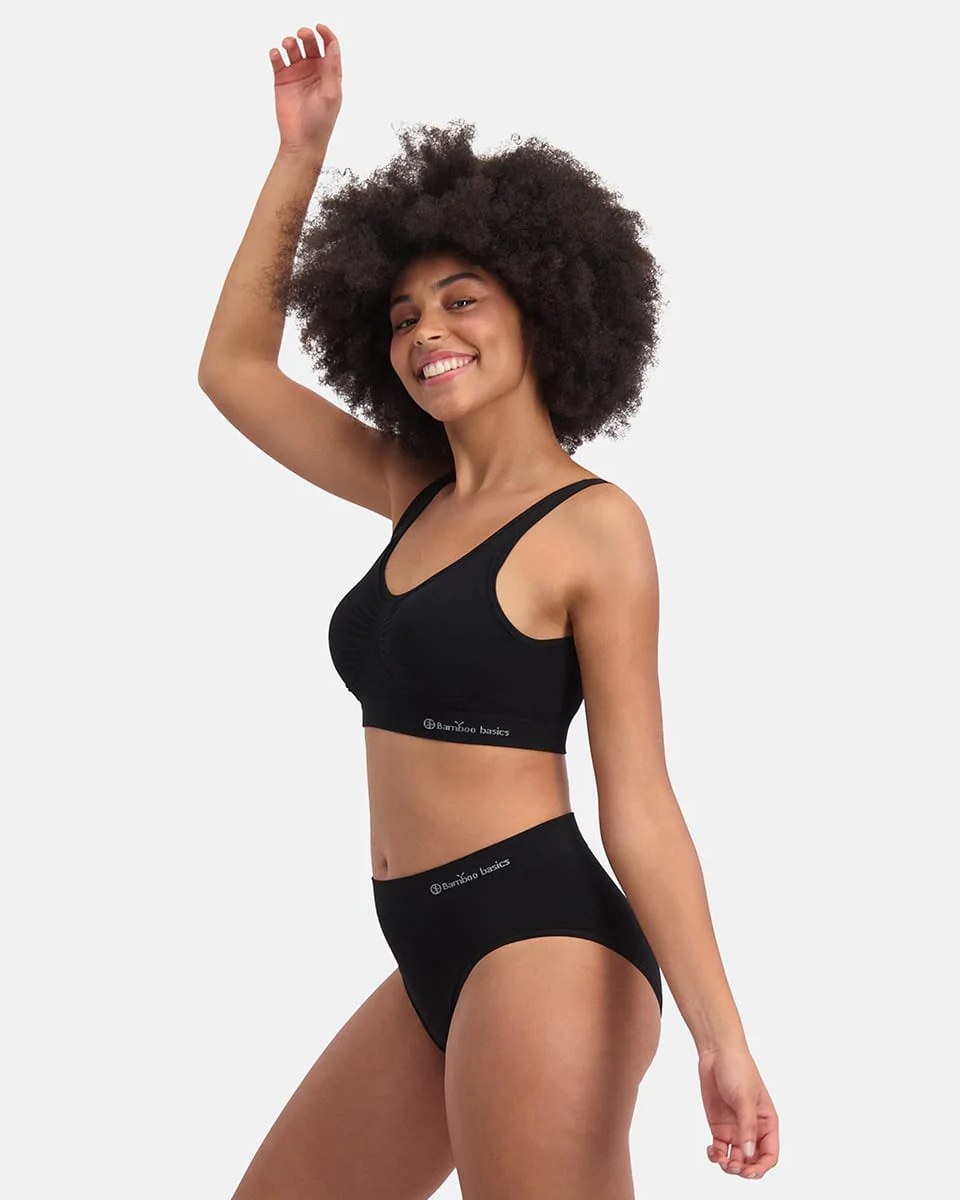
When the garment lies flat, the table carries the weight instead of the fabric. It then dries in its proper shape and does not grow long. Use a dry towel or a flat drying rack, and turn the piece once so both sides get air. See bamboo bodystocking and bamboo underwear for women.
Why a hanger stretches a piece
On a hanger the water gathers in the lower part of the garment and the whole weight hangs from the shoulders. That gives a narrow support point and pulls the fabric down while it is soft. The result is often a longer shirt with hanger marks, which you avoid by letting it lie flat.
How much can wet knit stretch
Up to several percent of the length, depending on weight and construction. That sounds small, but on a long jumper it is a few centimetres you can clearly see and feel. Thick, heavy knits give the most, because the water weighs more, while thin pieces normally cope better.
Does it apply to thick towels
Yes, but they are stable enough to hang, because the fabric is woven. The threads lie in fixed directions and do not give so easily, so a towel can dry on a hook without growing long. The difference shows how much construction matters, and not only material.
Can a stretched garment be rescued
Often yes. Wash it again and lay it flat in the right shape while it dries. Press the fabric gently into place with your hands so it follows the original measurements. It works best if you do it while the fabric is still damp and the fibres have not been pulled too hard.
Avoid wringing and pulling
A wet garment is at its weakest, and hard wringing can pull the loops out of shape. Press the water out between your hands instead, or roll the piece up in a towel. Lift it out of the machine with both hands so the weight does not hang from a single point.
How to decide how to dry
Always follow the care label for the individual piece. If you are unsure, choose to lay the piece flat rather than hang it. It takes a little longer, but the garment keeps its length and you avoid having to correct it afterwards. It is the simplest habit to change to get more from your knitwear.
Frequently asked questions
Can a stretched garment be rescued
Often yes. Wash it again and lay it flat in the right shape while it dries. Press it gently into place while it is still damp, and it follows the original measurements.
Does it apply to thick towels
Yes, but they are stable enough to hang, because the fabric is woven. The threads lie in fixed directions and do not give as easily as the loops in knit.
How much can wet knit stretch
Up to several percent of the length, depending on weight and construction. Thick, heavy knit gives the most, so always lay it flat to dry.