Why old garments feel thinner
Short answer: Because there really is less fabric left. Fibres have worn off, the yarn has become thinner, and the fabric has been stretched by many washes and many hours of use. It is a slow change you only notice when comparing with something new.
The material is less
Every wash and every day of wear removes a little of the outermost fibres. It is not much each time, but after many washes it adds up, gone with the waste water and as lint in the dryer. The garment in your hand simply holds less material than when it was new.
The yarn has grown thinner
A yarn is made of many fine fibres twisted into a thread. When the outermost fibres wear away, the thread becomes thinner and less full. Thin threads make a thinner fabric that lets more air and light through. That is why you often see light more clearly through an old garment held up to a window.
The fabric is stretched out
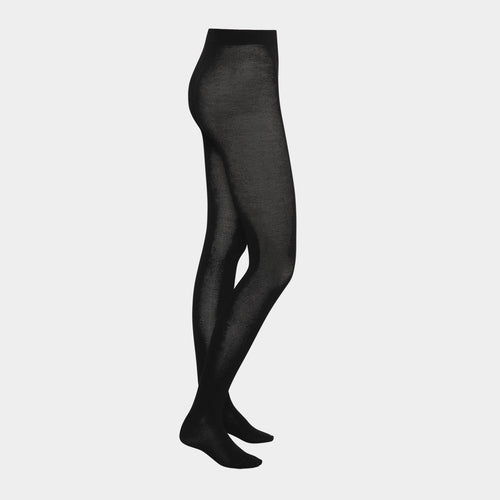
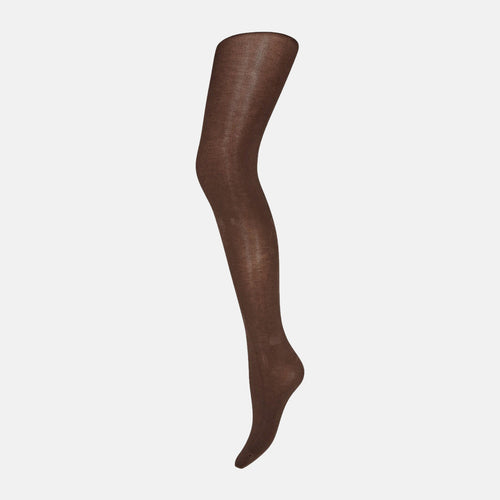
The loops have given way through many hours of wear and many washes, so there is more surface and less yarn per square centimetre. The fabric is spread over a larger area. It shows most at knees, elbows and seat, where fabric stretches daily. See bamboo tights for women, whose legs stretch each time you put them on.
The surface has been smoothed down
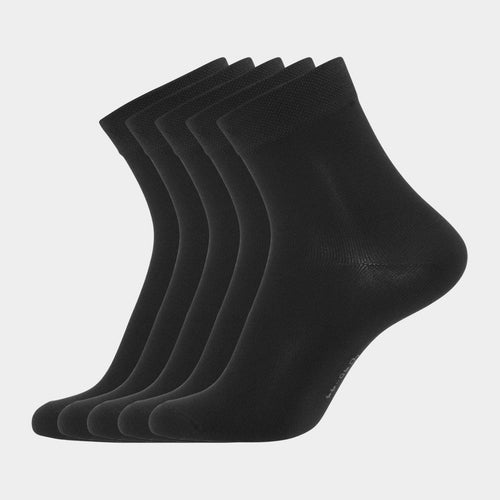
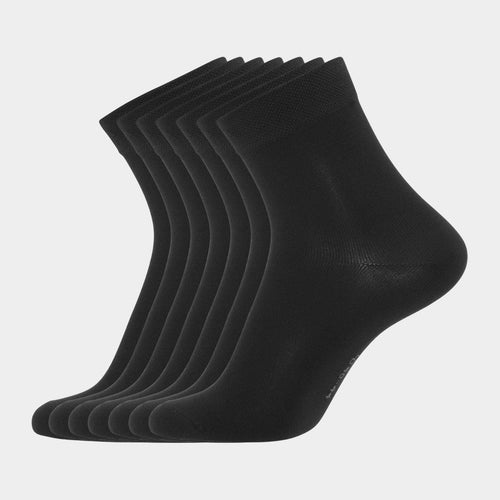
The raised fibre ends that make new fabric feel full and soft wear off over time. What remains is a smoother, flatter surface that feels thinner to the fingers, even if the yarn is still intact. It partly explains why old garments feel different from the first day. See bamboo underwear for women and all bamboo socks for women.
Washing and temperature
A hot wash and a long spin wear more than a cold wash and a short programme. High temperature makes fibres stiffer, and the movement of the drum rubs them together. If you wash less often and at low temperature, the fabric is affected less. It takes no special products, only a gentle programme and a machine that is not overfilled.
Pressure and movement in certain places
Wear is rarely spread evenly. It hits the places where the body bends, sits or rubs against something else. There the fabric turns thin first, and later a small hole can appear. The rest of the garment may still look fine, so thin fabric is often a local matter rather than something that affects the whole piece equally.
How to spot that a garment has grown thin
Hold the garment up to a light and look for places where the fabric looks see through. Feel with your fingers whether some areas are looser and flatter than others. Compare with a new garment of the same kind if you can. If the difference is clear, the fabric is nearing the end of its life.
Why old clothes still feel pleasant
Even if old clothes are thinner, they often feel good. The stiff ends are gone, and the fabric has adapted to your body after many hours of wear. It can feel soft and easy to move in. But thin fabric also gives less coverage and less warmth, so think about what you expect from the garment.
When a garment should be replaced
A garment should be replaced when it no longer does what you bought it for. That may be warmth, coverage or fit. If you have clothes that still work but have grown thin, you can wear them at home or as an extra layer. That extends their life without giving up comfort.
Frequently asked questions
Can a garment become thicker again
No. Material that has worn away does not come back. You can slow further wear by washing gently and air drying, so the remaining fabric lasts as long as possible.
Why do old clothes still feel pleasant
Because the stiff fibre ends have worn away and the fabric has adapted to your body. It feels soft and calm, although there is really less material left than in a new garment.
When should a garment be replaced
When it no longer does what you bought it for, such as giving warmth or coverage. Then it is time to use it differently or find a replacement.
You can find the full range at Bamboo-Clothing.com.