Why sweat fabric has loops on the inside
Short answer: Sweatshirt fabric has loops on the inside because an extra yarn is knitted in that is not tied down everywhere. The loops trap still air between skin and fabric, and that air is what makes a sweatshirt warmer than a T-shirt. The loops also decide how soft and heavy it feels.
Two yarns in one fabric
Sweat fabric is made from two yarns knitted together in the same machine. The outside comes from a firm yarn that forms smooth stitches. Beside it runs a looser yarn that is tied in only at intervals. The rest of the time it lies free and forms small loops on the inside.
How the loops form
The loops appear because the loose yarn gets more length between tie points than would fit flat. The extra length rises as a small arc. The more yarn is added, the denser and taller the loops become. It is a feature of the knit itself, not of a print or coating.
Air is the insulation
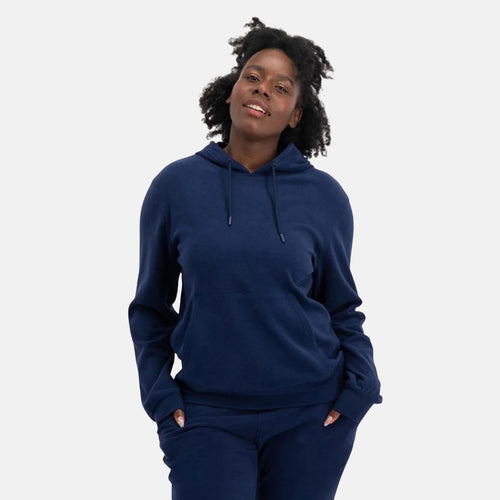
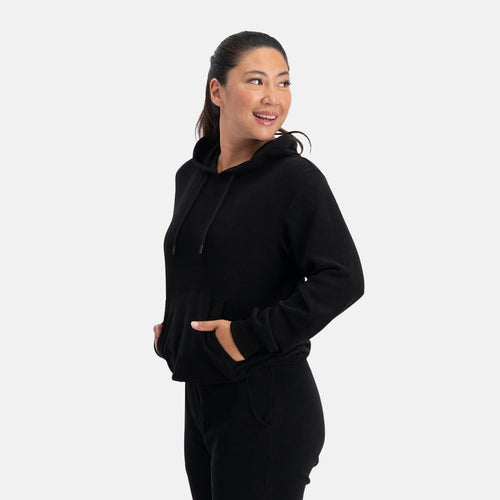
The loops hold a layer of still air between skin and fabric. Air conducts heat poorly, so the layer works as insulation, much like the air between two layers of clothing. That is why sweat fabric feels warmer than plain jersey of the same weight. See bamboo sweatwear for the range.
Why it feels soft
When the loops rest against the skin, you feel many small soft fibre arcs instead of a smooth, tight surface. That gives a round, fluffy feel, especially in bamboo viscose, which is already smooth and soft. This is why sweat fabric suits clothes at home, where comfort matters more than a close fit.
Heavy when wet
The same air that warms can be replaced by water. When the fabric is soaked, the loops fill with moisture, and the garment turns heavy and cold. This applies to all sweat fabrics, not only bamboo. If you need something for rain or sweat, a thinner fabric is a better choice than a thick sweatshirt.
Why it dries slowly
Moisture sits between the loops and leaves slowly. That is why sweat fabric dries more slowly than thin jersey, even at the same weight. Let the piece hang on a hanger or lie flat on a drying rack so air reaches both sides. Do not fold it away while it is still damp.
What happens to the loops
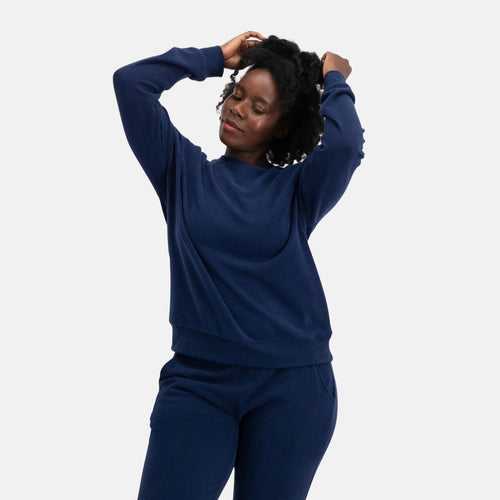
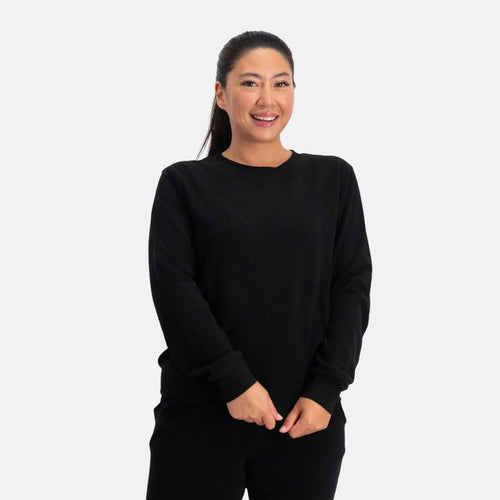
Over time, friction and washing wear the loops down. The fibres break and form a fuzzy surface on the inside. This is normal and does not mean the garment is ruined. Wash sweat fabric inside out at a low temperature, and the loops keep their shape longer. Read more about the bamboo sweatshirt for women here.
When sweat fabric suits
Sweat fabric suits cooler days and calm situations where you want warmth without many layers. It works well over a T-shirt in autumn and as comfortable wear at home. In summer, or close to the skin in warm weather, a thin jersey is usually more pleasant because it lets more air through.
How to choose the right fabric
If you want a sweatshirt that is warm without being too heavy, look at the fabric weight and how densely the loops sit. A set in the same fabric looks consistent, and you can see the range under bamboo jogging suit for women. Choose by use, not only by how soft it feels.
Frequently asked questions
Are the loops the same as terry cloth
Similar in principle, but sweat fabric loops are smaller, denser and only on the inside. Terry often has loops on both sides and is used mostly for towels and bathrobes.
Why does sweat fabric get fuzzy inside
Because friction and washing break the loops and form a fuzzy surface over time. Washing inside out at a low temperature helps the loops keep their shape longer.
Can sweat fabric be worn in summer
Rarely against the skin, since it holds heat. A thin jersey lets more air through and is more pleasant in heat. Sweat fabric suits cooler days.
You can find the full range at Bamboo-Clothing.com.