Why the thread breaks before the fabric
Short answer: The seam is a line, the fabric is a surface. When you pull, the force spreads across thousands of loops in the fabric, while the thread has to carry it all alone. That is why the thread often gives way first, and not the fabric itself.
A line against a surface
The fabric can shift force between neighbouring loops, so the strain is spread over a large area. The thread in a seam has nobody to share with, so the strain gathers in a few threads at a time. That is the simple reason a seam can give way even when the fabric around it still looks fine.
Why the thread is usually stronger
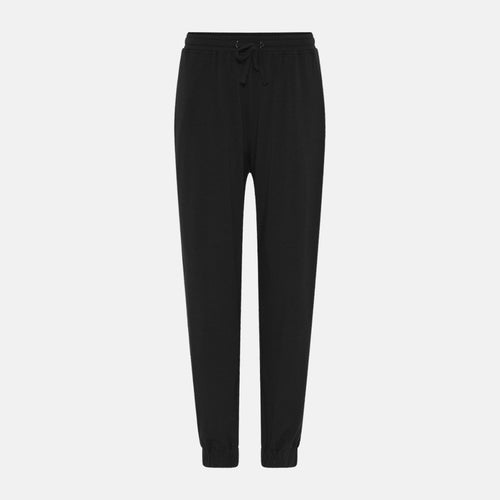
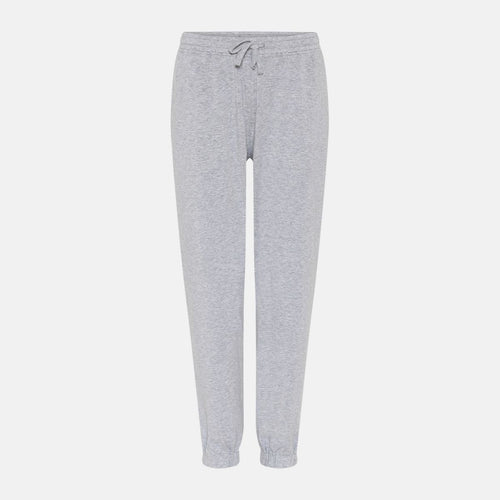
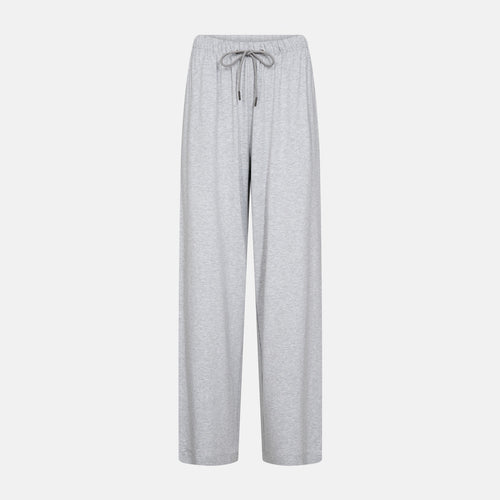
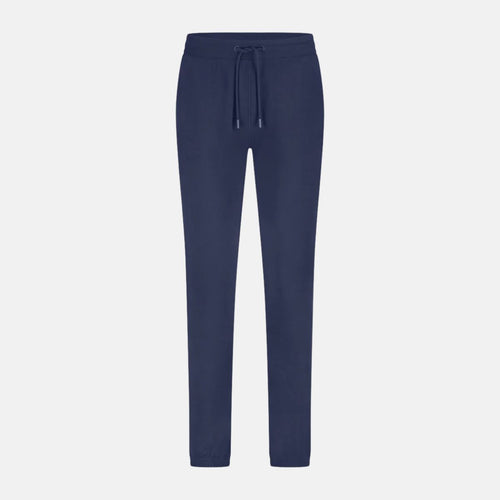
A maker normally chooses a thread stronger than the fabric, exactly because it carries more per thread. If the choice is wrong, the seam goes long before the fabric. It is about getting the balance right, so neither becomes the weak link in the garment. See bamboo sweatpants for women.
What you see when it happens
A split seam leaves two whole fabric edges and some loose thread ends. The fabric itself is intact, and the edges lie straight as they were sewn. If the fabric has torn, the edge looks frayed instead, and the hole has uneven borders. The difference is easy to spot once you look for it.
Why a seam fails in stages
A seam rarely breaks all at once. The threads snap one at a time as the strain moves from one thread to the next. The first sign is often a single thread peeking out, or a small gap between two fabric edges. If you step in early, you can often stop it before it spreads.
When the thread is too strong
You might think a stronger thread always makes a better seam. It does not work like that. If the thread is much stronger than the fabric, it cuts into the fabric with every pull instead of giving way itself. Then the fabric is damaged, which is far harder to repair. See bamboo bodystocking and period underwear.
Repairing a split seam
If the seam has split but the fabric is whole, the repair is simple. Turn the garment inside out, lay the two edges together and sew them up again with a thread that matches the fabric in colour and thickness. Use small, even stitches and do not pull too hard, so the seam can follow the fabric.
How to go easy on seams
Do not tug at seams when you take clothes off, and do not let a garment catch on sharp edges. Wash as the care label says, so threads are not worn unnecessarily. Check the seams now and then, because a small loose thread is easy to sew down while it is still short.
Why thread and fabric must match
A good garment needs thread and fabric that work together. The fabric has to stretch, and so does the thread, or it snaps as you move. A thread with no give in a stretchy fabric breaks easily, so the choice of thread matters as much as the fabric itself.
What to take away
If you remember one thing, make it this: a split seam and a torn fabric are two different problems with their own fixes. If you see whole edges and loose threads, the seam needs sewing. If you see frayed edges, the fabric has torn, and that takes more patience to put right.
Frequently asked questions
Is a split seam easier to repair?
Yes. The fabric is whole, so it only needs to be sewn together again with a suitable thread, and a careful repair usually hardly shows afterwards.
Why does a seam fail in stages?
Because the threads snap one at a time as the strain moves from thread to thread, so you often see only a single thread peeking out first.
Can a thread that is too strong damage the fabric?
Yes. If the thread is much stronger, it cuts into the fabric instead of giving way itself, and then the fabric takes the damage with every pull.
You can find the full range at Bamboo-Clothing.com.